
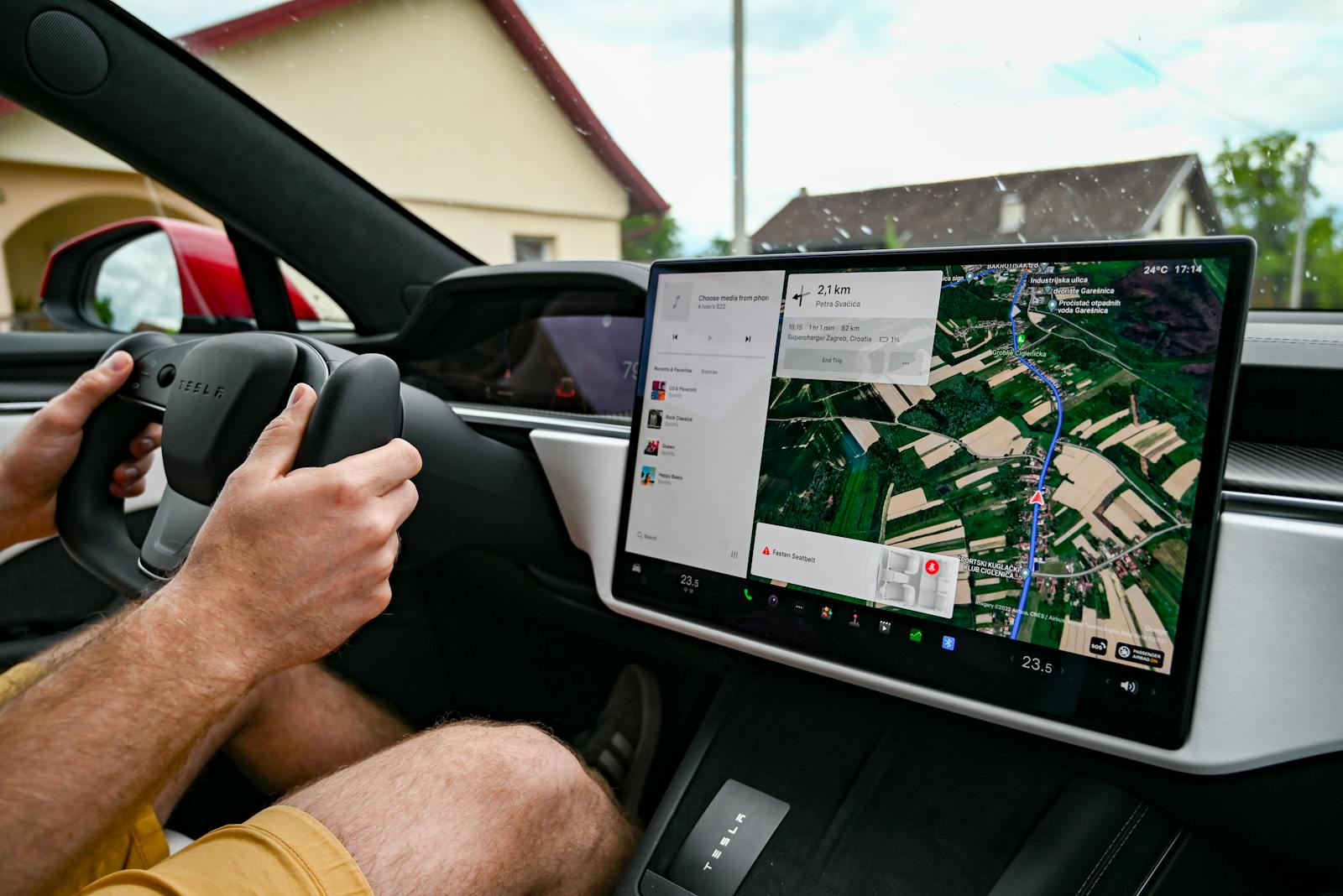

Drivers were promised that modern cars would quietly watch their backs, stepping in only when danger loomed. Instead, a growing number say their vehicles are occasionally slamming the brakes for no clear reason, turning routine commutes into jump-scare experiences. The industry calls it “phantom braking,” and despite years of software updates and public assurances, the complaints have not gone away.
From highway road trips to city errands, people in vehicles with advanced driver-assist systems are still reporting sudden, hard stops that seem to come out of nowhere. The pattern now stretches across brands, from high-profile systems like Tesla Autopilot to more basic Automatic Emergency Braking in mainstream sedans and SUVs, and regulators are starting to treat these surprise slowdowns as a safety problem in their own right.
What Phantom Braking Actually Is
Phantom braking is the catchall term drivers use when a car’s driver-assist or Automatic Emergency Braking system slams on the brakes even though there is no real obstacle in the lane. The software thinks it sees a threat, often based on radar, cameras, or a mix of both, and reacts faster than any human could, cutting speed sharply and sometimes triggering the seat belts. In theory that is exactly what these systems are supposed to do, but in these cases the “threat” is a mirage, and the driver behind has no idea why the car in front just lurched toward a stop.
Engineers describe it as a false positive, a moment when the sensors and algorithms misread the environment and treat harmless objects as hazards. Fleet safety specialists have warned that modern collision avoidance tech can be tripped by things like shadows, overpasses, or odd reflections in the environment that trigger the sensors. For the driver, the nuance does not matter much. All they feel is a sudden deceleration that can send coffee flying and, in heavy traffic, leave them praying the car behind is paying attention.
Tesla Autopilot And A Long Shadow Of Complaints
No brand has been more closely associated with phantom braking than Tesla, largely because so many of its owners use Autopilot on long highway stretches. Drivers describe cruising along with the system engaged when the car abruptly slows, sometimes multiple times on the same trip, even with clear lanes ahead. Analysts who have dug into Tesla’s software say the company’s sophisticated driver-assistance technologies still struggle with edge cases, and that Phantom Braking remains a problem despite repeated updates.
Regulators have noticed. Earlier investigations into Tesla’s behavior on highways highlighted a pattern of unexpected slowdowns, and local TV reporting has amplified owner stories of cars that suddenly hit the brakes with no visible trigger. One station described how Phantom braking has been a persistent issue for Tesla vehicles and noted that, despite software revisions, it has not been fixed to the satisfaction of many owners. That drumbeat of complaints has fed into a broader debate about whether Autopilot is ready for the kind of trust some drivers place in it.
When A “Safety Feature” Becomes Its Own Hazard
On paper, Automatic Emergency Braking is supposed to be the quiet hero of the modern car, stepping in only when a crash is imminent. In practice, a system that hits the brakes too often or too aggressively can create its own risks. A sudden stop on a crowded freeway can invite a rear-end collision, and drivers who have been jolted by false alarms sometimes admit they are tempted to turn the feature off entirely. That tradeoff, between catching every real threat and avoiding unnecessary panic stops, is at the heart of the phantom braking problem.
Regulators are now looking at that balance in specific cases. The National Highway Traffic Safety Administration, or NHTSA, has intensified an investigation into Honda Insight and Passport models over an Automatic Braking System problem, focusing on whether The AEB systems in these cars are activating inadvertently. A separate summary of the probe notes that Honda AEB Systems, which is essentially the regulatory way of describing phantom braking. When the watchdog that writes the rules starts using that kind of language, it signals that these incidents are no longer being brushed off as isolated glitches.
Drivers Swapping Horror Stories Online
While official investigations grind along, drivers are not waiting for formal findings to compare notes. On enthusiast forums and mainstream social platforms, owners of different brands are trading dashcam clips and near-miss stories that sound eerily similar. One widely shared post opened with “Hey everyone, I want to raise awareness about a serious issue,” before describing repeated phantom braking episodes that turned highway driving into a nerve test for a lot of us.
Another thread, aimed at a broader car audience, argued that the problem is not limited to one or two headline-grabbing brands. The author wrote that Since mid–2023, more and more drivers have been reporting dangerous behaviors in cars equipped with Automatic Emergency Braking, including models from multiple manufacturers (including Toyota and Subaru). That kind of cross-brand pattern is exactly what worries safety advocates, because it suggests the issue is baked into how these systems are designed, not just how one company implements them.
How Tesla Owners Are Told To Respond
For Tesla drivers, phantom braking has become common enough that independent repair shops and owner guides now offer step-by-step advice on how to react. One recommendation is to treat every surprise stop as a data point and send it straight back to the company. Owners are urged to use voice commands for Reporting the Problem to Tesla Use the in-car “bug report” feature when a phantom brake event occurs, which routes the incident to Tesla’s development team for analysis.
On the road, the advice is more immediate and practical. Drivers are told that the simplest way to counteract an unnecessary stop is to Override with the accelerator, gently pressing the pedal to signal that the human is taking charge and to override the system’s braking command. Some guides go further, suggesting that owners learn the spots on their regular routes where the car tends to misbehave so they can anticipate and be ready to intervene, advice framed around the idea that with experience you can predict or anticipate the system’s quirks. It is a strange twist: drivers are now adapting to the habits of software that was supposed to adapt to them.
Lawsuits, Trust, And The Tesla Backlash
The legal fallout from phantom braking is starting to catch up with the technology. In the United States, a federal lawsuit has accused Tesla of knowing about phantom braking complaints as early as 2015 but keeping details quiet while continuing to market its driver-assist features aggressively. According to According Autoblog, the suit describes cars “slamming the brakes” unexpectedly, language that mirrors what owners have been saying online for years.
Those claims are part of a broader trust crisis around Autopilot. Reporting on the issue notes that, with lawsuits gaining steam on two continents and hundreds of thousands of drivers affected, the phantom braking crisis is forcing a reckoning over how much faith people should put in partially automated systems. One analysis described how the controversy has become a full-blown trust crisis for Tesla Autopilot, with critics arguing that the company blurred the line between driver assistance and self-driving in a way that encouraged overconfidence. Phantom braking, in that context, is not just an annoyance, it is Exhibit A in the case that the tech is not as polished as the branding suggests.
Honda, NHTSA, And The Mainstreaming Of The Problem
While Tesla grabs the headlines, the Honda investigation shows how mainstream this issue has become. The NHTSA decision to intensify its look at the Honda Insight and Passport over an Automatic Braking System problem signals that regulators see a pattern worth unpacking in mass-market vehicles, not just luxury EVs. The agency’s summary of the case, which focuses on whether The AEB systems in these cars are the cause of inadvertent AEB activations, effectively treats phantom braking as a defect that can trigger a formal safety response.
That scrutiny is backed up by more detailed descriptions of how the systems behave. In its own framing, the agency has said that NHTSA: Honda AEB Systems May Activate Unexpectedly, and that owners should be notified should this happen. That kind of language moves phantom braking out of the realm of anecdote and into the formal vocabulary of safety campaigns, which in turn pressures automakers to treat every false stop as a potential recall issue rather than a mere annoyance.
The New AEB Mandate And Automaker Pushback
All of this is unfolding just as Automatic Emergency Braking is being written into federal rules. The National Highway Traffic Safety Administration, referred to in one legal filing as the National Highway Traffic, has pushed a rule that will require AEB systems in all new vehicles, from entry-level compacts to ultra-premium models with a Maybach badge. The idea is to make life-saving tech standard instead of a luxury add-on, and the agency has argued that AEB should not be limited to high-end trims. That is a big shift from the days when automatic braking was marketed as a pricey option.
Automakers, however, are warning that the way the rule is written could actually make phantom braking more common. In a separate regulatory debate, companies have argued that the new automatic emergency braking standard will cause more false positives, and they have urged regulators to reconsider aspects of the mandate. One industry summary notes that Automakers say the rule, which NHTSA estimates will save 362 lives a year, may also increase the number of unnecessary stops. That tension, between the promise of preventing crashes and the risk of spooking drivers with surprise braking, is now baked into the policy fight.
Why Phantom Braking Is So Hard To Stamp Out
Under the hood, phantom braking is a symptom of how hard it is to teach machines to read the real world as cleanly as humans do. AEB and driver-assist systems rely on a mix of cameras, radar, and software models that try to guess what is a threat and what is harmless clutter. A dark patch on the road, a truck in an adjacent lane, or a sign casting a sharp shadow can all look like potential obstacles to a cautious algorithm. Fleet experts have pointed out that modern Automotive technology, like many human advancements, can be tripped up by subtle changes in the environment that trigger the sensors.
At the same time, the pressure to roll out more advanced driver-assist features has pushed automakers to ship complex systems before every edge case is ironed out. Tesla’s experience is a case study: despite years of iteration, Tesla Autopilot still faces complaints about Why It is Still a Problem, and lawsuits now argue that the company knew about those issues long before they became public. Other brands are facing their own scrutiny as NHTSA digs into inadvertent activations and as drivers of vehicles with Automatic Emergency Braking, including Toyota and Subaru models, add their voices to the chorus. For now, the reality on the road is simple: the tech that is supposed to save drivers from their own mistakes is still making a few of its own, and the people behind the wheel are the ones feeling every unexpected jolt.
More from Wilder Media Group: