
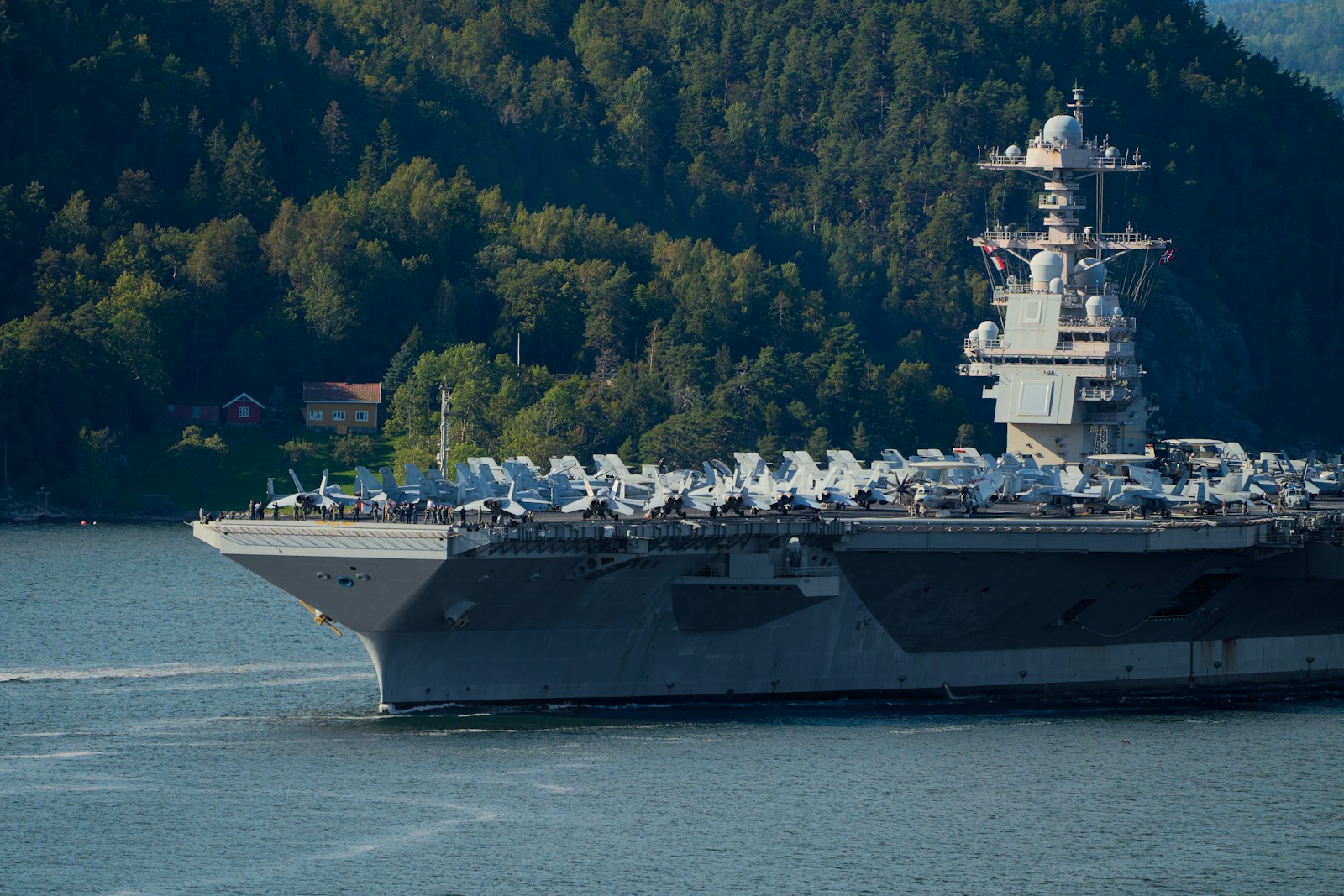

The newest Ford-class aircraft carrier to join the U.S. fleet is finally stretching its legs at sea. The future USS John F. Kennedy is out on builder’s trials, a major shakedown that will decide whether the Navy’s next nuclear-powered flagship is ready for prime time. For a program that has carried big expectations and bigger price tags, these early days under way are where the hype meets the Atlantic swell.
Instead of pier-side renderings and talking points, the Navy now has steel in the water, reactors humming, and flight deck crews learning the ship’s personality in real time. The tests ahead will shape how quickly the carrier can join the operational rotation and how confidently commanders can count on it in the Pacific and beyond.
The first run to sea and what is being tested
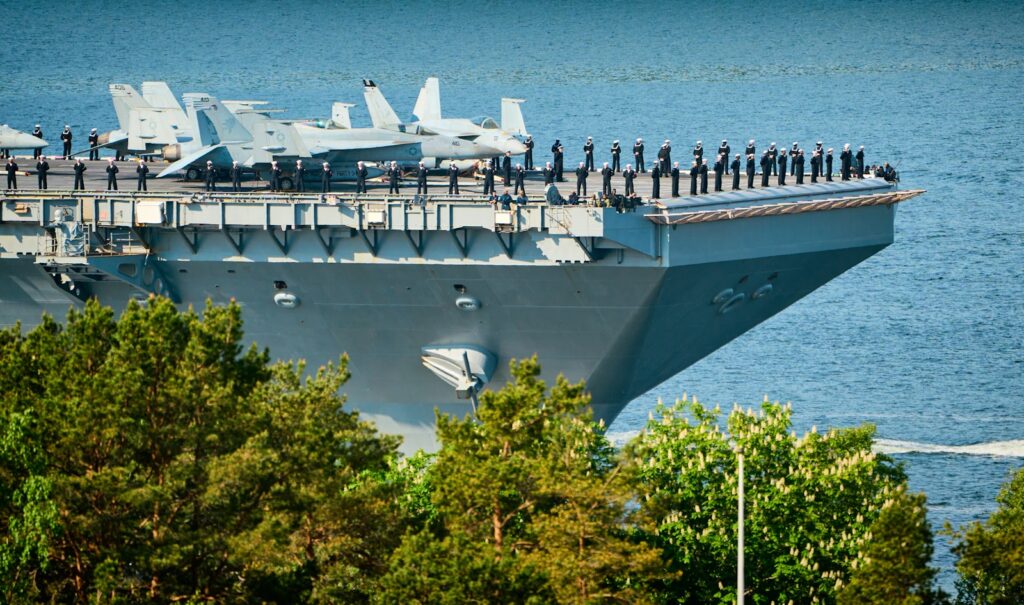
The future USS John F. Kennedy, designated CVN 79, recently left the pier at HII’s Newport News Shipbuilding division under its own power for the first time, a milestone that turns years of construction into an actual warship. The Navy’s acquisition team and shipyard leadership describe this initial departure as the start of a tightly scripted series of builder’s trials, where everything from propulsion and steering to combat systems is pushed hard before the service formally accepts the ship. The departure of the carrier from Newport News was highlighted as a key moment by Mallory Shelbourne, who noted that the future USS John F. Kennedy (CVN 79) is tracking toward a single phase delivery to the American fleet.
Once clear of the Virginia capes, The USS John Kennedy headed into the Atlantic Ocean for its first serious workout, a run that will check the ship’s nuclear reactors, electrical distribution, and advanced arresting gear under real sea conditions. Navy officials describe this phase as a chance to validate the design lessons pulled from the lead ship of the class, USS Gerald R. Ford, and to prove that the second hull can avoid the teething problems that dogged the first. The Navy’s own program office underscored that the carrier is now underway for builder, a step that will feed directly into the schedule for commissioning and deployment.
A 100,000 ton statement of intent
Even in a Navy full of big ships, this one stands out. The John F. Kennedy is a Ford-class supercarrier with a displacement of around 100,000 tons, built to launch and recover a mix of F-35C fighters, F/A-18E/F Super Hornets, and E-2D Hawkeyes at a higher tempo than the Nimitz-class ships it will eventually replace. The design leans heavily on new electromagnetic catapults, advanced arresting gear, and a reworked island layout to squeeze more sorties out of every day at sea. Reporting on the ship’s departure has repeatedly described it as a Latest US supercarrier, a label that reflects both its size and its role as the second Ford-class hull.
Behind the sleek island and fresh gray paint is a long industrial story. The US Navy’s second Ford-class aircraft carrier has been under construction at Newport News for years, with the ship’s keel laid and major modules stacked long before the public saw the hull hit the water. The US Navy’s newest aircraft carrier, USS John F. Kennedy, is now described as underway on sea, a sign that the long pipeline from steel cutting to fleet service is finally nearing its payoff.
From shipyard milestone to fleet workhorse
For the people who built it, getting the carrier off the pier is more than a scheduling box to check. Shipyard leaders have called the first trip to sea a “huge milestone” and credited “selfless teamwork and unwavering commitment” from shipbuilders and suppliers who kept the program moving through design changes and pandemic disruptions. That sense of pride came through clearly as the newest Ford-class carrier USS John F. Kennedy headed to sea for testing, with the yard emphasizing how many local jobs and specialized skills are tied up in a single nuclear carrier hull.
The Navy’s acquisition community is just as invested, but for different reasons. The service wants the Ford-class to deliver more sorties with fewer sailors and lower lifetime costs, and it is counting on the John F. Kennedy to prove that the painful learning curve on the first ship is behind it. Analysts have pointed out that the 100,000 Tons of New Carrier Muscle represented by the USS John F. Kennedy (CVN 79) will be a test of whether the class can truly become the Navy’s most powerful and cost effective supercarrier yet.
More from Wilder Media Group: