
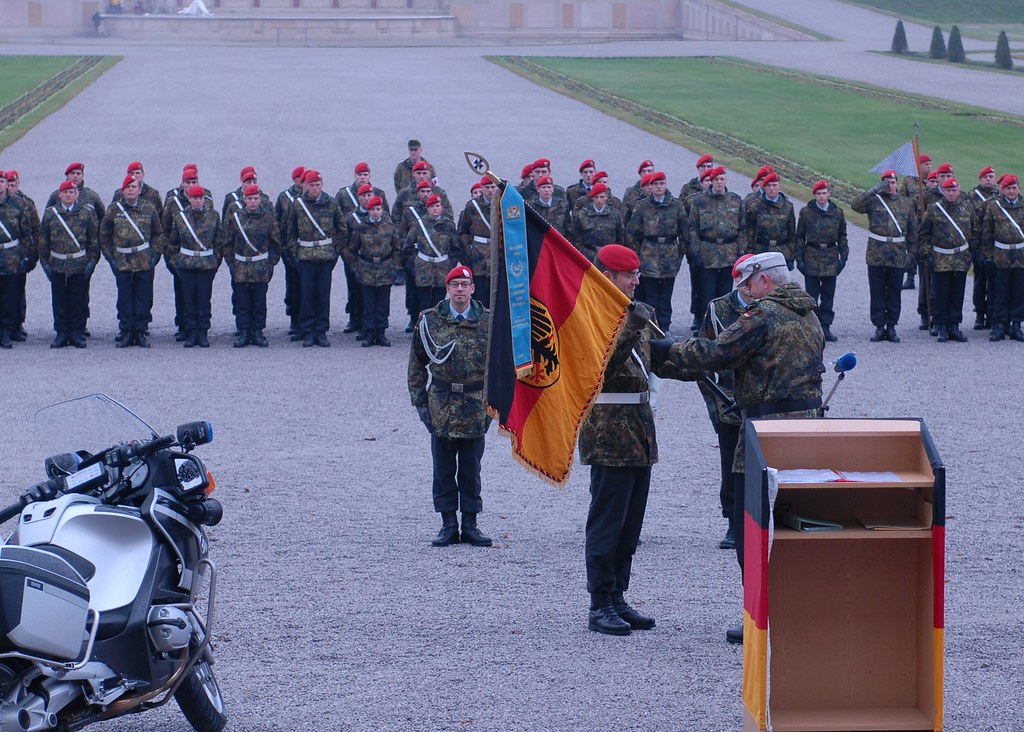

Germany is trying to drag Europe’s security policy into a faster gear, even if not every country is ready to shift at the same time. Berlin’s pitch is simple but disruptive: let a core group of willing states move ahead on defense integration and industrial policy, while the rest of the European Union catches up later. The idea of a “two‑speed” setup is now at the heart of a broader push to turn Europe into a serious military and economic power in a far rougher world.
The proposal lands as war on the continent, pressure from global rivals, and doubts about long‑term U.S. backing collide. It is also tightly bound up with Germany’s own promise to rebuild the Bundeswehr into a credible force and to double defense spending within a few years, a shift that would have been unthinkable not long ago.
How the ‘fast lane’ would work
At the core of the plan is a compact group of six heavyweight economies that would act as a kind of inner engine for the European project. According to Germany, this club would focus on deepening the euro, building a genuine capital markets union, coordinating defense, and securing critical raw materials. The logic is that if the biggest players can align quickly on money, markets, and military planning, the rest of the bloc will benefit from the momentum rather than be held hostage by endless vetoes.
German officials describe this as a response to a “rapidly changing geopolitical context” and to competitive pressure from powers like the United Stat, arguing that Europe’s ability to coordinate defense and act as a growth engine is now a strategic necessity. In that spirit, the initiative is framed as a way to promote tighter integration, strengthen the euro’s international role, and reduce the bloc’s heavy reliance on external suppliers by building new partnerships. The “fast lane” would not be a closed club, but it would set the pace for everyone else.
Defense urgency, from Berlin to the battlefield
The security angle is where the two‑speed idea really bites. Germany is already in the middle of a major rearmament, with Chancellor Friedrich Merz setting out the goal of making the Bundeswehr “the strongest conventional army in Europe” and pledging to double defense spending within five years to protect the freedom of the entire Euro‑Atlantic area. That ambition is backed by a visible push to modernize equipment and training, showcased on the official Bundeswehr portal, which highlights new capabilities and deployments.
Berlin’s broader European pitch is to match that national buildup with tighter cross‑border planning and procurement. Reporting on the proposal describes how By Linus Höller, the plan would speed up joint projects and secure critical raw materials for the defense industry, so that troops are not left waiting years for basic kit. The stakes are not abstract: Troops of the Dutch 13. Lichte Brigade (Light Brigade) with a Boxer armored vehicle, for example, are already training for high‑intensity scenarios on Europe’s eastern flank, and the argument in Berlin is that Europe’s political machinery needs to move at least as fast as units like the Lichte Brigade.
France on board, smaller states on edge
Germany and France are presenting a united front, pitching the two‑tier structure as a way to overcome policy inertia in the face of new geopolitical challenges. In their joint messaging, Germany and France argue that the current system, where 27 governments must sign off on sensitive moves, is simply too slow for an era of war in Ukraine and sharper competition with Russia and China. They also point to the political reality that, particularly as U.S. President Donald Trump’s actions have suggested that the United States is no longer as reliable a partner on trade and security, Europe has to be able to act on its own when needed.
That message is sharpened in domestic debates. In one speech, Klingbeil warned that “to survive in an increasingly unpredictable geopolitical situation, Europe must become stronger and more resilient” and that the core group should act as an engine for growth. Yet the same plan is already spooking some smaller and newer member states, which fear being sidelined. German officials have tried to calm those nerves by stressing that the advance‑group approach would work in different formats depending on who wants to join which project, a point laid out in Germany’s letter to partners.
More from Wilder Media Group: