
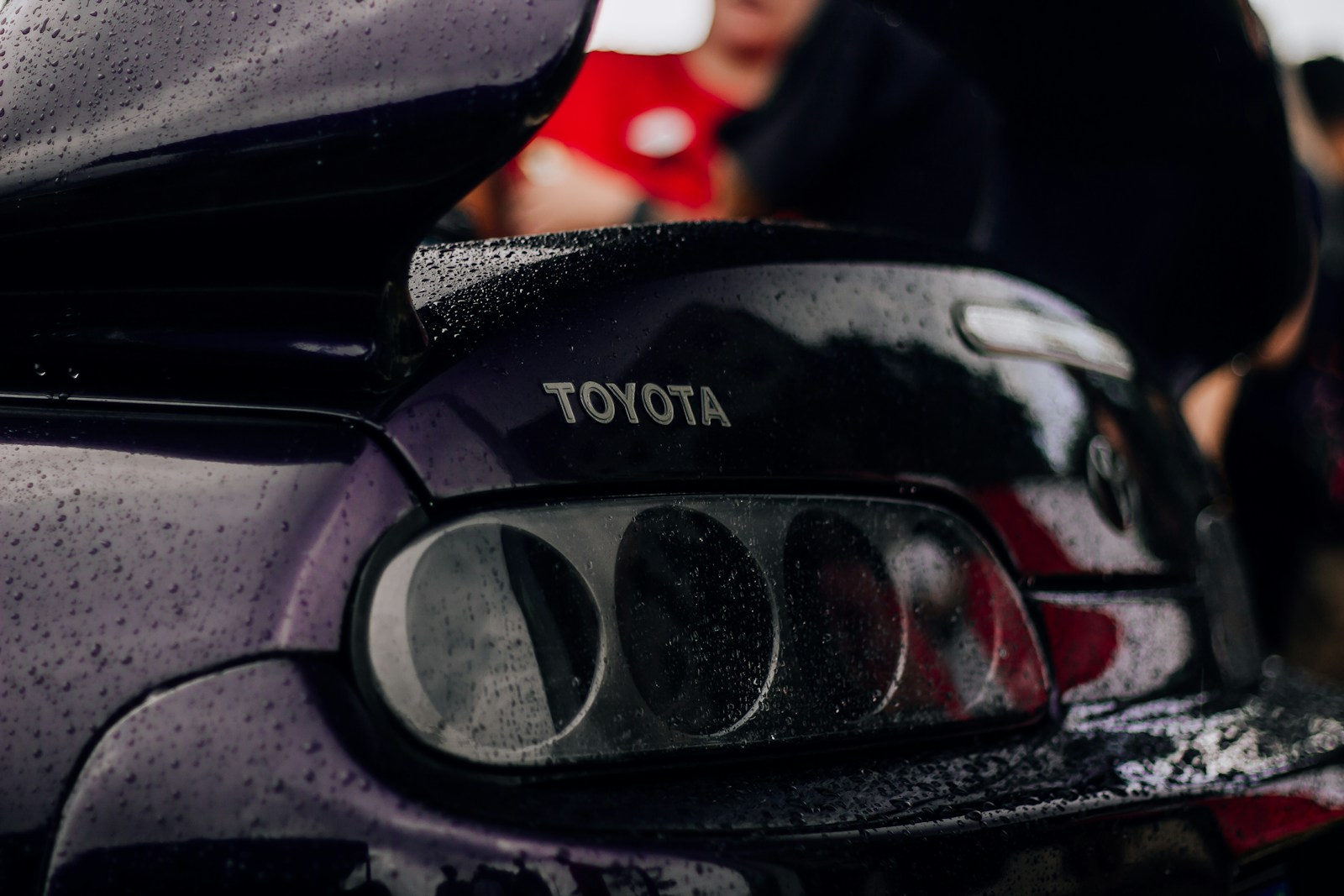

Toyota has built its reputation on bulletproof reliability, which is why a mixup involving basic lighting hardware lands with such a thud. In certain cars, the company ended up with rear units that looked like proper lamps but were actually just reflectors, a quiet parts snafu that only surfaced once regulators and owners started asking questions. The result is a recall that turns a seemingly tiny detail in the taillight catalog into a real-world safety and compliance headache.
The heart of the problem is the side marker area in the rear combination lamp, where U.S. rules expect an illuminated marker but some cars instead carried a passive reflector. The affected units trace back to Korean market parts that were never meant to satisfy American lighting standards, yet still found their way onto vehicles and into replacement channels. For a brand that trades heavily on doing the basics right, discovering that some customers were driving around with “fake” lights is a particularly awkward look.
How a catalog mixup turned into a safety recall

The story starts with the way Toyota sources and catalogs its rear lighting assemblies across different regions. For Korean market cars, the rear lamp includes a side marker reflector that is perfectly legal there, but U.S. regulations require a side marker light that actually illuminates. According to detailed recall information, the key issue lies in that side marker section, where a reflector-only Korean unit ended up being treated as if it met the Federal Motor Vehicle Safety Standards for American cars, a mistake traced back to a taillight catalog mixup that affected both factory builds and owners who later purchased a replacement light through parts channels, as outlined in recall documents.
Once the wrong assemblies were in circulation, the problem was not obvious at a glance, since the housings looked like any other modern LED cluster. The difference only shows up when the lights are on, or rather, when that side marker is not. A notice from the National Highway Traffic investigation lays out the key points of the incident, describing how the reflector-only units slipped into the supply chain and confused those purchasing replacement lights, which meant some owners unknowingly downgraded their cars from compliant lamps to noncompliant reflectors the moment a rear corner was repaired.
What regulators found and how Toyota responded
The issue came into sharper focus once U.S. regulators started comparing the suspect assemblies against the letter of the law. Federal Motor Vehicle Safety Standards spell out exactly how bright and how visible side marker lights must be, and a reflector with no bulb or LED behind it simply does not count. Reporting on the recall notes that Toyota first caught wind of the problem after questions were raised about rear lighting behavior, which pushed the company to dig deeper into its parts catalog and production records; that internal review revealed a potential batch of cars and replacement units that did not meet the required safety standards.
From there, the investigation widened to cover how the Korean parts were specified and how they ended up tagged for U.S. use. Due to differences in automotive regulations between markets, a lamp that is fine in one country can be illegal in another, and the recall documentation explains that this is exactly what happened once the Korean reflector units were treated as if they were U.S. spec. As the company mapped out the affected vehicles, the findings were folded into a broader summary that describes how Toyota first caught wind of the issue, how the discovery led the company to dig deeper, and how the investigation revealed a potential population of cars that needed corrective action to satisfy Federal Motor Vehicle Safety Standards, all detailed in the expanded regulatory summary.
Why a small lighting error matters for a big-name brand
On paper, a side marker that reflects instead of glows might sound like a minor technicality, but for a company like Toyota the symbolism cuts deeper. Even the most reliable brands sometimes stumble on the basics, and here the stumble is literally baked into the rear corners of the car, where other drivers rely on those tiny amber glows to judge distance and position at night. Analysts have pointed out that the incident underlines how globalized parts sourcing can backfire when catalog data is not watertight, a point echoed in coverage that notes how Key details of error show a simple mislabeling cascading into a formal safety campaign.
For owners, the practical takeaway is straightforward: if their car falls within the recall population, Toyota will swap the reflector-only units for proper illuminated markers at no cost, restoring both compliance and peace of mind. The broader lesson for the industry is less about one specific model and more about process, since the same global catalog logic that tripped up Toyota is used by countless other automakers. As one summary of the case notes, Toyota remains a benchmark for durability, but this episode is a reminder that even the most reliable brands sometimes get tripped up by the fine print, a point underscored in reporting that frames the recall as proof that Even the biggest names are only as solid as their smallest part numbers.
More from Wilder Media Group: