

The Trump Administration did not just talk about bringing manufacturing back to the United States, it quietly tried to uproot one of Germany’s most iconic corporate crowns. According to the company’s own leadership, senior officials pressed Mercedes-Benz Group AG to shift its global headquarters from Stuttgart to American soil, pitching a move as a win for both sides. Mercedes listened, then firmly passed.
The episode, which only surfaced publicly after the fact, shows how far President Donald Trump’s team was willing to go to tilt industrial power toward America, and how carefully a global brand like Mercedes-Benz weighs politics against long term strategy. It is a story about ambition, leverage, and the limits of even a White House sales job.
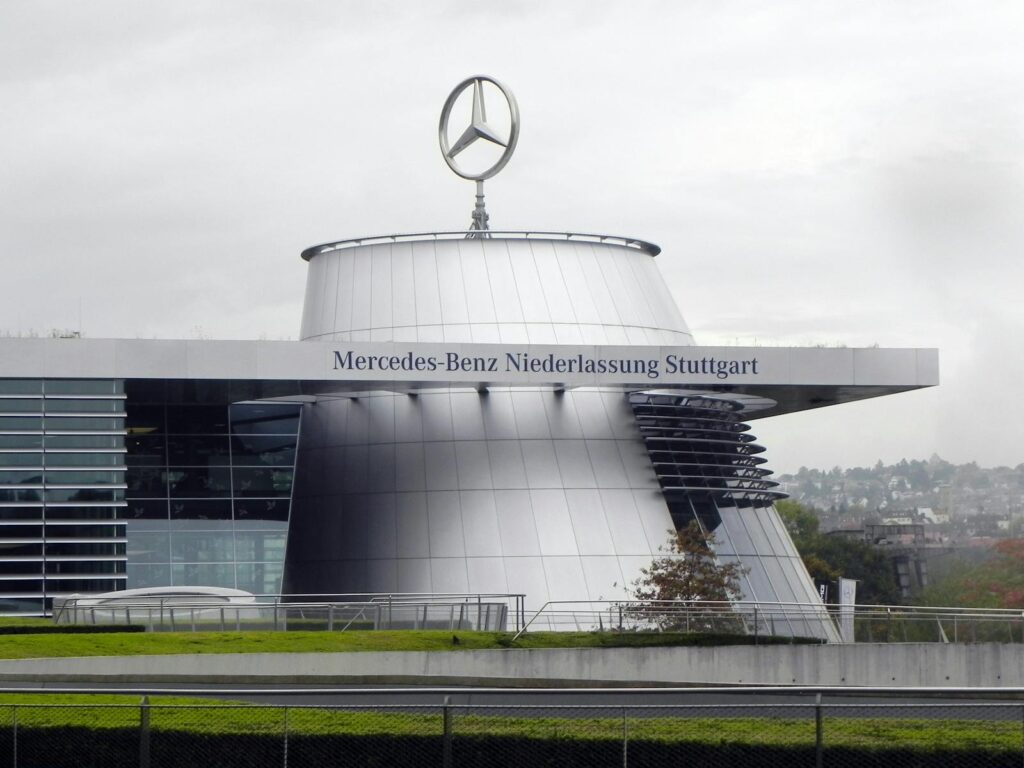
The hard sell from Washington meets a firm “no” in Stuttgart
At the center of the push was Commerce Secretary Lutnick, a key economic lieutenant in the second Trump Administration who took on the role of chief closer. Reporting indicates that Lutnick personally tried to persuade Mercedes-Benz Group AG’s chief executive, Ola Källenius, to relocate the company’s global base from Germany to the United States. The pitch, described by people familiar with the talks, framed a headquarters move as a signature example of how The Trump Administration could lure high value corporate functions, not just factories, to America.
Källenius, however, was not buying. Accounts of the meeting say the CEO listened to Lutnick’s arguments, then rejected the idea of shifting Mercedes’ command center out of Germany, effectively ending the courtship in a single conversation. One detailed summary notes that the Mercedes, Benz Group AG leader “turned down” the cabinet secretary’s attempt to move the headquarters, underscoring how flatly the proposal was dismissed even as the company continues to expand its footprint in the U.S. market. That refusal is echoed in separate coverage that describes how the Mercedes CEO rebuffed Lutnick’s pitch despite the political pressure behind it.
Inside the Trump Administration’s pitch to “Lure Mercedes Out of Germany”
The outreach was not some vague suggestion floated at a cocktail party. Multiple accounts describe a structured effort in which The Trump Administration tried to lure Mercedes to America with a mix of political access and the promise of a friendlier regulatory and tax climate. One report, summarized by Michael Gauthier, says Commerce Secretary Lutnick “reportedly offered” incentives as part of a broader push by The Trump Administration to showcase marquee corporate wins in America. That same reporting notes that the Trump team’s goal was to get Mercedes, a German luxury giant, to plant its global flag in America rather than simply expand production lines. The contours of that effort are laid out in coverage of how the Trump admin tried to get Mercedes to move to America.
Another layer of reporting frames the gambit in even starker terms, describing how Trump Tried to Lure Mercedes Out of Germany and how the CEO Flatly Said No. That account notes that the Trump Administration Sought Mercedes HQ Move as part of a broader strategy to shift industrial power toward the US, treating the company’s global base as a symbolic and economic prize. The same narrative, repeated in a separate summary that again uses the phrase Trump Tried to Lure Mercedes Out of Germany, makes clear that the outreach was not about a single plant or model line but about the headquarters itself. Those details are captured in coverage that highlights how the Trump Tried to move the company’s center of gravity.
Further detail comes from a version of that same reporting that explicitly states that the Trump Administration Sought Mercedes HQ Move as a way to pull industrial power toward the US. That framing underlines how the White House saw corporate headquarters as strategic assets, not just mailing addresses, and why a German automaker like Mercedes was such an attractive target. The description of how the Trump Administration Sought Mercedes HQ Move, and how the CEO Flatly Said No, is laid out in a follow on analysis that again emphasizes the Trump Administration Sought as part of a larger industrial strategy.
Why Mercedes stayed put while still deepening its U.S. footprint
From Mercedes’ side, the calculus was more complicated than a simple yes or no to a presidential ask. The company has spent decades building its brand identity around German engineering and its roots in Stuttgart, and uprooting that heritage would have sent shockwaves through its workforce and home market. At the same time, Mercedes has been steadily expanding its presence in America, including a major manufacturing hub in Tuscaloosa County and a growing corporate base in the Southeast. One detailed account notes that the Mercedes, Benz Group AG chief executive weighed the Trump Administration’s offer against the company’s existing plant in Tuscaloosa, Alabama, and still chose to keep the headquarters in Germany, a decision described in coverage that highlights how the CEO turned down the pitch while continuing to invest in the existing plant.
More from Wilder Media Group: