
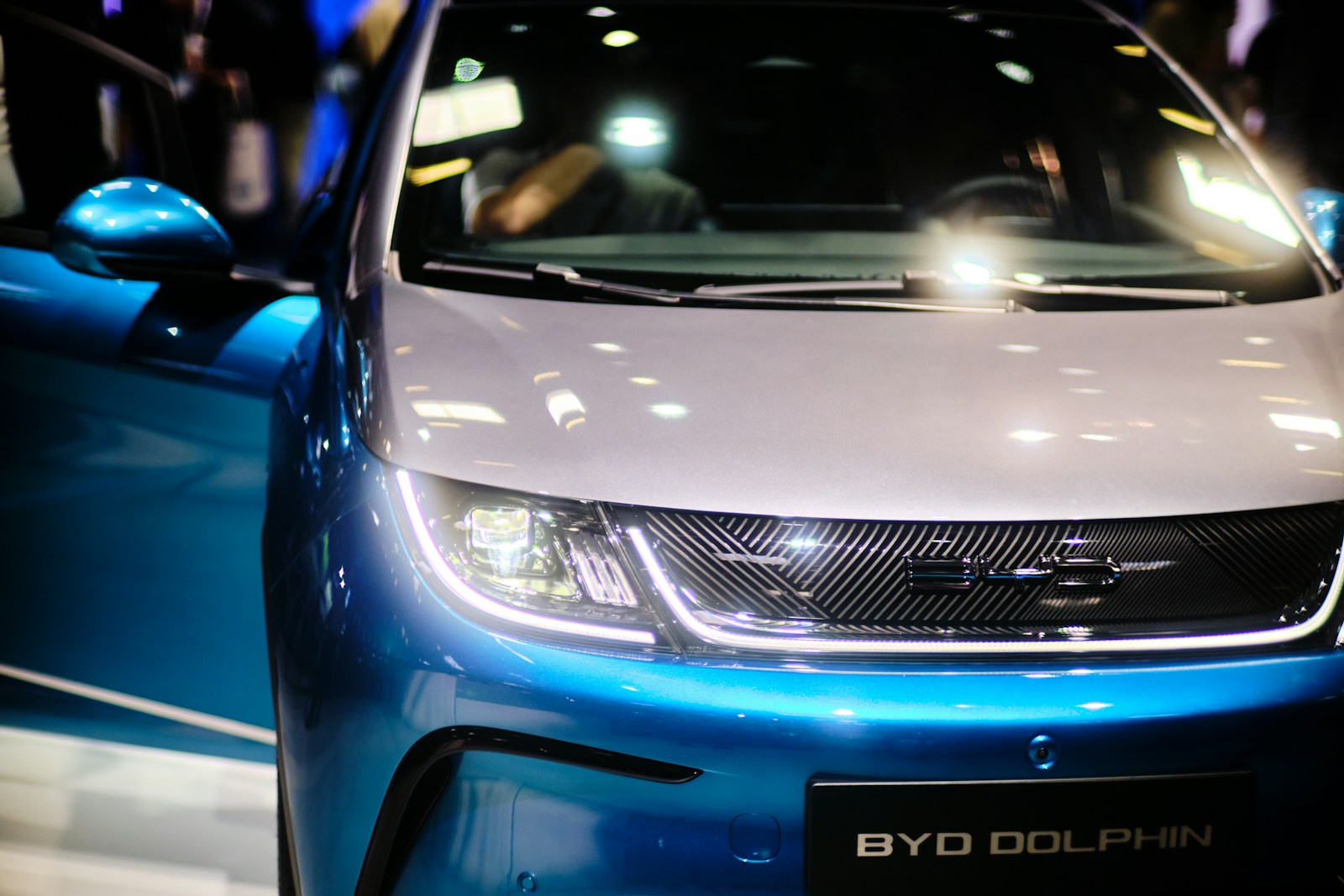

Chinese automaker BYD has quietly turned into the kind of rival legacy carmakers used to fear only in theory: a company that can build good electric cars faster, cheaper, and in more places than almost anyone else. Its vehicles are now sold in 112 cities across 102 countries, and that reach is starting to reshape how boardrooms in Detroit, Wolfsburg, and Tokyo think about their future. When executives talk about an existential threat, this is what they mean: a competitor that changes the rules of the game, not just the score.
What makes BYD so dangerous to established players is not just volume, or the fact that it has overtaken Tesla in global electric vehicle sales. It is the way the company has fused batteries, software, and manufacturing into a single machine that keeps getting more efficient as it scales. That combination is now colliding with Western politics, industrial policy, and the basic math of what it costs to build a car.
BYD’s vertical edge: batteries, costs, and brutal pricing power

When I look at why BYD is different, I start with its roots as a battery specialist rather than a traditional carmaker. The company began as a cell producer in the 1990s and still treats energy storage as its core technology, which is why it can build its own packs, power electronics, and even the Blade Battery that underpins many of its models. That level of control lets BYD tune performance and cost in ways that are hard for rivals who still buy key components from suppliers. Analysts describe this as Vertical Integration, Total Control, Maximum Efficiency, and it shows up directly in the company’s margins.
The vertical model runs through the entire business. BYD designs and builds most of its own motors, inverters, and software, and it even sells components to other brands, which gives it scale advantages that are tough to copy. One breakdown of the company’s structure notes how controlling the entire lets it squeeze out Tier-1 Supplier Cost and shorten development cycles. A Spanish-language analysis of the same strategy points to the same integration advantage, reinforcing the idea that this is not a side feature but the core of the business model.
That structure is now being exported. BYD’s global plan calls for international sales to reach 50% of its total volume by 2030, up from 28.5% today, a target that rests heavily on what one summary calls its Vertical Integration: The. Investors watching the Global EV Race have zeroed in on the same theme, with one assessment arguing that lower costs and faster production cycles give BYD a real edge as it expands overseas. Another breakdown of Why BYD Has a Real Edge in the Global EV Race lists Key Points that highlight how The Chinese market’s intensity has forged a company with unusual manufacturing scale and proven leadership, a Real Edge that is now being deployed globally.
On the ground, that cost base translates into aggressive pricing that many rivals simply cannot match. In China, Several companies stand out in the electric surge, but BYD (Build Your is described as the undisputed leader in the EV and hybrid market, with a reputation for using price cuts as a competitive weapon. One widely shared discussion among EV enthusiasts bluntly claims that BYD is the off other car companies through a price war it can sustain because of very low costs. When that kind of pricing power starts to spill into export markets, it is no surprise that incumbents see an existential threat rather than just another competitor.
From China to Europe and America: a global collision course
The scale of BYD’s expansion is already visible on the map. According to its own figures, BYD vehicles are on six continents, a footprint that would have sounded fanciful for a Chinese brand a decade ago. In Europe, the company has moved from niche importer to serious player, with one industry analysis noting how BYD is reshaping the European conversation around affordable EVs. Another deep dive into the region points out that the company’s vertical integration model underpins BYD’s rapid expansion, giving it room to cut prices without sacrificing profitability.
BYD is not just shipping cars into Europe, it is also building factories. The Hungarian venture is a departure for BYD, which for decades focused on tight control of its supply chain inside China, but the new plant shows how the company is adapting to local politics and subsidy regimes. One account of that move describes how The Hungarian project fits into a broader push to anchor production inside the European Union, even as Brussels probes Chinese subsidies between 2018 and 2022. At the same time, BYD is quietly building a global EV empire that leans on Localization as a strategic pillar, with one summary of Key Points arguing that Vertical integration and local plants create a cost and speed advantage that is hard to match.
More from Wilder Media Group: