

The Bertone name is back in the headlines for all the right reasons, and it is not with a safe, anonymous GT. Instead, the storied Italian studio has dragged one of its strangest 1960s ideas into the present, turning the Runabout concept into a road‑legal, Lotus Exige–based supercar with a sharp retro twist. The result is a tiny, carbon-bodied wedge that looks like it escaped from a vintage boat show and somehow picked up modern performance numbers on the way out.
Rather than chasing the usual top‑trumps hypercar formula, the new Bertone Runabout leans hard into character. It borrows its bones from a Lotus chassis, its power from a supercharged Toyota V6, and its attitude from Marcello Gandini’s original 1969 vision, then wraps the whole thing in a price tag and production run that keep it firmly in fantasy‑garage territory.
From 1969 Autobianchi oddball to Lotus-based mini supercar
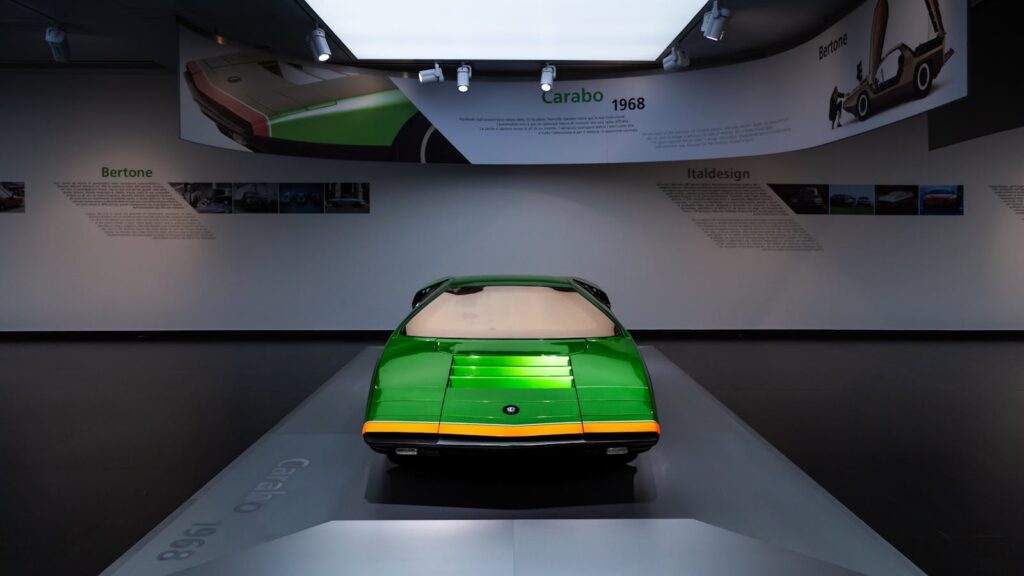
The modern Runabout only makes sense when parked next to the 1969 Autobianchi A112 Runabout, the tiny wedge that first wore the name under the Autobianchi badge with a Fiat 1.1-liter engine hanging out back. That show car was pure Marcello Gandini mischief, a speedboat‑inspired barchetta with a prow like a powerboat and proportions that made even period sports cars look tame, and it is that playful weirdness the new car is determined to channel. Bertone is explicit that this is not a faithful replica but a reinterpretation, a point underlined by the way the new wedge-shaped, carbon bodywork stretches the original idea into something lower, wider, and far more serious in intent, while still nodding to the marina more than the racetrack through its open‑air stance and nautical cues linked to the Autobianchi original.
Design responsibility this time sits with Lead designer Andrea Mocellin, who has been tasked with translating Marcello Gandini’s 1969 Runabout into something that can pass modern regulations without losing its sense of fun. On social channels, the Bertone Runabout is presented as a modern take on that concept, with Andrea Mocellin leaning into the low nose, exposed roll‑hoops, and boat‑deck rear, while tightening every surface to suit contemporary aero and crash demands. The result is a car that still reads as a Gandini wedge at a glance, but one that clearly lives on a Lotus chassis rather than a humble city‑car platform, a shift that is obvious in the stance and in the way the new Bertone Runabout sits on its wheels.
Lotus Exige bones, Toyota power, and serious numbers
Underneath the retro styling, the Runabout is not shy about its modern hardware. The structure is built from bonded and extruded aluminum in the Lotus tradition, which keeps weight to a wispy 1,057-kilogram figure, or 2,330-l in old money, and gives the car the same kind of ultra‑rigid, featherweight feel that made the Exige such a track weapon. That lightness is paired with a carbon body and a chassis layout that clearly shares more than a little DNA with the Exige, right down to the compact wheelbase and mid‑engine balance, a connection that is openly acknowledged in coverage of the Lotus‑based Lotus arrangement.
The engine is not a straight lift from Hethel, though. Power comes from a 3.5-liter supercharged V6 sourced directly from Toyota and tuned specifically for this project, a setup that delivers 475 hp and 361 lb-ft according to the official Spec Sheet for the 2026 Bertone Runabout in Barchetta and Targa form. That output edges past even the hottest factory Exige variants and is channeled through a gated manual gear stick that leaves the mechanical linkage proudly exposed, a detail that enthusiasts will recognize from classic Italian exotics and from the minimalist approach Lotus has long favored. The combination of Toyota and Lotus ingredients, wrapped in Bertone’s own calibration, is spelled out in technical rundowns that highlight how the Exige roots and Toyota and V6 come together in this tiny supercar.
Performance figures back up the spec sheet bravado. Reports on the modern Runabout describe a car that sprints from rest to highway speeds in a little over four seconds, with the aluminum and carbon construction helping it punch well above its modest footprint. Top speed is stated at around 270 km/h, a number that puts it squarely in junior‑supercar territory despite its playful styling and open‑air Barchetta configuration. Both body styles, the roofless Barchetta and the more sheltered Targa, share the same basic wedge silhouette with an impossibly low nose and wheelarches that jut out of the main body, details that are picked out in design walk‑throughs of how Both versions stick closely to the original proportions while adding modern aero and lighting tricks.
More from Wilder Media Group: