

You’ll feel the pulse of pure racing heritage when you discover road cars that carry real race engines under their hoods. These machines give you the raw sound, high-revving character, and engineering pedigree of the track — distilled into street-legal metal you can drive.
This article guides you through six iconic cars that bridge the gap between circuit and commute, from F1-derived tech to engines lifted straight from competition. Expect vivid examples and clear context so you can grasp what makes each one a true racing heart on the road.
Ferrari F50
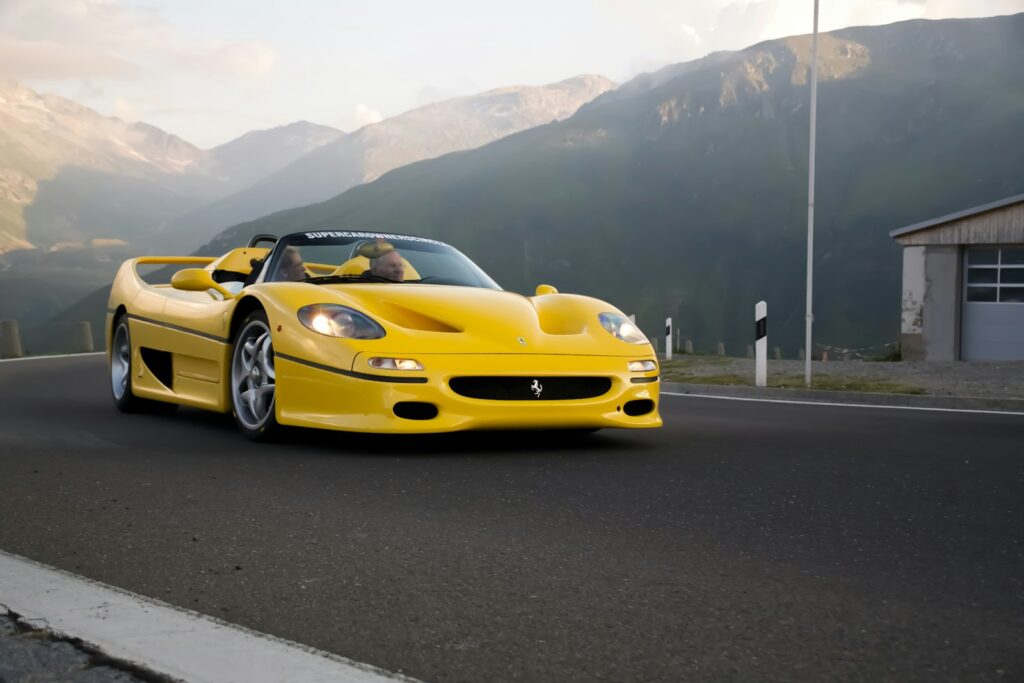
You step into an F50 and feel a race car more than a road car. Its 4.7L V12 traces directly to Ferrari’s early ’90s F1 program, delivering razor-sharp response and 520 bhp at high revs.
The chassis uses a carbon-fiber monocoque and race-derived suspension, so the ride is raw and focused. If you want an analog, track-bred experience with minimal driver aids, the F50 delivers.
Learn more about its F1 roots and engineering on Ferrari’s page about the F50 as a Formula 1 car for the road.
Porsche Carrera GT
You’ll feel the Carrera GT’s race-bred V10 the moment you rev it, a 5.7-liter engine developed from Porsche’s aborted Le Mans program that sings to 8,400 rpm.
The car pairs that high-revving engine with a lightweight carbon-fiber structure for a raw, mechanical driving experience.
You can still find detailed histories of the engine’s roots in Porsche’s LMP project and how it became a road car in coverage like Porsche’s own retrospective on the Carrera GT.
Mercedes-AMG One
You get an F1-derived 1.6-liter turbo V6 that revs to about 11,000 rpm and pairs with four electric motors for over 1,000 hp. It’s essentially a race powertrain adapted for road use, with carbon-clutch single‑sequential gearing.
Expect razor-sharp response and limited creature comforts; this car prioritizes lap performance over daily practicality. For full details on its F1 lineage and hybrid layout, see the Mercedes-AMG ONE page (https://www.mercedes-amg.com/en/amg-one).
Ford GT
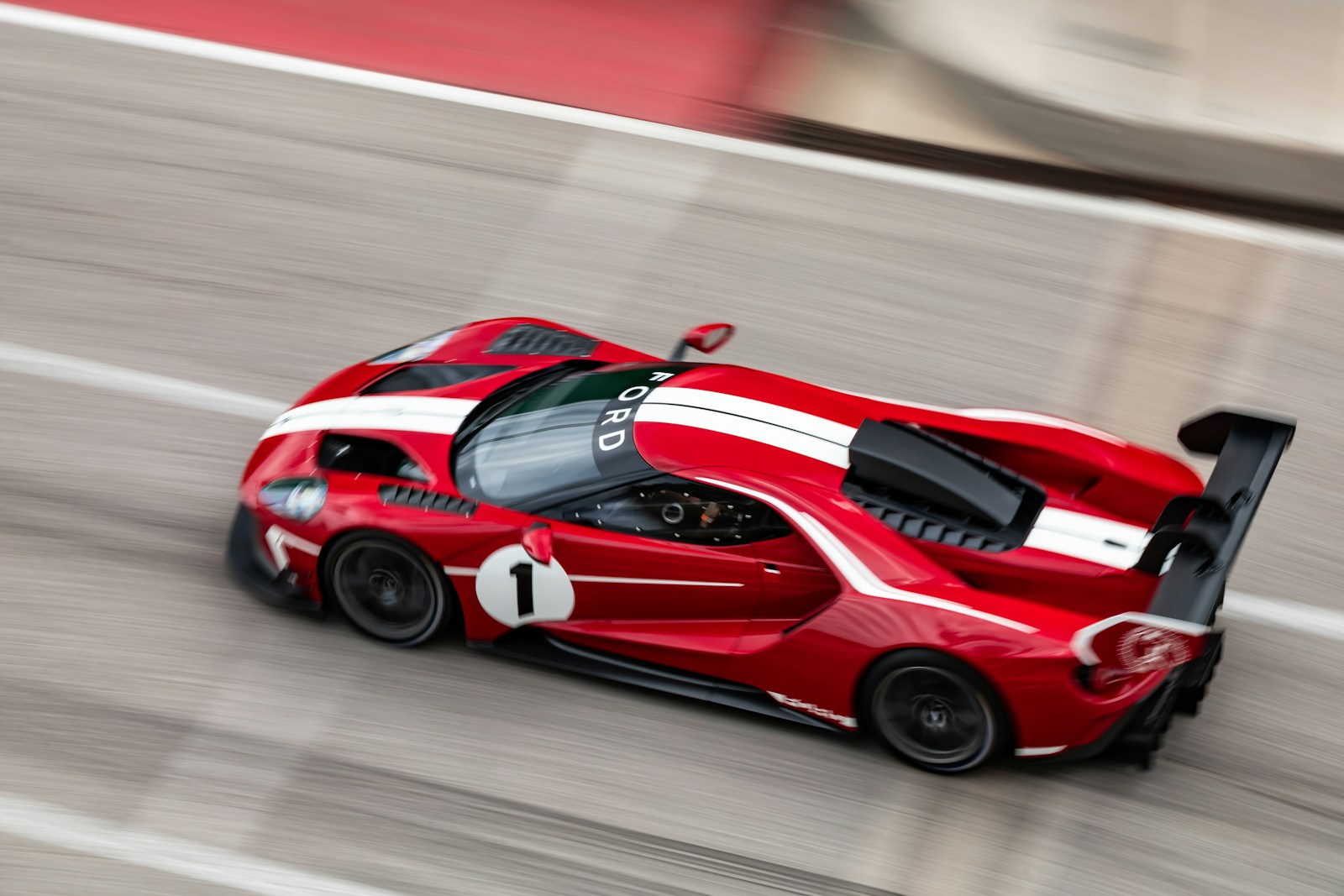
You get a street-legal supercar that traces its roots to the Le Mans-winning GT40 lineage and race-developed powertrains.
The modern Ford GT uses a compact, twin-turbo V6 whose design benefits from Ford’s endurance-racing know-how and engineering pedigree.
Driving the GT feels track-focused yet usable on the road; aerodynamics and lightweight construction keep performance sharp.
Learn more about the GT’s history and specs on Ford’s official GT page: Ford GT supercar information (https://www.ford.com/performance/gt/).
Jaguar XJ220
You’ll notice the XJ220 started life as a racier concept and ended up with a turbocharged V6 derived from a rally program, not the originally planned V12.
That engine and the car’s low-slung shape let Jaguar claim top-speed bragging rights in the early ’90s, reaching well over 200 mph during tests.
You get a car that mixes road comforts with race-bred engineering from Tom Walkinshaw Racing.
If you’re hunting classic supercars, the XJ220 rewards knowledge about its controversial development and rare production run.
Chevrolet Camaro ZL1
You feel the race pedigree the moment you sit in the ZL1; its supercharged 6.2-liter LT4 V8 shares lineage with Corvette motors and track-focused hardware.
That engine serves up strong, immediate torque and a soundtrack that matches the car’s aggressive stance.
You can trace recent race-to-road ties through Chevrolet’s updates, including the Carbon Performance styling and NASCAR adaptations for 2026.
Those changes show how Chevy keeps race-developed ideas in your showroom Camaro.
More from Steel Horse Rides: