

President Donald Trump’s pitch for a $2,000 “tariff dividend” has landed right in the middle of America’s car affordability crunch. For shoppers staring down record monthly payments and stubborn sticker prices, that kind of cash sounds like the difference between keeping an aging sedan and finally driving home a newer SUV. The reality is more complicated, and the way that $2,000 flows through family budgets and dealer lots will decide whether it softens car costs or quietly props them up.
At its core, the plan would send qualifying Americans a $2,000 payment tied to tariff revenue, effectively dropping a one time bonus into millions of household balance sheets. That money could behave like a bigger down payment, a repair fund, or a debt extinguisher, and each choice nudges car prices in a different direction. The catch is that the checks are not guaranteed yet, and the same tariffs meant to fund them are already reshaping the auto market from the factory floor to the finance office.
How a $2,000 check hits the showroom floor
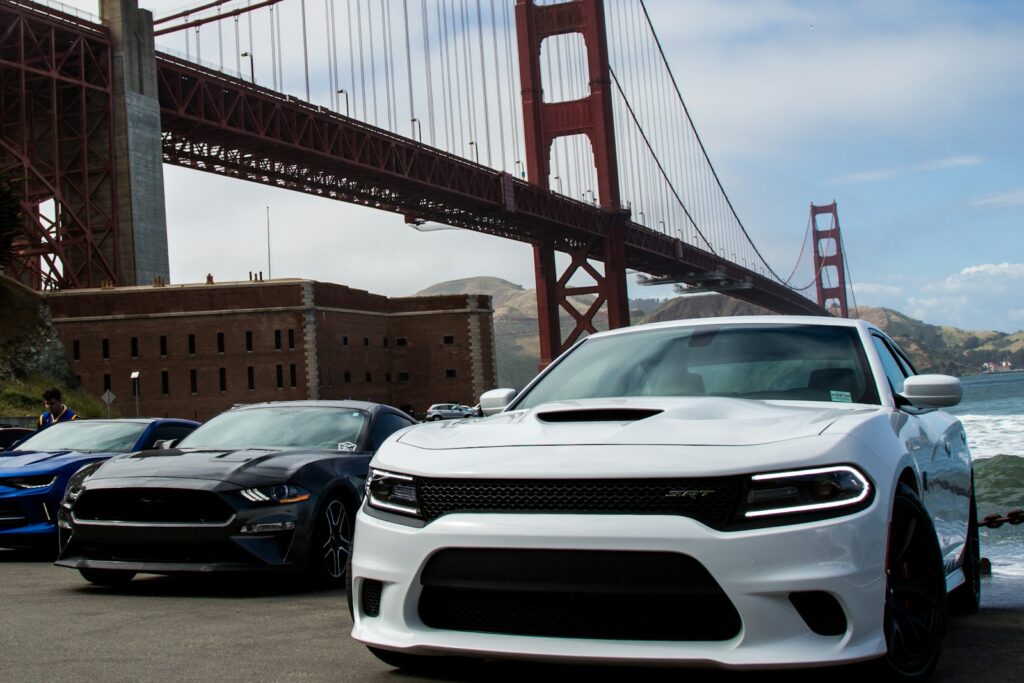
Economists looking at car buying habits say a lump sum like $2,000 tends to act as instant leverage in the finance office. For a buyer eyeing a 2023 Toyota RAV4 or a 2024 Ford F-150, that extra cash can slot straight into the down payment, shrink the loan amount, and pull the monthly bill back into reach, which is exactly how analysts describe a one time $2,000 payment working in a typical car budget. If enough shoppers suddenly qualify for loans they were previously denied, dealers get a wave of fresh demand for in stock crossovers, pickups, and compact SUVs.
That is where the price story gets tricky. Analysts warn that if buyers rush to spend the same $2,000 at once, dealers have every incentive to hold the line on pricing, especially on in demand models, rather than offer bigger discounts. Reporting on how a tariff funded payout would filter into auto lots notes that a one time $2,000 boost could make buyers more willing to accept higher transaction prices, which props up the market instead of forcing it down. In other words, the check might make the car feel cheaper to the household, while the national price data barely budges.
There is also the question of how many people would actually use the money on a vehicle at all. Some coverage of the proposal, including analysis by Tobi Opeyemi Amure, frames the idea as a broad consumer payout rather than a car specific subsidy, with the Dividend Could Impact only if households choose to steer it toward the driveway. If a big slice of recipients instead throw the money at rent, medical bills, or credit cards, the effect on car prices becomes more muted, even as individual families still feel some relief.
The tariff math, legal clouds, and what dealers are watching
Before anyone starts shopping for a new 2025 Honda CR V on the assumption that a check is in the mail, there is a basic hurdle: the money is not locked in. Coverage of the plan makes clear that Trump has floated the idea of sending Americans a $2,000 “tariff dividend,” but tariff revenue is currently far below what would be needed to fund that scale of payout. Detailed breakdowns of the numbers note that the Tariff pool would have to grow significantly to cover a nationwide dividend, and that gap is one reason experts like Robert Triest are cautious about promising that Americans will actually see the full Americans payment.
On top of the revenue shortfall, the plan is tangled in Legal and political uncertainty. Reporting on the proposal’s status points out that there are active Legal challenges to the underlying Tariff structure, with Supreme Court review adding another layer of risk for anyone counting on the money to close a car deal. One detailed explainer notes that routine tax refunds and credits are still arriving on schedule, but that Trump’s $2,000 tariff dividend has no authorizing bill in Congress, which means there is still no binding law that would force the Treasury to cut those checks.
Trump himself has tried to reassure voters that the money is coming, telling supporters that a $2,000 tariff dividend stimulus check will arrive sometime in 2026, even as courts weigh key pieces of his trade agenda. Fact checks of the broader stimulus chatter, including segments asking “Could the Trump administration issue another round of stimulus checks,” stress that there is no firm delivery date and that the White House has not detailed how the program would interact with IRS systems for direct deposit, which is why segments featuring NOTUS reporter Violet Jira treat the timeline as very much in flux and frame the question “Could the Trump” as unresolved.
More from Wilder Media Group: