

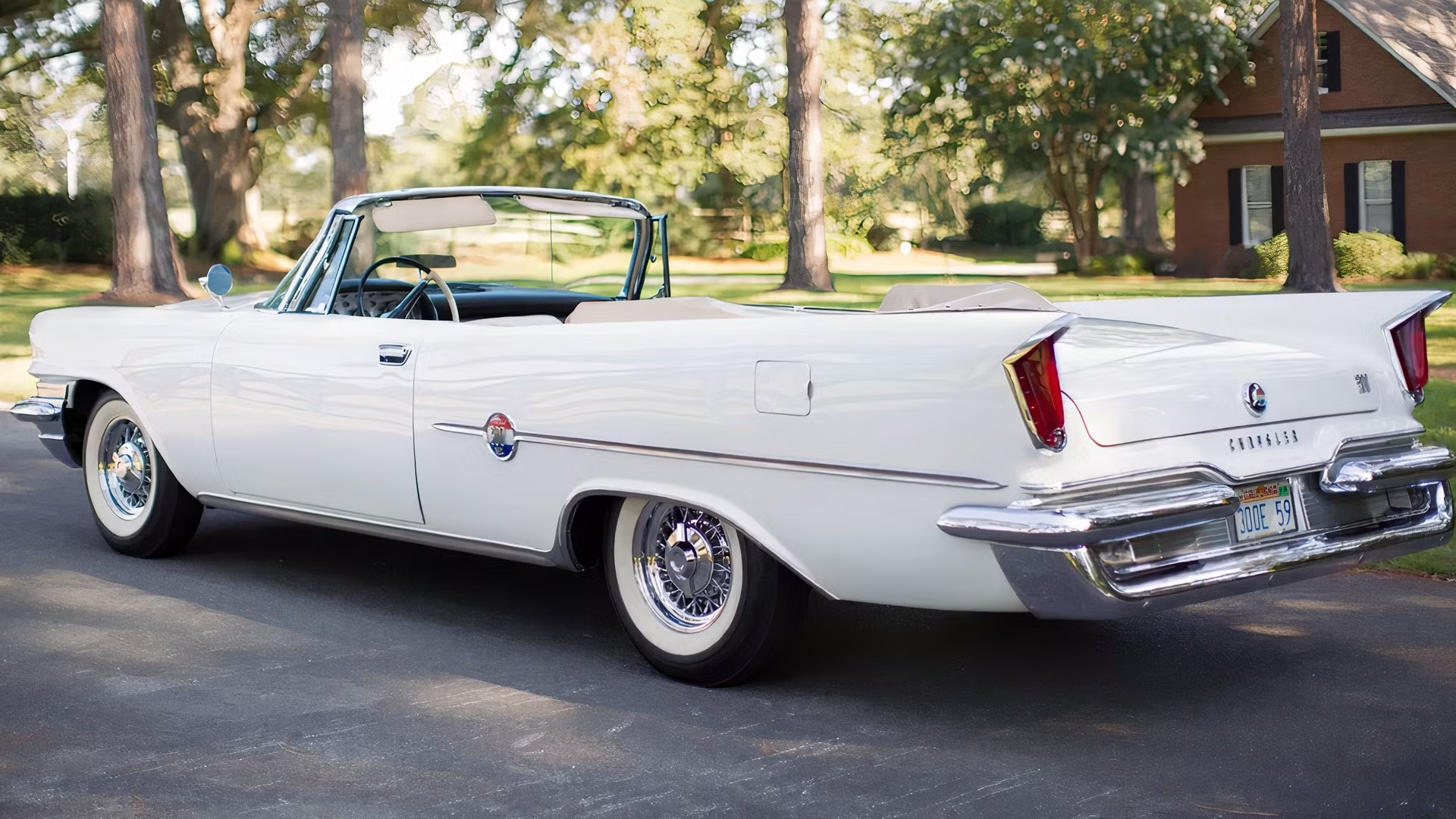
Before fuel economy stickers and crash test scores ruled the showroom, America built a car that treated subtlety like a design flaw. The Chrysler 300E arrived at the tail end of the 1950s, a Convertible bruiser that wore its power on its sleeve and in its tailfins, long before anyone in Detroit seriously talked about restraint. It was loud, lavish, and a little unhinged, and that is exactly why it still matters.
Seen from today’s world of downsized engines and driver-assist menus, the 300E feels like a postcard from a country that believed the road was endless and gasoline was practically a birthright. It was not just another big American coupe, it was the moment Chrysler decided to turn excess into a selling point and dared the rest of the industry to keep up.
The 300E and the moment Chrysler went all‑in on excess
By the late 1950s, Chrysler had already built a reputation for big power and big style, but the 1959 Chrysler 300E Convertible pushed that idea to its limit. Everything about the 300E reflected a kind of confident overkill, from its vast hood and sweeping rear quarters to the way its bodywork seemed designed to make parking lots feel too small. The car sat low and long, with sheet metal that looked stretched over something barely contained, a visual hint at what was hiding under the hood that contemporary coverage of the 300E has emphasized.
Chrysler did not shy away from calling the 300E a statement piece, and modern retrospectives describe the 1959 Chrysler 300E Convertible as representing the height of American automotive design and engineering from that decade. It blended a luxury interior, serious straight line performance, and a sense of occasion that started the moment the door swung open. That mix of comfort and brute force is exactly why the 300E still shows up when Chrysler celebrates its heritage, including events that spotlight the 1924 Chrysler Six, the 1934 Chrysler Airflow Sedan, the 1948 Chrysler Town & Country, the 1951 Chrysler New Yorker Convertible, the 1955 Chrysler 300, the 1958 Chrysler 300D, the 1963 Chrysler Turbine Car, and the 1959 Chrysler 300E Convertible as a centerpiece of the brand’s first hundred years of American performance.
Power, handling, and the unapologetic driving experience
On the road, the 300E was built for drama more than delicacy. Big American cars of that era were not known for nimble cornering, and modern lists of classic machines with “zero handling” still point to the way many full size coupes of the 1950s and 1960s floated through bends rather than carving them. The 300E lived in that world, prioritizing straight line thrust and highway comfort over tight, European style responses, a tradeoff that shows up whenever enthusiasts compare these giants to later American cars that finally learned to handle like a.
What the 300E delivered instead was a kind of effortless surge that matched its visual swagger. Contemporary retrospectives describe how everything about the car, from the seating position to the view over that long hood, reminded the driver that this was not a machine built to be modest. Later analysis of the model notes that the 300E’s design and engineering choices were all tilted toward making a bold impression, with its styling and powertrain working together to create a car that felt like the last word in 1950s bravado, a point underscored in detailed breakdowns of the American car that pushed past any sense of moderation.
Why the 300E still looms large in Chrysler’s story
Decades later, the 300E’s real legacy is how clearly it marks the end of an era. Within a few years, safety regulations, changing fuel prices, and shifting tastes would start to rein in the wildest ideas from Detroit’s design studios. Looking back, the 300E feels like the last big exhale before the industry had to learn words like “efficiency” and “restraint,” which is why modern writers keep circling back to it as the car that captured the final, unfiltered moment of 1950s American optimism. Detailed features on the model point out that everything about the 300E, from its proportions to its power, reflected a mindset that assumed more was always better, a theme that runs through close readings of the 300E’s design.
That is also why Chrysler keeps the 300 lineage close whenever it tells its own story. The company’s centennial celebrations do not just dust off the early sedans and engineering milestones, they put the 1959 Chrysler 300E Convertible right alongside icons like the 1955 Chrysler 300 and the 1963 Chrysler Turbine Car to show how the brand moved from raw power to experimental tech without losing its taste for spectacle. Modern coverage of the model treats it as the car America built before anyone believed in dialing things back, a role that has turned the 300E into a touchstone for enthusiasts who want to remember what it felt like when size, style, and speed were the only metrics that mattered, a perspective reinforced every time a new deep dive revisits the 300E’s place in Chrysler history.
More from Wilder Media Group: