

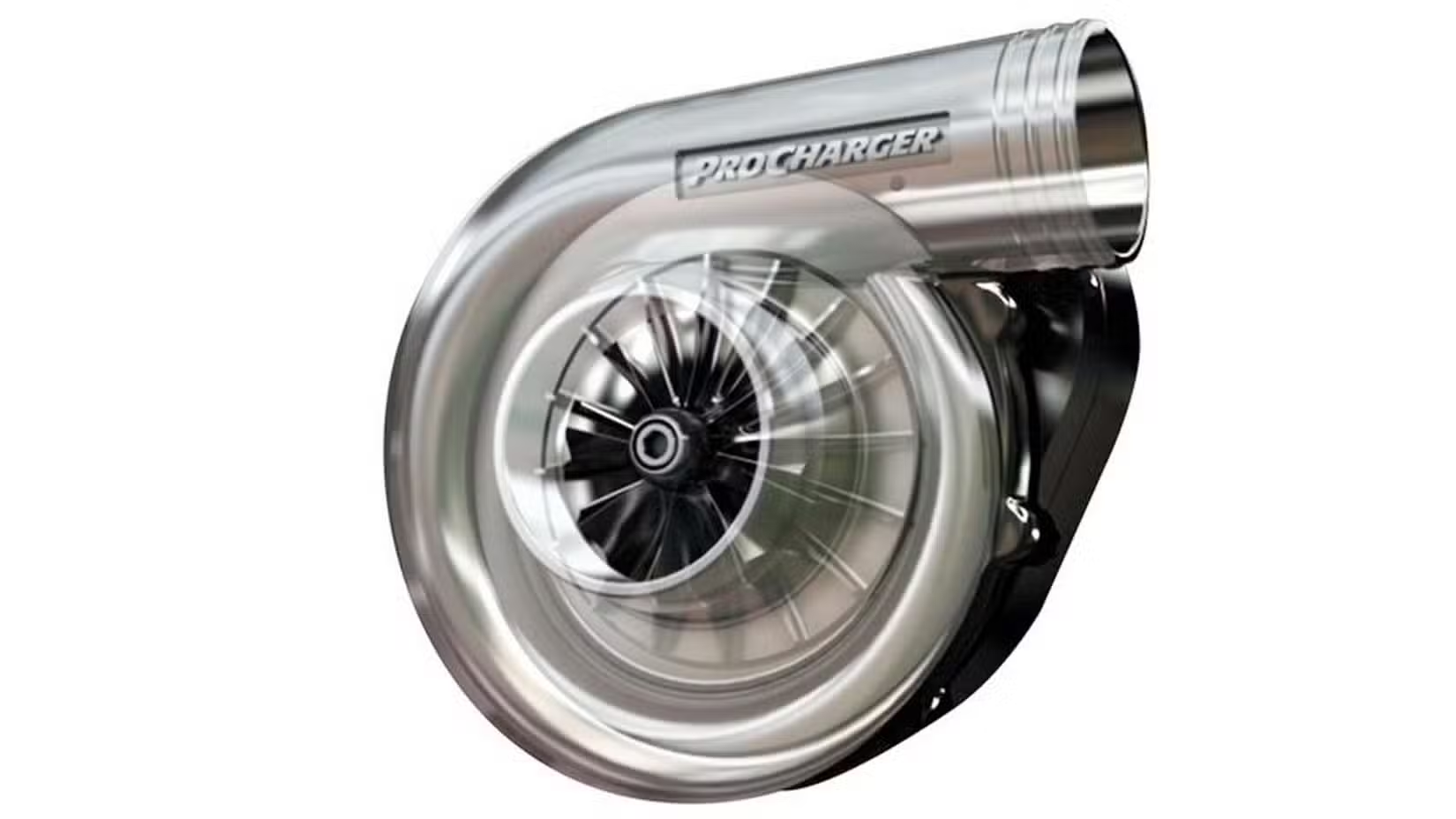
Forced induction is where street builds stop being polite and start getting serious, and the choice between a ProCharger and a traditional supercharger is usually what decides how that power feels. Both setups cram more air into the engine, but they deliver boost, heat, and drivability in very different ways that matter a lot once real money and real hardware are on the line. The real trick is matching the hardware to how the car will actually be driven, not just what sounds good in a parking lot debate.
On paper, ProCharger and supercharger kits can look similar, right down to the polished brackets and big intake pipes, yet the internal layouts and power curves are almost opposites. That is why builders who care about lap times, quarter-mile slips, or long-haul reliability obsess over the details before they pick a side. Get the fundamentals wrong and the car will still be fast, but it will not feel fast in the way the owner actually wants.
How ProCharger and supercharger hardware really differ
The first big split is mechanical. A ProCharger uses a centrifugal compressor that behaves a lot like a belt-driven turbo, building boost with rpm instead of all at once. That layout relies on an impeller and volute housing to compress air, which tends to keep intake temperatures lower than bulkier designs that introduce excessive heat quickly, a point that becomes obvious once the Procharger architecture is compared directly with older blower styles. In practice, that means a ProCharger kit often feels calmer at part throttle, then comes alive as the tach swings past the midrange.
Traditional superchargers, by contrast, are usually positive displacement units that move a fixed volume of air per revolution, which is why they are often described as Roots or twin-screw designs. These sit in the valley or on top of the engine and are driven straight off the crankshaft or an electric motor, so they deliver near instant low-end torque and throttle response, especially in setups like a Whipple Roots package. Whether roots, screw, or centrifugal, cooling the supercharger is critical, because the more the air is heated during compression, the more power, efficiency, and reliability suffer, a tradeoff that becomes obvious once builders compare Roots and screw-type units with cooler running centrifugal layouts.
Power delivery, packaging, and daily livability
Once the hardware is understood, the next real difference is how the car behaves on the road. Positive displacement superchargers hit hard right off idle, which is why big-displacement V8s with a blower on top feel like they are trying to twist the driveshaft out of the car the moment the driver breathes on the throttle. That instant shove is exactly what many muscle car owners want, and it is why Superchargers are often pitched as the choice for drivers who prioritize low-end grunt over a rising, turbo-like rush. Supercharger kits are typically divided into positive displacement and centrifugal families, and as one long-running Supercharger debate put it, spinning is not winning if the torque curve does not match the way the car is used.
A ProCharger, on the other hand, tends to build power progressively, which can make a high-revving engine feel smoother and more controllable on the street or track. A ProCharger is a unique centrifugal supercharger that uses an impeller spinning at very high speed to compress air, and that design usually generates less heat than other supercharger types, a detail that the manufacturer highlights in its own Centrifugal overview. That cooler charge air, combined with the rising boost curve, is why a ProCharger kit often feels friendlier on pump gas and more at home in builds that live at higher rpm, such as track-focused Chevrolet Camaro SS or Ford Mustang GT setups that spend their time above 4,000 rpm.
Packaging and installation also push some builders one way or the other. A ProCharger usually mounts off to the side of the engine with brackets and piping, which can mean less surgery under the hood and fewer changes to the intake manifold. One breakdown of the hardware notes that a procharger has lesser installation complexity and can be easier to package cleanly, especially for high-performance models that already have crowded engine bays. By contrast, a big positive displacement blower often replaces the entire intake, sits in the hottest part of the engine compartment, and can compromise airflow around other components, which is why some tuners warn that overall Performance and efficiency can be compromised if the rest of the cooling system is not upgraded to match.
Cost, goals, and the “real difference” for your build
Money always enters the chat, and here the story gets more nuanced than simple kit prices. Both superchargers and ProChargers help in boosting performance, but they come with their pluses and minuses, and the choice is rarely just about peak horsepower. One comparison points out that Both options have applause and flaws, and that the real value depends on how the owner weighs installation, supporting mods, and long-term reliability. First and foremost, value is an important factor to consider, and unfortunately it is a subjective one because ProChargers are often priced differently from traditional blower kits, a point that is spelled out in detail in one Value-focused breakdown that also notes many systems can run for well over 100,000 miles when installed and tuned correctly.
More from Wilder Media Group: