
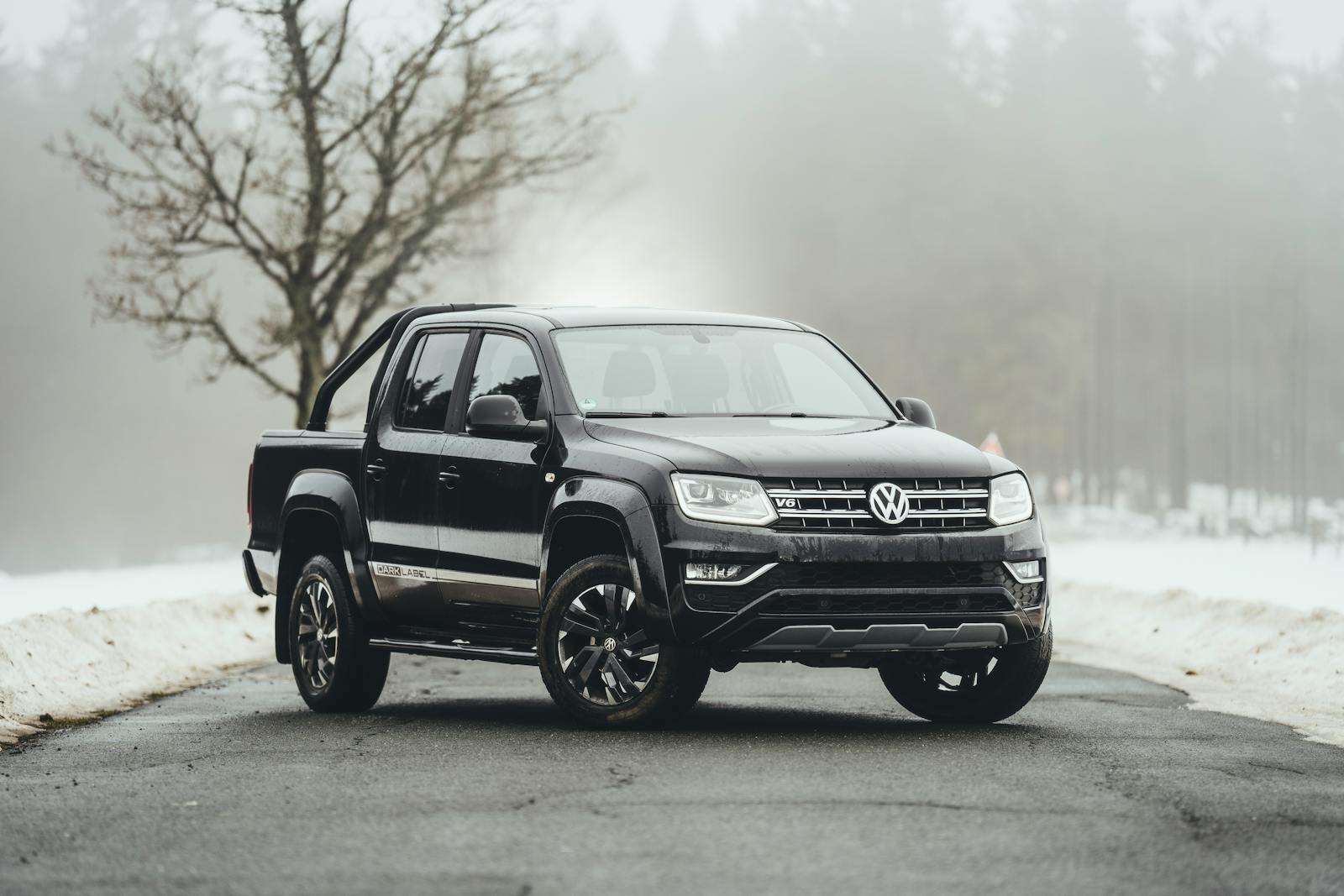

Volkswagen is quietly lining up a new compact pickup that will slot beneath the Amarok, and the move says a lot about where the brand thinks the truck market is heading. Instead of chasing full-size brawn, the company is leaning into smaller, more efficient workhorses that can double as daily drivers in crowded cities.
The project centers on a fresh model aimed first at South America, where lifestyle pickups are booming and the Amarok already has a loyal following. If the strategy pays off, this baby truck could become the template for how Volkswagen approaches affordable pickups in other regions too.

The Tukan: Volkswagen’s New Small-Truck Bet
Volkswagen is preparing a new pickup called Tukan that is designed to sit below the Amarok and effectively replace the long-running Saveiro in its home region. The company is positioning this truck as a modern answer to compact utility, with proportions and pricing that target buyers who need a bed but do not want the bulk or cost of a traditional midsize. In Brazil, the Tukan is planned to take over the role that the Saveiro has played for decades as a light commercial and family hauler, but with a more contemporary design and a cabin that can compete with crossovers.
Production of the Tukan is set to take place in Paran, a move that underlines how central Brazil is to Volkswagen’s small-truck ambitions. The new model is being developed to compete directly with regional favorites like the Fiat Toro and Chevrolet Montana, which blend SUV comfort with pickup practicality. By giving the Tukan a clear mission as the Saveiro’s successor in Brazil, Volkswagen is signaling that this is not a niche experiment but a core product for its South American lineup.
Backing that up, Volkswagen is committing serious money to get the Tukan off the ground. The company, listed as OTC VOW, has earmarked $570 m to build the new pickup in Brazil, a figure also described as $570 million in the same investment plan. That level of spending shows the brand expects compact pickups to keep gaining ground in South America, where buyers increasingly want vehicles that can handle both weekday work and weekend leisure. The Tukan is being framed as the right-sized answer to that demand, and its sub-Amarok positioning gives Volkswagen room to grow the truck family above and below.
How It Fits Under Amarok And Into VW’s Global Truck Puzzle
To understand why a smaller pickup matters, it helps to look at how the Amarok itself is evolving. The next Volkswagen Amarok for the South American market is set to be based on a Chinese pickup platform, a shift that reflects the brand’s push for a more cost-effective and flexible architecture. This change is described as a strategic reset for the Amarok, aimed at giving the truck a renewed identity with more robustness and updated technology that better suits South American buyers. With Amarok moving up in capability and sophistication, there is a natural opening for a more affordable, city-friendly truck to sit underneath it.
The Tukan is being tailored to fill exactly that gap, giving Volkswagen a two-tier pickup strategy in markets where trucks are as much about lifestyle as they are about payload. Amarok can chase higher-margin customers who want more power, tech, and off-road credibility, while the Tukan focuses on compact dimensions and lower running costs. In practice, that means a buyer in Brazil could graduate from a Tukan to a Volkswagen Amarok as their needs and budget grow, keeping them inside the brand’s ecosystem instead of losing them to rivals that already offer multiple truck sizes.
Globally, this layered approach also helps explain why Volkswagen has been cautious about bringing pickups to the United States. The company has pointed to the so-called chicken tax, a 25 percent tariff on imported light trucks that dates back to 1963, as a major obstacle to selling foreign-built pickups in America. That extra cost would make a compact truck like Tukan a tough sell for American buyers if it had to be imported, a point Volkswagen has acknowledged when discussing why it does not currently offer a pickup in the U.S. market, as noted in reporting that highlights how But VW sees the tariff as a structural barrier. Until that equation changes, South America is likely to remain the proving ground for Volkswagen’s sub-Amarok truck strategy.
More from Wilder Media Group: