
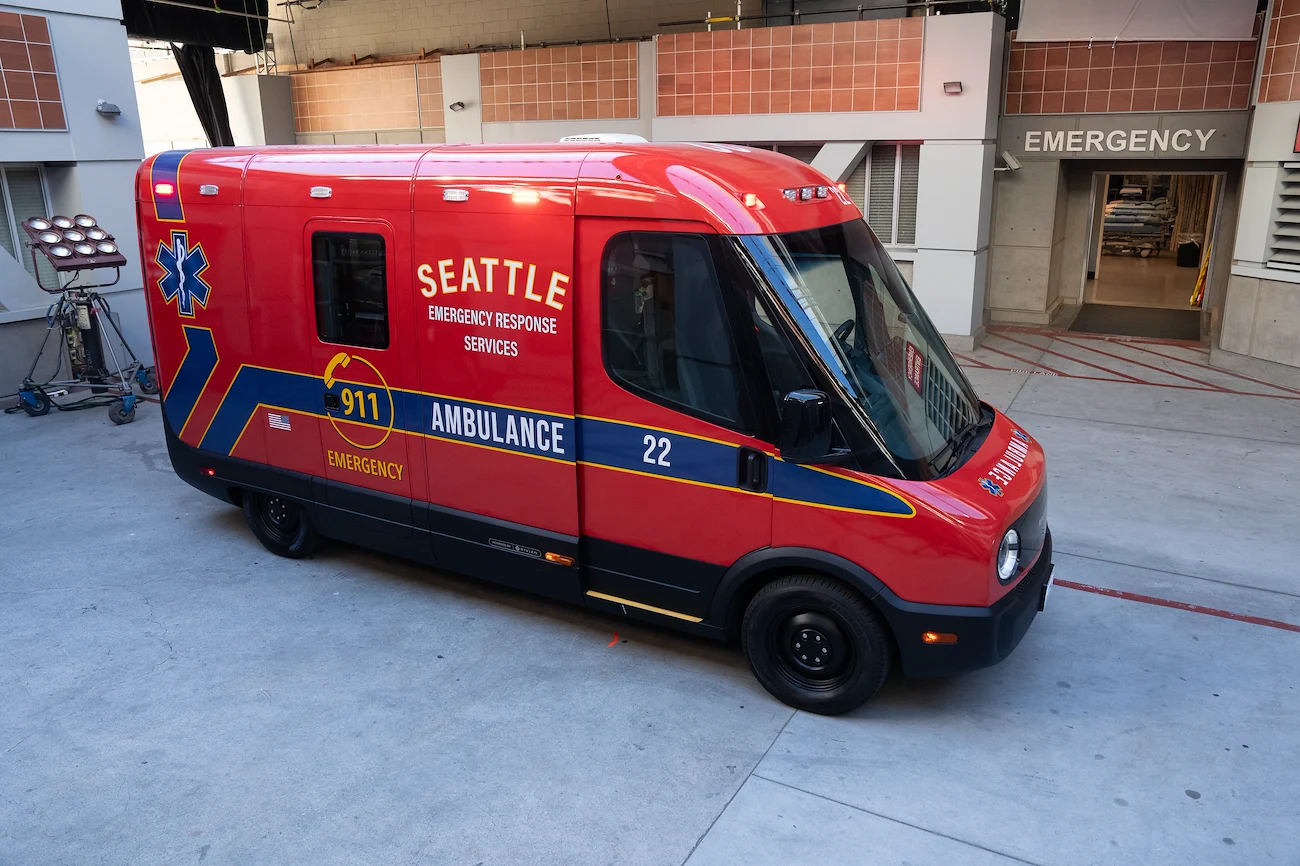

Rivian did not just park one of its electric vans on a Hollywood backlot and call it a day. For the new season of Grey’s Anatomy, the company turned its commercial platform into a purpose-built, fully electric ambulance that looks ready to roll up to Seattle’s fictional emergencies. It is a prop, but it is also a rolling argument for what cleaner, quieter emergency response could look like in real life.
The custom rig, nicknamed the “Vanbulance,” is designed to fit seamlessly into the show’s high-drama hospital universe while quietly showing off what an EV can do under pressure. By blending Rivian’s tech with the long-running medical series’ appetite for spectacle, the collaboration turns a background vehicle into a co-star and a test case for the future of first response.
The Vanbulance joins TV’s most famous hospital
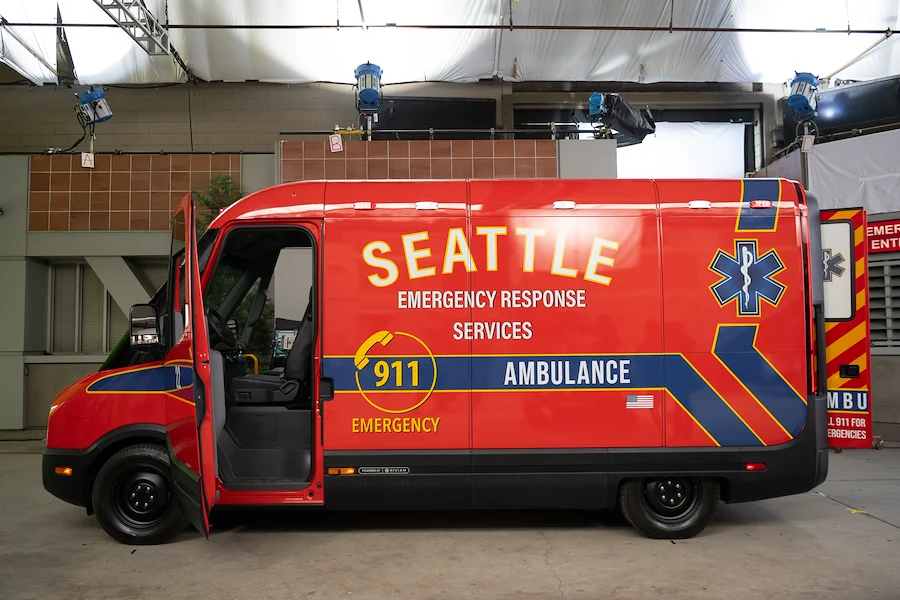
Grey’s Anatomy has spent years turning medical chaos into primetime comfort viewing, so it makes sense that the show would be the one to debut a futuristic ambulance. The production needed a vehicle that felt at home in the world of Seattle’s fictional doctors while still signaling that medicine, like everything else, is heading into an electric era. That is how the Vanbulance ended up on set for Season 22, sliding into the same universe that fans find when they search for the long running drama under Grey’s Anatomy.
Rivian’s role goes far beyond a logo cameo. The company partnered directly with the production team to turn its existing commercial van into a screen ready ambulance, a collaboration that is detailed in coverage of how Rivian turned its platform into an emergency vehicle. The result is a vehicle that looks like it belongs to “Seattle Emergency Response Services,” complete with the kind of lighting, badging, and interior layout viewers expect from a real ambulance, even though it lives firmly in the world of scripted drama.
How Rivian turned a delivery van into an ER on wheels
Underneath the dramatic paint and sirens, the Vanbulance starts life as a Rivian Commercial Van, the same basic platform the company uses for its delivery partners. That foundation gives the ambulance a flat, low floor and a big, boxy interior, which are exactly what paramedics want when they are working around a patient. Rivian’s own materials on the Rivian Commercial Van highlight how the platform is built for modular upfits, and the Grey’s Anatomy build leans hard into that flexibility.
To make the van camera ready, Rivian’s Special Projects and Design Studio teams reworked the body into a full medical module, adding cabinetry, equipment mounts, and lighting that would look convincing in close up shots. The company describes how, over the last year, it has built a roster of partnerships around the Rivian Commercial Van, and the Vanbulance is one of the most eye catching examples in that list of special projects. The build keeps the electric drivetrain intact, so the ambulance has instant torque and regenerative braking, even if it will mostly be sprinting between soundstages.
Quiet on set, quiet in the city
One of the most practical perks of an electric ambulance shows up not in a hospital bay, but behind the camera. Without a diesel engine rattling away, the Vanbulance can pull into a scene without drowning out dialogue, something Rivian itself has noted as an added benefit of the build. Coverage of the project points out that the company highlighted how the elimination of engine noise brought a welcome quiet while cameras were rolling, a detail repeated in reports on how Rivan wrote about the project.
That same silence would matter just as much off set. An electric ambulance can idle at a scene without pumping exhaust into the faces of patients, paramedics, or bystanders, and it can creep through dense neighborhoods with less noise pollution. Reports on how Rivian has added another standout use case for its commercial platform note that the Grey’s Anatomy build is meant to hint at the real world potential of electric ambulances, not just to solve soundstage problems but to make city streets a little less chaotic when sirens start wailing.
More from Wilder Media Group: