
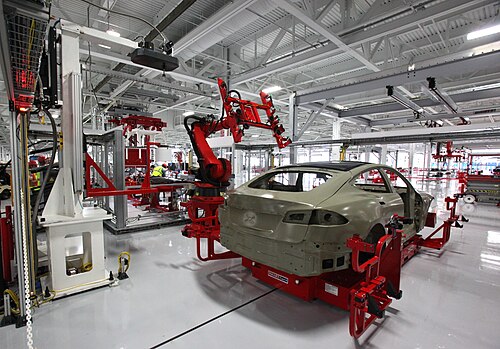

Ford and Honda are ripping up parts of their electric playbooks after racking up losses that would make even tech unicorns blush. The two brands poured billions into ambitious EVs and partnerships, only to discover that customers, charging networks, and costs were not lining up fast enough to justify the bets. Now they are scrapping halo models, shelving joint platforms, and trying to prove to investors that the next wave of EVs will be leaner and actually profitable.
This reset is not happening in a vacuum. Across the industry, carmakers are taking huge write-downs on electric programs that once looked untouchable, with total charges around $50 billion tied to EV development and manufacturing. Ford and Honda sit right in the middle of that storm, and their decisions to walk away from struggling projects offer a blunt reality check on how tough the transition from gasoline to batteries has become.
Ford’s costly EV reset and the end of the F-150 Lightning dream
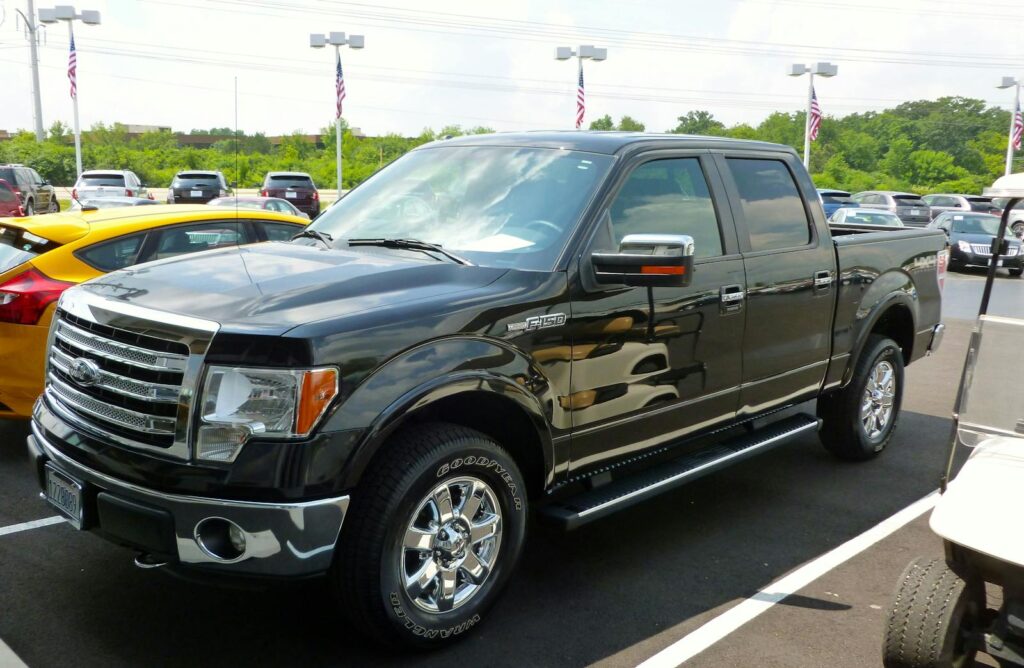
Ford went harder than most into electric pickups and big-ticket crossovers, and the bill has arrived. The company’s dedicated EV arm, often described as Ford Model e, has been a financial sinkhole, with reports that Ford Motor’s electric vehicle division lost $4.8 billion in fiscal year 2025 alone. That red ink helped drag the wider business into what has been described as Historic Losses that were Worse Than the Great Recession, with The Blue Oval absorbing a hit that dwarfed the pain of earlier downturns and highlighting how aggressively it had chased electric growth.
Those numbers forced a ruthless look at the product lineup. Ford has already warned that its EV division is expected to keep losing money, with internal guidance pointing to losses of up to $4.5 billion through 2026 even after an improvement of $1.6 billion in Gen 1 products. The company has also acknowledged a separate $8.2 billion overall loss, where the Ford Model E EV Unit Lost $4.8 Billion In 2025, underlining how much of the financial damage is tied directly to the electric push rather than the traditional truck and SUV franchises that still generate cash.
Faced with that backdrop, Ford has started killing off some of its most high-profile EV projects. The company decided to stop making the electric F-150 pickup, a move that came with a warning of a $19.5 billion writedown tied to the 150 program and related investments. Earlier, Ford Motor had already canceled a large electric SUV and flagged about $1.9 billion in special charges and write-downs linked to that decision, signaling that big, expensive EVs are no longer the centerpiece of its near-term strategy. The company has also warned investors that it faces nearly 20 billion in after pulling the plug on an iconic electric vehicle, with executives conceding that The American consumer is speaking clearly about price, range, and charging expectations.
Rather than doubling down on those halo projects, Ford is trying to reinvent how it builds electric cars. After a $19.5 Billion Reset, the company is pivoting to a Universal EV program that promises affordable, long-range models built with far lower complexity and cost. Internal Key Points on that strategy highlight a push for Innovation in battery packaging, software, and manufacturing, all aimed at making the next generation of EVs cheaper to build and easier to scale. The company has also been blunt that it misjudged how quickly mainstream buyers would embrace high-priced electric trucks, and that lesson now shapes every new product decision.
Honda’s write-offs, scrapped partnerships, and a painful rethink
Honda has been hit just as hard, even if its EV story looks slightly different. The company’s car business has now logged four straight quarters of operating losses, and executives in TOKYO have ordered what they call a fundamental review of the auto strategy after tallying Honda’s EV Woes, including 267.1 Billion in Write Offs and Losses tied to electric programs. Those charges reflect not just weak sales, but also the cost of unwinding projects that were supposed to anchor Honda’s North American EV future, including work with General Motors on shared platforms.
One of the biggest reversals came when Honda and General Motors Co decided to scrap a plan to co-develop smaller EVs on a joint platform. The two companies had once touted a JOINT PLATFORM that would deliver cheaper compact models, but rising costs and shifting demand killed the project. Around the same time, GM and Honda agreed to cancel plans for subcompact electric cars priced below $30,000, ending an affordable EV push that had been marketed as a way to bring mass-market buyers into the fold. A separate explainer from Oct captured how much had changed in just a year and a half since the spring of 2022, with a lot has changed narrative that pointed to higher costs across the board, not just in cars.
More from Wilder Media Group: