
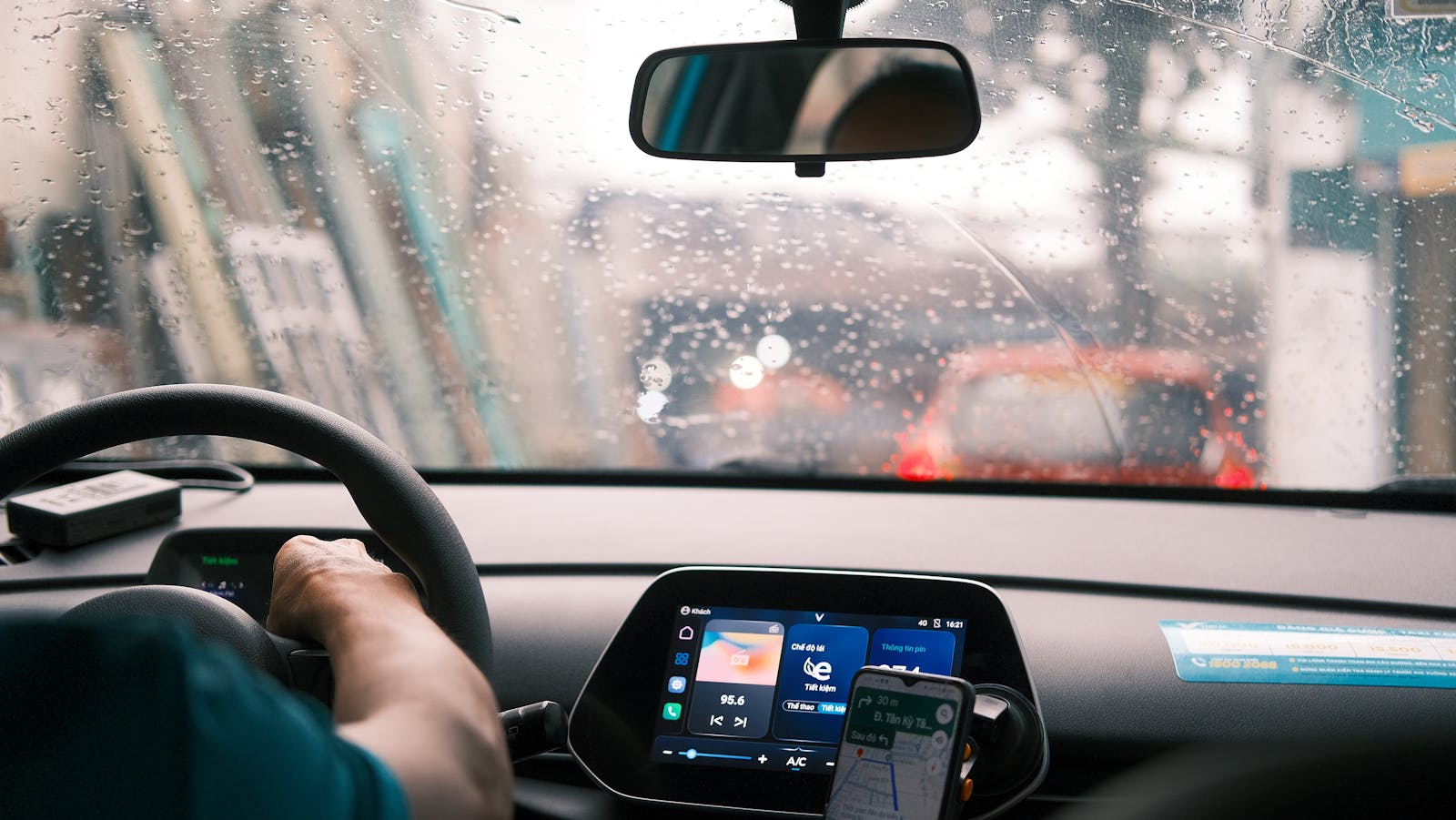

They may not realize their car already knows when rain starts and can wipe the windshield for them. If the vehicle has a rain-sensing system, it can automatically adjust wiper speed using a light-reflective sensor and the car’s control module, so you often don’t need to flip the wiper switch at all.
This piece explains why many people miss that feature, how the sensors detect raindrops, and what benefits automatic wipers bring for everyday driving. It will also point to practical checks so anyone can find out whether their own car quietly offers this convenience.
Why Many Car Owners Overlook Built-In Automatic Rain-Sensing Wipers

Many drivers don’t realize their cars already include rain-sensing wipers because the controls and indicators are subtle, manufacturers bundle the feature with other packages, and documentation hides the detail in long option lists.
Hidden and Unmarked Controls
Rain sensors often sit behind the rearview mirror as a small module on the windshield; it uses infrared light to detect drops and adjust wipe speed. The control for automatic wipers can be a single unlabeled position on the stalk, a tiny icon, or a setting buried in the infotainment system menus, so drivers assume their vehicle only has manual intermittent settings.
Manufacturers sometimes omit a dedicated dashboard light for the rain-sensing mode. That leaves owners relying on the owner’s manual, which many never read. A quick visual cue is a small camera-like housing at the top-center of the windshield — if present, it often indicates rain sensor technology is installed.
Common Vehicle Brands and Models with Rain Sensors
Mid- to high-trim models from Toyota, Honda, Ford, BMW, Mercedes-Benz, and many Hyundai/Kia cars frequently include rain-sensing wipers as standard or part of a convenience package. Luxury brands put rain sensors on base trims more often, while mainstream brands add them to higher trims or safety bundles.
Examples include Toyota Camry and RAV4 higher trims, Honda Accord EX and above, Ford Escape with tech packages, and compact luxury models like BMW 3 Series. Older cars from the 2000s onward may also have factory-installed sensors, especially if they came with automatic headlights or advanced driver assist packages.
How to Check if Your Car Has Rain-Sensing Wipers
Look for the sensor module on the windshield behind the rearview mirror and inspect the wiper stalk for an “AUTO” or raindrop icon. If the stalk lacks a clear label, check the infotainment system under vehicle settings for “wiper,” “rain sensor,” or “automatic wipers.”
If those visual checks are unclear, read the quick-start section of the owner’s manual for equipment lists or search the VIN on the manufacturer’s website or a dealer portal to view original build options. A dealer service department can also confirm presence and show how the system behaves during a brief test with a spray bottle.
Understanding How Rain-Sensing Technology Works and Its Everyday Benefits
Rain-sensing systems detect moisture, decide how often wipers should sweep, and can share that data with other vehicle systems to improve visibility and safety. Drivers get automatic wiper activation, adjustable sensitivity, and fewer distractions while driving in changing weather.
How Rain Sensors Detect Rain Automatically
Most cars use an optical rain sensor mounted behind the rearview mirror that projects infrared light onto the windshield. When raindrops hit the glass the light scatters; photodiodes measure that scattering and the sensor’s electronics convert it into a wipe-rate command.
Systems often include a sensitivity setting the driver can tweak, so light mist won’t trigger frequent wipes. Some models use capacitive or multi-sensor designs that factor in temperature or vehicle speed to avoid false triggers from road spray. Regular cleaning of the sensor area and proper windshield replacement alignment preserve accuracy.
Interaction with Advanced Driver Assistance Systems
Rain-sensing data can feed into ADAS features like automatic headlights, lane-keeping, and forward collision warnings. If the rain sensor reports heavy precipitation, the car may increase headlight intensity or adjust camera-based system thresholds to reduce false alerts.
Automakers sometimes integrate the rain sensor with the central vehicle network, so wiper commands coordinate with windshield de-icer, camera washers, or adaptive cruise control. After a windshield replacement, calibration ensures ADAS cameras and the rain sensor share the same reference point; without calibration, camera-based features may underperform.
Benefits of Automatic Wipers for Safety and Comfort
Automatic wipers reduce driver workload by engaging immediately and setting an appropriate wipe frequency, which helps maintain clear sightlines during sudden showers. That lets drivers keep both hands on the wheel and eyes on the road more consistently.
Comfort gains include hands-free operation and fewer manual adjustments when weather fluctuates. Combined with ADAS, automatic wipers contribute to more reliable sensor performance in wet conditions, lowering the chance of missed warnings or unnecessary alerts during rain. For many owners, the feature feels like a small convenience that meaningfully improves everyday driving.
More from Steel Horse Rides: