

Drivers are used to stressing over speeding tickets, not six-figure penalties for pulling over to let someone out of the car. Yet a strict new rule tied to how and where people can be dropped off has raised the specter of fines as high as $100,000, turning an everyday maneuver into a potential financial disaster. The debate around that figure is colliding with wider fights over homelessness policy, airport traffic, and even who gets blamed when a robotaxi breaks the law.
At the center of the controversy is Jackson, Mississippi, where city leaders have moved to criminalize unauthorized drop-offs of unhoused people, with a maximum penalty that can reach $100,000 and a year behind bars. That headline number has become a lightning rod, especially as other cities and states quietly tighten their own rules on where drivers can stop, park, or hand off a passenger.
How a homeless-drop-off rule turned into a $100,000 warning shot
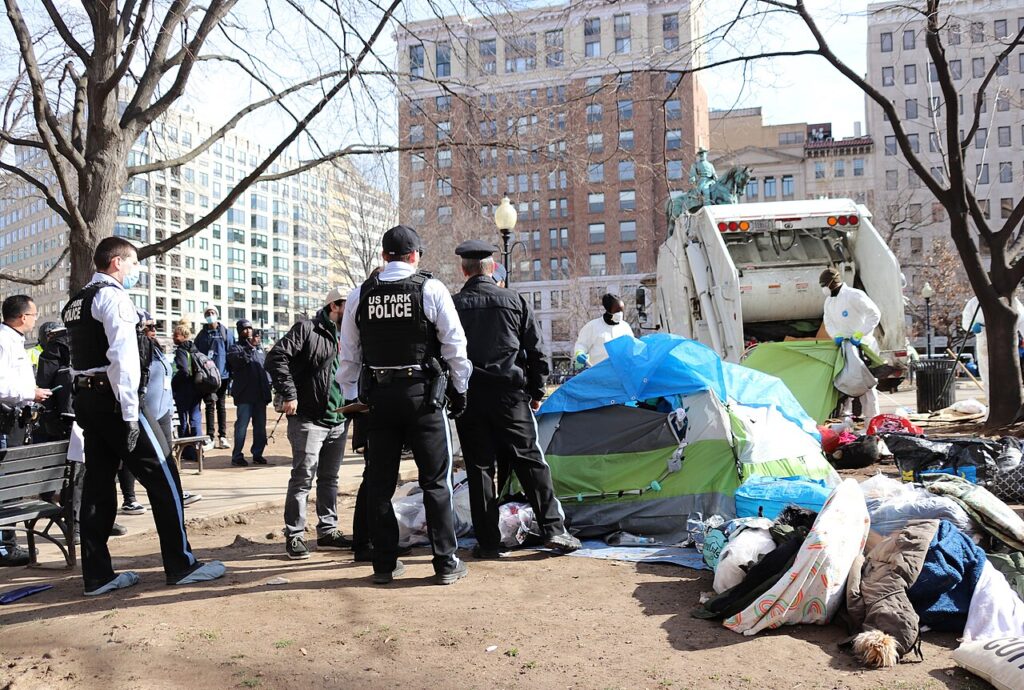
The spark for the six-figure panic comes from Jackson, where new reporting shows that city officials are trying to clamp down on what they describe as outside agencies transporting unhoused people into the city without any coordination. According to coverage of the measure, Jackson leaders framed the ordinance as a way to stop what they see as unregulated “dumping” of vulnerable people at hospitals, shelters, or sidewalks, often with no plan for services or follow-up. A local post noted that Jackson City Council approved criminal penalties for unauthorized drop-offs, signaling that they want real teeth behind the policy rather than a symbolic slap on the wrist.
The details matter, because the viral framing of a $100,000 hit for simply dropping off a friend is not how the ordinance is written. Reporting on the measure explains that Jackson officials are targeting people who intentionally transport unhoused individuals into the city without permission, not everyday carpoolers or Uber drivers picking up a fare across town. Under that account, the ordinance allows for fines up to $100,000 and as much as a year in jail for the individual responsible for the unauthorized drop-off, a penalty that has been widely repeated in coverage that describes a New homelessness division tightens enforcement. Even so, the sheer size of the possible fine has made it easy for the story to morph online into a broader warning that any “improper” drop-off could bankrupt a driver.
From airports to front lawns, cities are rewriting the rules on stopping
Jackson is not the only place where a seemingly simple stop at the curb has become a legal minefield. Around Chicago, for example, state lawmakers have responded to chronic backups near O’Hare International Airport by cracking down on drivers who pull onto highway shoulders to wait for arriving passengers. A recent law that takes effect on Jan. 1 aims squarely at drivers who were using the shoulder as a makeshift cellphone lot, and it specifically targets those picking up or dropping off passengers at Chicago’s O’Hare International Airport rather than people dealing with an emergency. The new statute, described in coverage of the New Illinois law, is pitched as a safety measure, but it also shows how quickly a casual airport pickup can slide into ticket territory.
Elsewhere, fights over local code enforcement have produced eye-popping totals that mirror the $100,000 figure now attached to Jackson. In Florida, a long-running dispute over a woman parking with two tires on her own grass resulted in fines piling up to over $100,000, as described in a segment that highlighted just how fast daily penalties can snowball. In that report, a clip titled Florida Supreme Court walks through how a code violation that might sound minor, such as parking slightly off the driveway, can morph into a six-figure bill when it is enforced aggressively over time. That case was not about dropping off passengers, but it shows that the $100,000 number is not theoretical in municipal enforcement, and it helps explain why drivers are taking Jackson’s maximum penalty seriously.
Robotaxis, viral outrage, and the next wave of traffic enforcement
While human drivers absorb the shock of potential $100,000 fines, a parallel debate is brewing over what happens when the driver is a piece of software. In California, coverage of autonomous vehicles has pointed out that current law leaves a strange gap: when a driverless car breaks traffic rules, there is no human behind the wheel to ticket. One report on whether driverless cars can describes how companies like Cruise have been able to operate even after high profile incidents, in part because traditional enforcement tools are built around a flesh-and-blood driver. In one case, regulators scrutinized Cruise footage after a crash, and the company publicly pushed back on claims that it had ever withheld the full video from the DMV, insisting that the entire clip of the accident was shared.
More from Wilder Media Group: