

You spot Air Force One’s new colors from a mile away: red, white, dark blue and gold replace the pale blue that’s flown on presidential jets since the Kennedy years. This redesign swaps the iconic Kennedy-era palette for a bolder, Trump-approved livery across the presidential and executive airlift fleet, including the next-generation VC-25B and other VIP transports.
They’ll explain which aircraft get repainted, why the change happened, and which officials and contractors shaped the decision and rollout. Expect details about the new scheme’s rollout timeline and the role of the Air Force and industry partners in transforming the fleet’s look.
The New Paint Scheme for Air Force One and the Executive Fleet
The Air Force replaced the long-standing robin’s-egg blue and white exterior with a bolder palette that emphasizes gold, red, white, and dark blue. The redesign affects both the next-generation presidential jets and multiple VIP aircraft used by senior officials.
How the New Colors Depart From the Kennedy Era Design
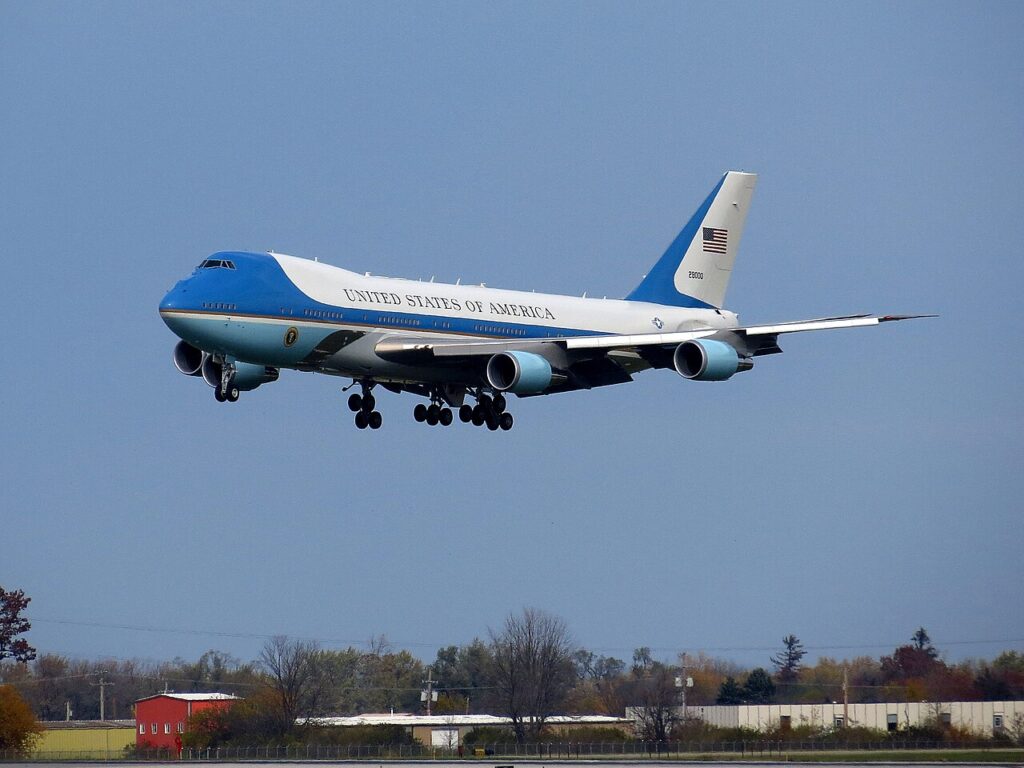
The Kennedy-era look featured a pale robin’s-egg blue cheatline along the fuselage and a mostly white upper fuselage. That scheme traced to the early 1960s and became a visual shorthand for the presidential jet and its call sign, Air Force One.
The new livery drops the light blue cheatline for a darker, two-tone approach and adds prominent red accents. It shifts visual weight from subtle pastels to stronger primary colors, changing how the presidential aircraft presents itself in photos and at airfields.
Changes also extend to trim and lettering. The presidential seal, tail markings and “United States of America” lettering receive color and contrast adjustments to match the deeper blues and added gold highlights. Those details alter visibility and brand consistency for the Air Force One fleet.
Trump’s Influence on Presidential Jet Aesthetics
Donald Trump publicly favored a red, white and blue motif and pressed for that look while in office. Elements of that preference informed the current palette, though engineers previously rejected an all-dark treatment over thermal and engineering concerns.
The Air Force integrated parts of Trump’s suggested palette—notably red accents and bolder blue—while adding gold to soften contrast and signal executive status. Officials describe the result as a compromise between presidential preference and operational constraints.
This update also revives debate about aesthetics versus engineering. The Air Force acknowledged earlier thermal issues when darker paints increased heat loads; the new scheme reportedly considers those lessons while reflecting former presidential preferences.
Gold, Red, White, and Blue: Details of the Updated Livery
The updated livery uses four principal colors: a deep navy for the lower fuselage, bright white for the upper fuselage, vivid red for accent stripes, and metallic gold for select insignia. Designers placed gold on the presidential seal and select trim to give a higher-contrast, ceremonial feel.
Red appears as a forward fuselage stripe and on tail accents to echo the flag motif. The dark blue anchors the visual weight along the belly and tail, improving ground visibility. White remains dominant on the upper surfaces to help limit solar heating compared with an all-dark wrap.
Aircraft signage—”United States of America” and registration details—switches to high-contrast treatments to remain legible from varied angles. Those choices balance photography, recognition, and operational requirements for the presidential jet and related VIP transports.
Application of the New Look Across the Executive Fleet
The Air Force is rolling the scheme out across the VC-25B presidential platforms, interim 747s received for near-term use, and several VIP transports including modified 757-200s used for vice-presidential and Cabinet travel. Repainting aligns with scheduled maintenance windows to avoid extra downtime.
One 757 has already received the new livery and returned to service. The program covers both Air Force One (when the president is aboard) and other call signs such as Air Force Two and VIP fleet aircraft, ensuring visual consistency for executive airlift.
Logistics teams coordinate paint work to preserve avionics access panels and thermal coatings. They also confirm that new pigments and metallic finishes meet weight and corrosion standards before final application.
Aircraft and Leadership Behind the Transformation
The repainting affects both the long‑serving VIP fleet and the next‑generation presidential transports, and senior officials directed the rollout and communications around the change.
Boeing 747, VC-25B, and 747-8i: Jets at the Center of the Redesign
The Air Force is applying the new red, white, dark blue and gold livery to its executive airlift fleet, including the VC-25B configuration that designates the modified Boeing 747‑8i jets intended to serve as the next Air Force One. The VC-25B program converts two 747‑8i airframes with advanced communications, defensive systems, and specialized interiors to meet presidential requirements.
These conversions replace the aging Boeing 747‑200s that have served since 1990. The 747‑8i airframes were purchased and adapted to provide more range and updated systems, though the program has experienced schedule slips and cost increases. The repaint follows engineering and thermal considerations first raised when a previous Trump-era paint proposal was shelved due to potential overheating concerns.
VIP Fleet Expansion: Refurbishing the Qatari 747-8i
As an interim measure and to support training and continuity, the Air Force accepted a used Boeing 747‑8i jet from Qatar and has tasked contractors to overhaul it for executive use. That refurbishment covers avionics integration, defensive modifications, and interior reconfiguration to meet presidential and VIP transport standards.
The refurbished 747‑8i joins a broader set of aircraft receiving the new livery, including smaller C‑32 variants used for vice presidential and cabinet travel. Repainting and upgrades are being scheduled during normal maintenance windows to limit operational disruption. One 757/ C‑32 repaint has already surfaced publicly, indicating a phased rollout across the fleet.
Official Roles: Air Force Secretary Troy Meink and Defense Secretary Pete Hegseth
Air Force Secretary Troy Meink publicly confirmed the new paint scheme and framed it as a service-level decision applying across executive airlift platforms. He has overseen communications about which airframes—VC‑25B 747‑8is and select C‑32/757 aircraft—will receive the update and when repainting will occur during maintenance cycles.
Defense Secretary Pete Hegseth’s role centers on broader Pentagon oversight and approvals tied to cost, schedule, and operational readiness. Hegseth and Meink coordinate on program timelines, interim solutions such as the Qatar‑donated 747‑8i conversion, and on addressing technical questions like thermal impacts that affected earlier color proposals. Reporting on these leadership roles appeared in major outlets such as CBS News during the announcement period.
More from Steel Horse Rides: