

You’re in for a routine oil change. You’ve got errands to run, maybe a coffee waiting in the cupholder, and you’re feeling pretty good about keeping up with maintenance. Then the service advisor comes back with a suggestion: a fuel system cleaning. Your car has 8,000 miles on it. Oh, and “today’s the last day the discount applies.”
If that scene sounds familiar, it’s because it happens every day in dealership service lanes and quick-lube shops across the country. The pitch is often friendly, sometimes urgent, and usually sprinkled with just enough technical language to make you wonder if you’re about to ruin your engine by saying no. So what’s actually going on here?
A common upsell… with a very specific sense of urgency
The “last day” line is the part that tends to set off people’s internal alarm bells. Not because discounts never end—of course they do—but because it’s often presented like a cliffhanger: act now or suffer later. Most consumers don’t have the time (or desire) to research fuel injectors while sitting in a waiting room with daytime TV humming in the background.
Shops know that. Urgency is a classic sales tool, and in automotive service it can feel extra intense because the stakes are framed as safety and reliability. Nobody wants to be the person who ignored “recommended service” and then got stuck on the highway three weeks later.
What a “fuel system cleaning” usually means
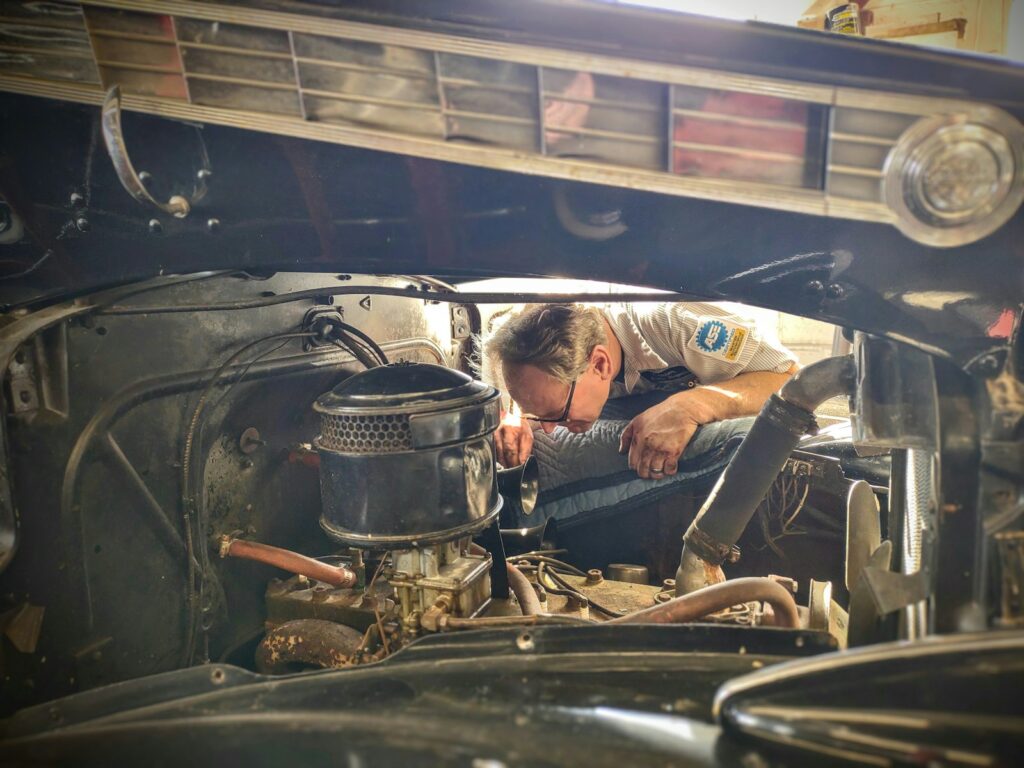
Fuel system cleaning can mean a couple of different things, and that’s where confusion starts. Sometimes it’s as simple as pouring a detergent additive into the fuel tank—something you could buy yourself for a fraction of the price. Other times it’s a more involved service where a technician runs a concentrated cleaner through the fuel rail or intake system using special equipment.
The problem isn’t that fuel systems never get dirty. They do. The question is whether your specific car, at 8,000 miles, is likely to benefit in a measurable way from a paid cleaning service right now.
At 8,000 miles, most cars are still basically in their “new car” era
For many modern vehicles, especially those running on Top Tier gasoline (a common detergent standard in the U.S.), fuel injectors and intake components are usually doing fine at 8,000 miles. In fact, a lot of owners won’t see meaningful fuel-related issues until much later—if at all—assuming the engine is running smoothly and the car isn’t throwing any codes.
That doesn’t mean every engine is identical. Direct-injection engines, for example, can have different deposit patterns than older port-injection designs. But even then, “you need this immediately at 8,000 miles” is a strong claim—and it deserves a strong explanation.
What your owner’s manual says matters more than the menu board
Here’s the simple rule that saves people a lot of money: the maintenance schedule in your owner’s manual is the baseline, not the dealership’s promotional flyer. If the manual doesn’t call for a fuel system cleaning at 8,000 miles, it’s almost certainly not required for warranty or basic maintenance.
That said, dealerships do sometimes recommend services earlier than the manual for “severe driving conditions,” which can be legitimate. Lots of short trips, heavy idling, towing, dusty environments, extreme heat or cold—those can all be considered severe. The catch is that the advisor should be able to connect the dots between your driving habits and the recommendation, not just point at a generic interval on a screen.
The discount pressure: why it works (and why you can push back)
“Today’s the last day” works because it creates a tiny panic. You’re already there, the car’s already checked in, and the difference between “maybe later” and “fine, do it” is often just the fear of missing out on $30–$60 off. It’s a very human response, and service departments are staffed by people who are trained to keep work flowing.
You’re allowed to slow the moment down. A helpful response is: “Can you show me where this is recommended in the manufacturer schedule, or what issue you’re seeing that suggests I need it now?” If the answer is vague—“it’s just good preventative maintenance”—you’ve learned something important.
When a fuel system cleaning might actually be worth considering
There are cases where cleaning services can help, even on relatively newer cars. If you’re noticing rough idle, hesitation, decreased fuel economy that isn’t explained by weather or tire pressure, or a check engine light pointing to misfires or fuel trim issues, then a diagnostic path that includes cleaning may make sense. The key difference is that it’s tied to symptoms or data, not an arbitrary mileage number.
It can also make sense if you’ve consistently used low-detergent fuel, the car sat for a long time, or you’ve had known contamination issues. But in those cases, a reputable shop usually explains the “why” clearly and may recommend additional steps—like checking filters, testing fuel pressure, or reading live data—rather than jumping straight to a one-size-fits-all service.
Questions to ask before you say yes
If you’re put on the spot, a few quick questions can cut through the fog. Ask what exact procedure they’re selling: tank additive, pressurized injector cleaning, throttle body service, intake cleaning, or some bundle of all of the above. Then ask for the price, the discounted price, and what the service is expected to improve.
Also ask whether it’s required to maintain warranty coverage. In most situations, the honest answer is no—unless it’s explicitly in the manufacturer’s required maintenance, which is rare at such low mileage. If you hear anything that sounds like “you have to do this or you’ll void your warranty,” it’s reasonable to request that statement in writing.
If you want a low-drama middle ground, there is one
If the whole conversation leaves you feeling uneasy, you don’t have to choose between “do the upsell” and “do nothing forever.” A practical middle ground is to keep using quality fuel (Top Tier if available), follow the manual, and revisit the idea later if you develop symptoms. You can also ask your mechanic at your next visit—ideally someone who isn’t paid on service sales—to weigh in.
And if you really want to scratch the “preventative maintenance” itch, an occasional bottle of a reputable fuel system detergent added to the tank—used according to directions—can be a reasonable, low-cost option for some drivers. It’s not magic, but it’s also not a $200 impulse buy in a waiting room.
The bigger takeaway: you’re not “difficult” for asking for clarity
Car care shouldn’t feel like a pop quiz. If a vehicle with 8,000 miles truly needs extra fuel system service, the advisor should be able to explain the reasoning in plain language and point to a schedule, a bulletin, or a symptom-based diagnosis. If instead you get urgency, a discount countdown, and a shrug, it’s okay to politely decline.
And honestly? The best service advisors don’t mind those questions at all. They’ll treat you like a partner, not a target, and they’ll be just as comfortable saying “not necessary right now” as they are selling you something. That’s the vibe to look for—because your car deserves good care, and you deserve a recommendation that’s based on need, not a ticking clock.
More from Steel Horse Rides: