

It was one of those perfectly ordinary drives where nothing interesting is supposed to happen. I was headed home, coffee still doing its job, radio low, brain in “autopilot but polite” mode. Then I ended up at a red light, in the right-turn lane, with a big “Right Turn Permitted on Red After Stop” sign—classic.
I stopped completely, like you’re supposed to. I looked left, then left again, then right (because pedestrians have a talent for appearing out of nowhere), and decided to wait. Partly because traffic was heavy, partly because the intersection felt a little awkward, and partly because I wasn’t in a hurry and didn’t want to be That Person who shoots the gap and spikes everyone’s blood pressure.
The red light that turned into a long personal saga
One cycle passed. Still red, still steady traffic coming from the left, still not a clean opening that didn’t feel like a gamble. I stayed put, feeling mildly virtuous and mildly annoyed, which is a very common emotional cocktail behind the wheel.
Second cycle passed. At this point I started doing the mental math: “Is it safer to wait, or am I creating a weird situation by not going?” I wasn’t blocking anyone—there wasn’t a line behind me yet—so I figured waiting was fine.
Then a car pulled up behind me. And not just any car: a police cruiser. No siren, no urgency, just… there. You know how your posture changes instantly when you notice that in the mirror, like your spine becomes a little more law-abiding?
The moment I finally go… and the lights come on
Eventually, I got what looked like a genuinely safe opening. I stopped again (because I’d already stopped, but by then I was double-checking everything like I was about to take a driving test), then eased into the turn. And right as I merged, the cruiser’s lights lit up behind me.
My first thought wasn’t even fear—it was confusion. I hadn’t rolled through the red. I hadn’t cut anyone off. I hadn’t done the “California stop” thing where your wheels barely slow down and you call it good.
I pulled over as soon as it was safe, heart doing that annoying little drum solo it always does in these moments. The officer approached, and I did the usual routine: hands visible, window down, “Hello, officer,” voice slightly higher than normal because apparently my body thinks I’m a cartoon character when I’m nervous.
So… can you actually wait through multiple cycles?
Here’s the thing most people don’t talk about: in many places, a right turn on red is permitted, not required. That “permitted” part matters. You’re allowed to go after a complete stop if it’s safe and there’s no sign prohibiting it—but you’re generally not obligated to take the turn the second it becomes possible.
That said, traffic laws can be weirdly local. Some states and cities have specific rules about impeding traffic or “unreasonable delay,” and while they’re usually aimed at people going 20 in a 45, an officer could interpret “waiting forever” as creating a problem. The big question is whether your waiting is actually creating a hazard or blocking normal flow.
And in the real world, it’s not just the letter of the law—it’s what the officer thinks happened, what they can articulate, and what you can calmly explain. Which is why these moments can feel so surreal: you’re trying to do the safest thing, and suddenly you’re being treated like you did the sketchiest thing.
What the officer might be thinking (even if you did nothing wrong)
From the officer’s perspective, a driver who sits through multiple cycles at a right-on-red might look distracted. Maybe you’re texting. Maybe you’re impaired. Maybe you’re lost. Police are trained to notice unusual behavior, and “not turning when you can” can register as unusual, especially late at night or in low-traffic situations.
Another possibility: your stop didn’t look like a stop from behind. Sometimes you stop, creep, stop again, and in your own mind it’s careful. From the angle behind you, it can look like you rolled past the limit line without fully stopping, especially if the intersection markings are worn or if you inched forward while searching for a gap.
And yes, there’s also the human element. If the cruiser was behind you and wanted to turn too, your extended wait might have read as either indecision or obstruction. Most officers won’t stop someone just for being cautious, but if they’re already watching because something seems “off,” the lights can come on quickly.
What to do if you get stopped after a right on red
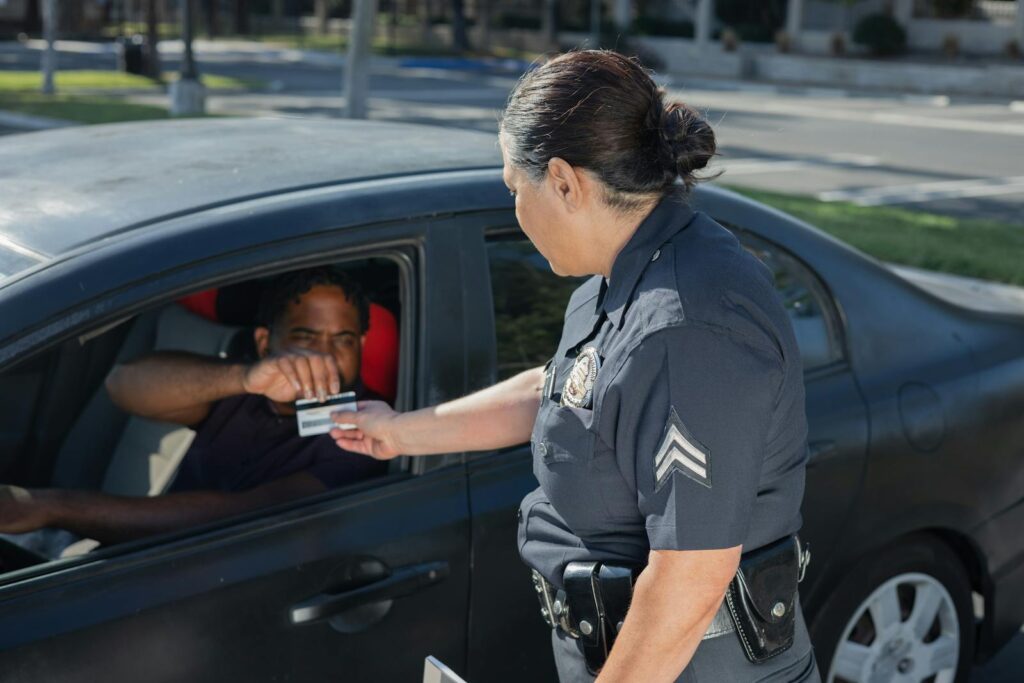
The best move is boring but effective: stay calm, be polite, and keep your explanation simple. “I stopped completely and didn’t see a safe gap, so I waited until it was clear” is a very normal sentence that doesn’t accuse the officer of anything. It also aligns with the core rule of right-on-red: only go when it’s safe.
If the officer says you didn’t stop, don’t argue like it’s a courtroom drama. You can say, “I believe I did stop fully at the line,” and leave it there. The side of the road is not the place to litigate physics and memory.
If you’re worried about this happening again, consider adjusting your approach: stop fully at the line, pause for a clear beat, then creep forward only if you need a better view, and stop again. That two-step pattern is often recommended because it makes the “complete stop” obvious and still lets you see past poles, bushes, or parked cars.
The bigger takeaway: cautious isn’t illegal, but clarity matters
Waiting through two cycles felt overly cautious, sure, but it also felt safe in the moment. And unless you’re truly impeding traffic or ignoring a lawful signal, you’re generally allowed to prioritize safety over speed. Still, driving is a weird social contract, and anything outside the usual rhythm can draw attention—especially from a trained observer.
What surprised me most wasn’t the stop itself, but how quickly a normal decision turned into a high-stakes interaction. One minute you’re thinking about traffic gaps, and the next you’re mentally reviewing your entire driving history like you’re applying for moral clearance. It’s a good reminder that “doing the right thing” and “looking like you’re doing the right thing” aren’t always the same.
In the end, the whole experience made me a little more intentional at right-on-red intersections. I still won’t force a turn that doesn’t feel safe, but I’m more mindful about making my stop unmistakable and my movements predictable. Because apparently the only thing more stressful than turning right on red is turning right on red with a police cruiser behind you—right up until the moment the lights come on and you realize, nope, there is something more stressful.
More from Steel Horse Rides: