
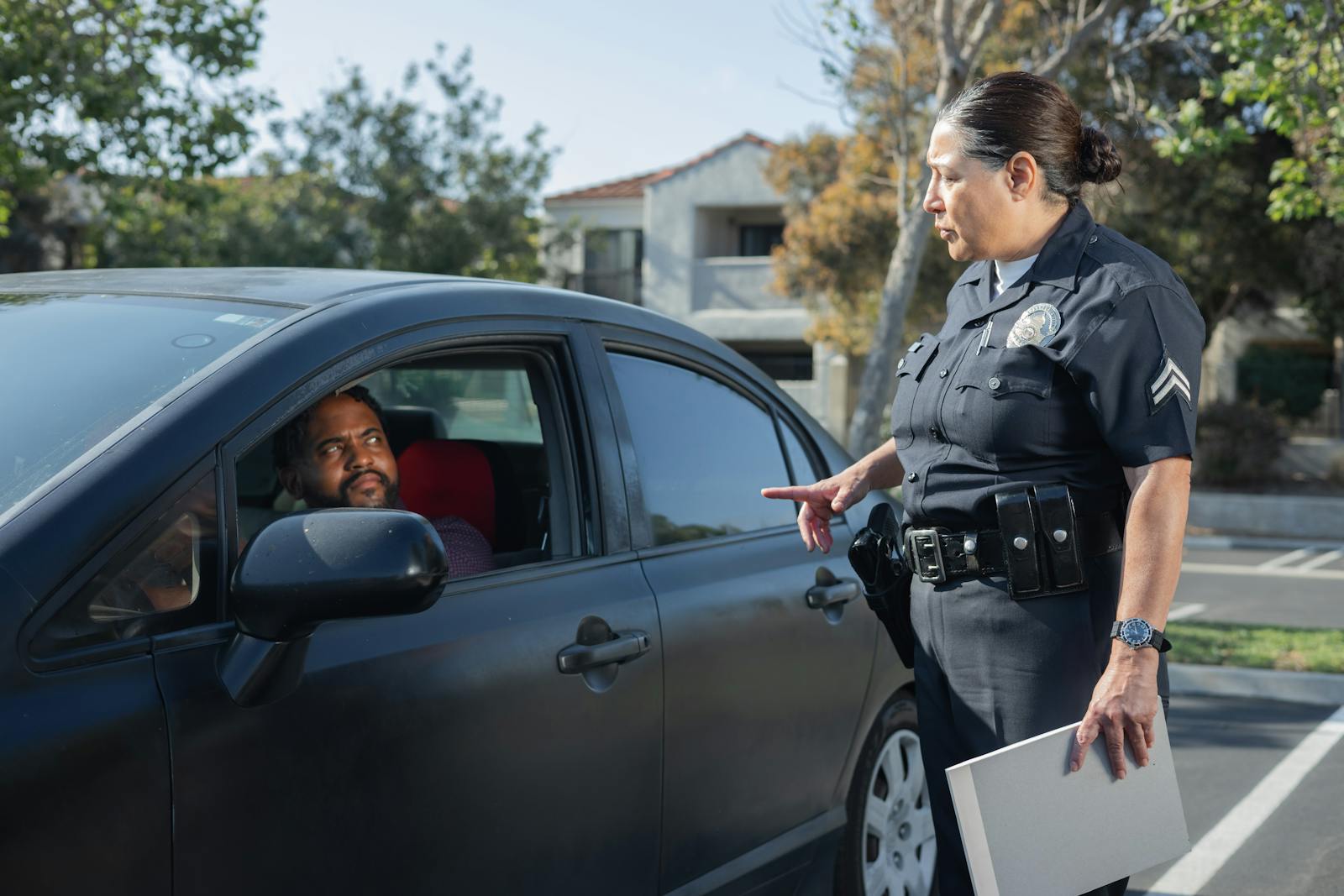

It started the way a lot of traffic stops do: flashing lights in the rearview mirror, that little stomach drop, and the quick mental replay of everything you did in the last five minutes. I pulled over, turned down the radio, and put both hands on the wheel like every driver’s-ed video ever has taught us. The officer walked up and opened with a calm line about “safety” and “just making sure everything’s okay.”
So far, so normal. But then the conversation took a turn that felt… less normal. Instead of “license and registration,” he asked where I worked, how long I’d lived in the neighborhood, and whether I was “from around here.”
A Stop That Felt Like Small Talk—Except It Wasn’t
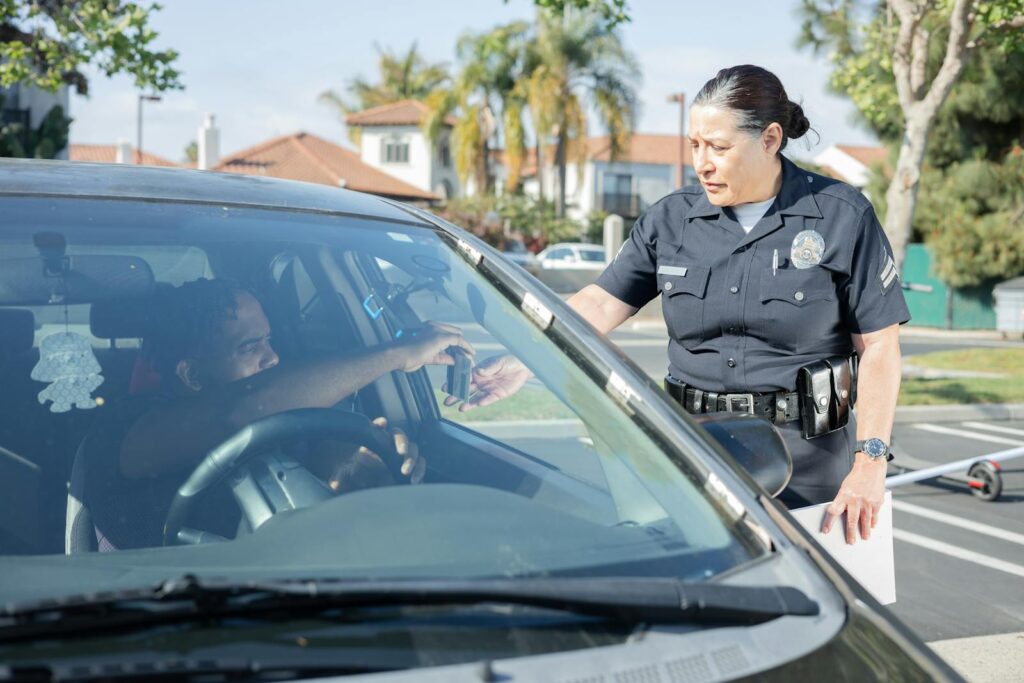
The stated reason for the stop was vague: something about my brake light and “making sure I wasn’t having trouble with the car.” I waited for the practical part—checking the light, telling me to fix it, maybe handing me a warning. Instead, he lingered on questions that sounded like networking at a backyard barbecue, except the setting was the shoulder of a road with a uniform and a sidearm.
“So where do you work?” he asked, friendly enough. Then: “How long have you lived nearby?” Then: “Do you rent or own?” The tone wasn’t aggressive, but the vibe was unmistakable: this wasn’t about my brake light anymore.
Why Drivers Say These Questions Raise Red Flags
Legal experts and civil rights advocates have long pointed out that traffic stops can expand quickly—sometimes in ways that feel more like fishing expeditions than road safety. In many places, officers can ask a wide range of questions, even if they’re unrelated to the reason you were pulled over. But there’s a difference between “allowed” and “appropriate,” and that difference is exactly what makes these encounters so unsettling.
When questions focus on where you live, where you work, or whether you “belong” in a neighborhood, people tend to hear an unspoken subtext. Are you being sized up as suspicious because of your car? Your age? Your race? The time of night? It’s the kind of interaction that leaves you wondering if you did something wrong—or if you simply exist in a category someone decided to scrutinize.
“Safety” Can Mean a Lot of Things—And That’s Part of the Problem
Police departments often frame traffic enforcement as a public safety mission, and sometimes it truly is. If someone’s swerving, speeding through a school zone, or driving with no headlights, most of us want an officer to intervene. But “safety” can also be a catch-all explanation that’s hard to challenge in the moment, because who wants to argue against safety?
That flexibility can blur lines. A stop that begins as a quick check can morph into something more personal, with the driver feeling pressure to answer questions simply because an officer is asking them. You’re sitting there thinking, “If I’m polite, this ends faster,” even when the questions don’t seem to have anything to do with your tail light, your speed, or your lane position.
What You’re Required to Answer (and What You’re Not)
Rules vary by state and country, but in much of the U.S., you’re generally required to provide identifying information—like your driver’s license, registration, and proof of insurance—when you’re stopped while driving. Beyond that, casual questions like “Where are you headed?” or “Where do you work?” are often optional, even if they’re asked in a friendly tone. Optional can feel theoretical when someone with authority is standing at your window, though.
Attorneys often recommend a calm, neutral approach: answer what you must, and politely decline what you don’t. A simple, steady line like, “I’d prefer not to answer any questions,” or “Am I free to go?” can keep things from spiraling. It’s not about being combative—it’s about setting a boundary without turning the stop into a debate club.
How to Keep the Moment From Escalating
People who’ve been through uncomfortable stops often say the hardest part is managing your own adrenaline while also trying to sound “normal.” You don’t want to seem nervous, but you are nervous. You don’t want to seem annoyed, but you are annoyed. And somehow you’re expected to be a perfect actor in a scene you didn’t audition for.
Practical advice tends to look boring, but boring is good here: keep your hands visible, speak clearly, and don’t make sudden movements. If you’re going to reach for your wallet or glovebox, say so first. If you want to record, check your local laws, but in many places you can record police interactions as long as you don’t interfere—and a phone on the dashboard is less provocative than waving it around mid-conversation.
What Community Advocates Say This Reveals
Community groups argue that the bigger issue isn’t just one awkward conversation—it’s the pattern these conversations can represent. When drivers repeatedly report being asked where they live, what they do, and whether they “belong,” it feeds a sense that some neighborhoods are informally policed like gated communities. The gate just happens to be a traffic stop.
These concerns have fueled calls for clearer departmental policies on what questions officers should ask during routine stops, along with better documentation for why stops occur and how they unfold. Some jurisdictions have experimented with limiting pretextual stops or requiring more detailed reporting, aiming to reduce the “because I felt like it” gray area. Whether those reforms stick often depends on politics, leadership, and public pressure—none of which move quickly.
What Happened Next—and Why It Still Matters
In the end, the officer didn’t issue a ticket. He didn’t inspect the brake light for more than a glance. He wrapped up with a reminder to “drive safe,” as if we’d spent the last five minutes discussing seatbelts instead of my residential history.
I drove away with that specific kind of irritation that sticks around longer than it should. Not rage, exactly—more like a nagging sense that the rules of the interaction were never clear, and that clarity was never the point. It’s hard to shake the feeling that the “safety” line was just the polite wrapper on a different kind of inquiry: Who are you, and do you fit here?
If This Happens to You, Here’s What People Suggest Doing Afterward
Once you’re home and your pulse is back to normal, it can help to write down what you remember while it’s fresh: time, location, badge number if you saw it, what was said, and whether you were given a reason for the stop. If there was a ticket or warning, keep it. If you recorded, back up the file.
If you feel the stop crossed a line, you can contact the department’s internal affairs or civilian oversight office (if your city has one), or speak with a local civil rights organization about what happened. Even if you don’t file a formal complaint, documenting these experiences is one way communities spot patterns—because a single odd stop is easy to dismiss, but a hundred similar stories is harder to wave away.
Traffic stops will probably always be a little tense—it’s an inherently unequal interaction. But they don’t have to feel like an impromptu background check disguised as friendly conversation. And if an officer says it’s about safety, it’s reasonable to expect the conversation to actually stay there.
More from Steel Horse Rides: