
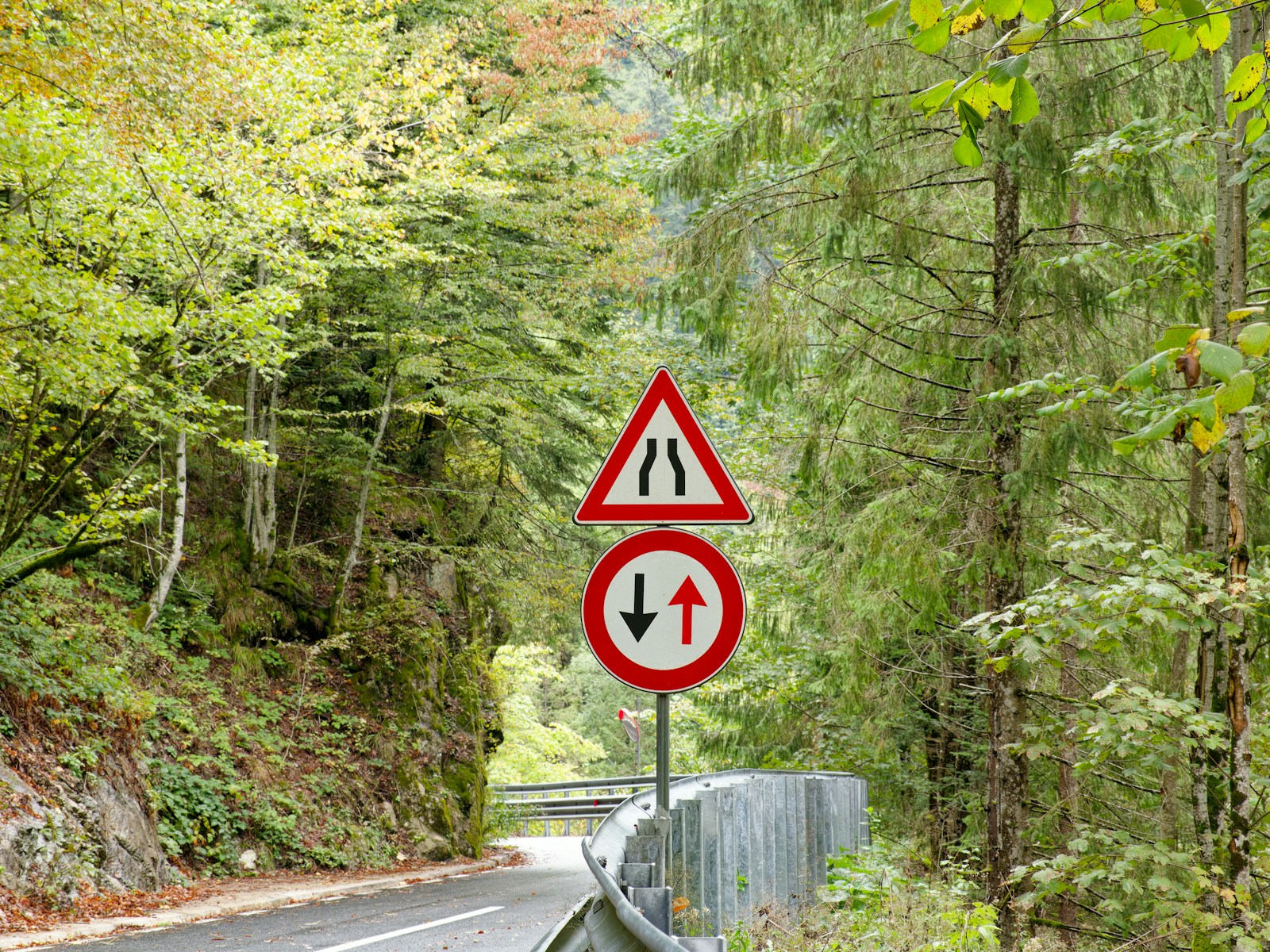

Every spring, thousands of drivers head down single-track lanes toward holiday cottages, scenic overlooks and rural shortcuts, only to find themselves nose-to-nose with a road sign they barely remember from their theory test. The narrow-road warning, a triangle showing two lines pinching together, is one of the most misunderstood symbols on British roads. With vehicles getting wider year after year and many rural routes unchanged since the 1800s, that gap between what drivers think the sign means and what it actually demands is causing real damage: clipped mirrors, scraped bodywork and, in the worst cases, head-on collisions on bridges with zero room to swerve.
According to the RAC and motoring safety advocates, confusion over this sign has become a recurring problem as of early 2026, particularly on roads in Wales, the Lake District and the Scottish Highlands where narrow bridges and single-track passes are part of daily life.
What the narrow-road warning actually means
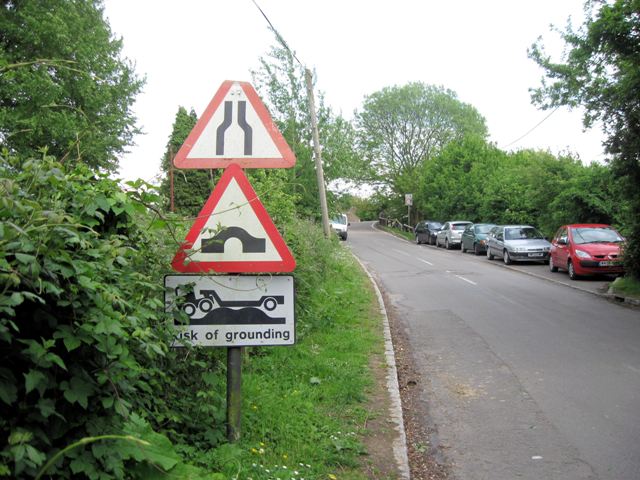
The sign is a red-bordered triangle containing two thick black lines that start wide at the base and taper toward each other near the top. In the Highway Code’s official sign catalogue, it signals that the carriageway ahead is about to get significantly narrower. A related variant warns specifically about narrow bridges, where hard walls or parapets replace soft verges and the usable width can drop to barely two metres.
There are actually two versions of the narrowing warning that drivers routinely confuse. One shows both edges tapering equally, meaning the road tightens from both sides. The other shows only one edge angling inward, indicating the pinch comes from a single side, often a stone wall, hedge or parked vehicles. That distinction matters: a driver hugging the left kerb in a wide van needs to know whether the squeeze is coming from the right, the left or both.
The dangerous mix-up with width restrictions
The narrowing triangle is a warning. It tells drivers to slow down, prepare to give way and check whether their vehicle can fit. But a separate sign, a red circle containing a measurement in metres (for example, “2.0m”), is a legal prohibition. Vehicles wider than that figure are not allowed through, full stop.
Reporting by Yahoo News UK highlights that drivers are routinely mixing up these two signs, a mistake safety experts call “dangerous” because one requires caution while the other requires a U-turn. The problem is compounded by how quickly theory-test knowledge fades. Research from the RAC and the AA has repeatedly shown that drivers struggle to identify warning signs just months after passing their test, let alone years later.
One viral Instagram reel titled “Mind the Width” has tried to fill that gap, walking viewers through how a red-circled 2.0m restriction works in practice. The clip shows how a casual guess about clearance can end with a wing mirror sheared off or a vehicle wedged between concrete bollards.
Modern vehicles on roads that haven’t changed
Part of the problem is sheer size. The average new car sold in the UK is substantially wider than models from 20 or 30 years ago. A current-generation Range Rover measures 2,209 mm across its body (closer to 2,400 mm with mirrors folded out), according to Land Rover’s own specifications. Even a Volkswagen Transporter van, a common sight on rural roads, spans roughly 1,904 mm before mirrors.
Now consider that some local authorities set minimum road widths as low as 2.0 metres (about 6 feet 6 inches) at traffic-calming chicanes and bridge approaches. In parts of London, Hackney Council’s traffic management guidance notes a preferred minimum of 2.13 metres (7 feet) for restricted residential streets. On an unimproved country bridge, the gap may be even tighter, and there is no chicane to slow you down, just stone parapets on either side and, potentially, a tractor coming the other way.
What drivers should actually do
When you see the narrowing warning triangle, the Highway Code’s guidance is straightforward:
- Slow down early. Reduce speed well before the narrow section, not at the last moment.
- Check for oncoming traffic. On single-track roads and narrow bridges, only one vehicle may be able to pass at a time. Look for passing places and be prepared to reverse to one.
- Know your vehicle’s width. Check your owner’s manual or the manufacturer’s website. Include mirrors in your calculation, since they are usually the widest point.
- Give way if in doubt. If you are unsure whether two vehicles can pass, stop and let the other driver through first.
If you encounter a circular width-restriction sign, the rule is absolute: if your vehicle exceeds the posted width, you must find another route. Ignoring it can result in a fine, points on your licence and liability for any damage to the road infrastructure or other vehicles.
A small sign with growing stakes
As vehicles continue to widen and rural tourism pushes more traffic onto roads designed for horse carts, the narrow-road warning is no longer a niche curiosity. It is a practical safety instruction that a growing number of drivers will encounter, particularly during the spring and summer travel season. The fix is not complicated: learn what the sign looks like, know how wide your vehicle is and, when the road tightens, slow down before the gap makes the decision for you.
More from Wilder Media Group: