
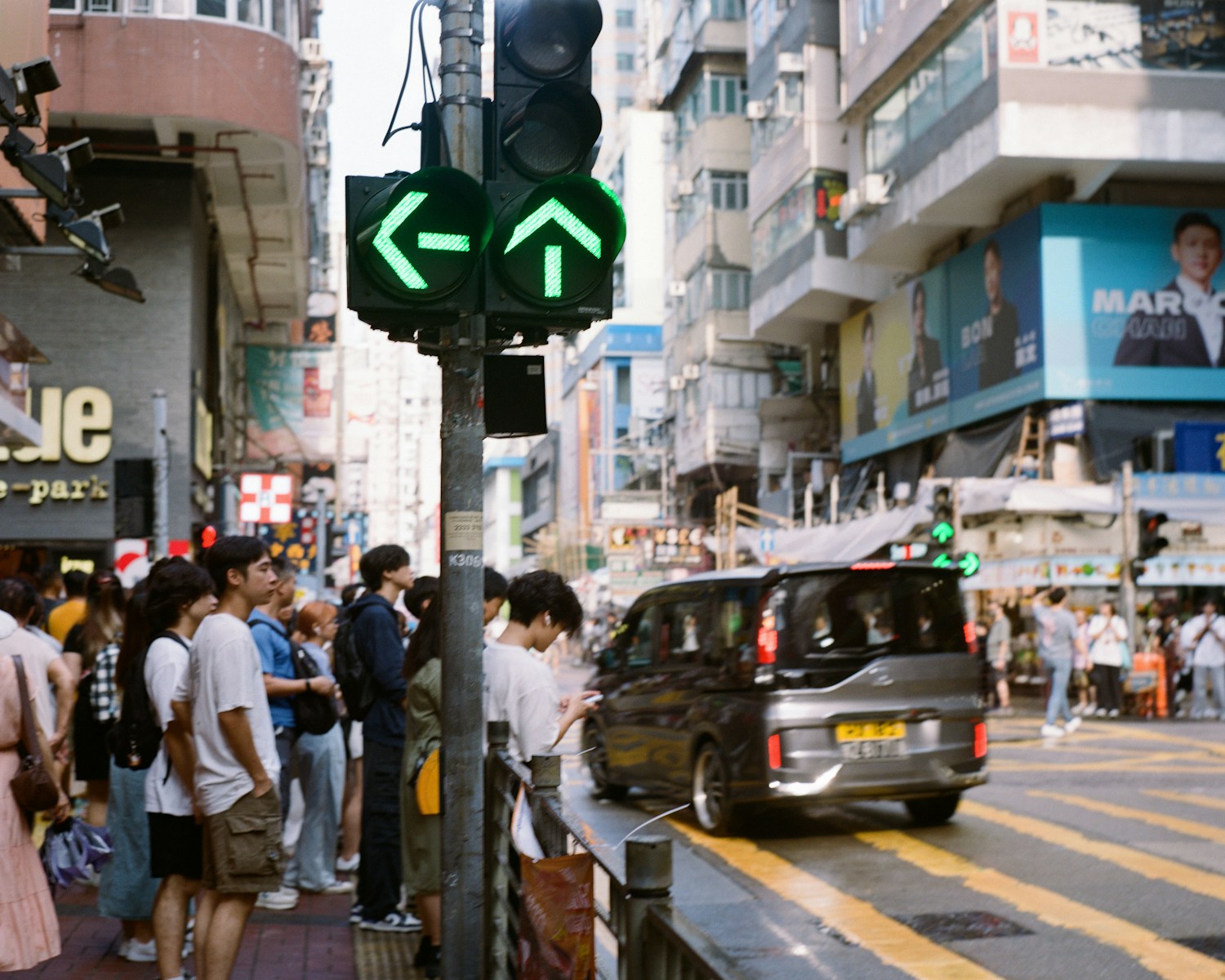

A solid green light has meant “go” to American drivers for nearly a century. But at a growing number of intersections across the country, green now comes with conditions: small signs requiring left-turners to yield, flashing hybrid beacons that go dark between cycles, and adaptive signals that shift timing on the fly. The result, according to traffic researchers and safety officials, is a gap between what drivers expect green to mean and what it actually permits, and that gap is showing up in crash data.
According to the National Highway Traffic Safety Administration, roughly 40 percent of all police-reported crashes in the United States occur at or near intersections. While no single signal type accounts for that figure, transportation engineers say the proliferation of unfamiliar traffic-control devices is compounding a problem that was already serious.
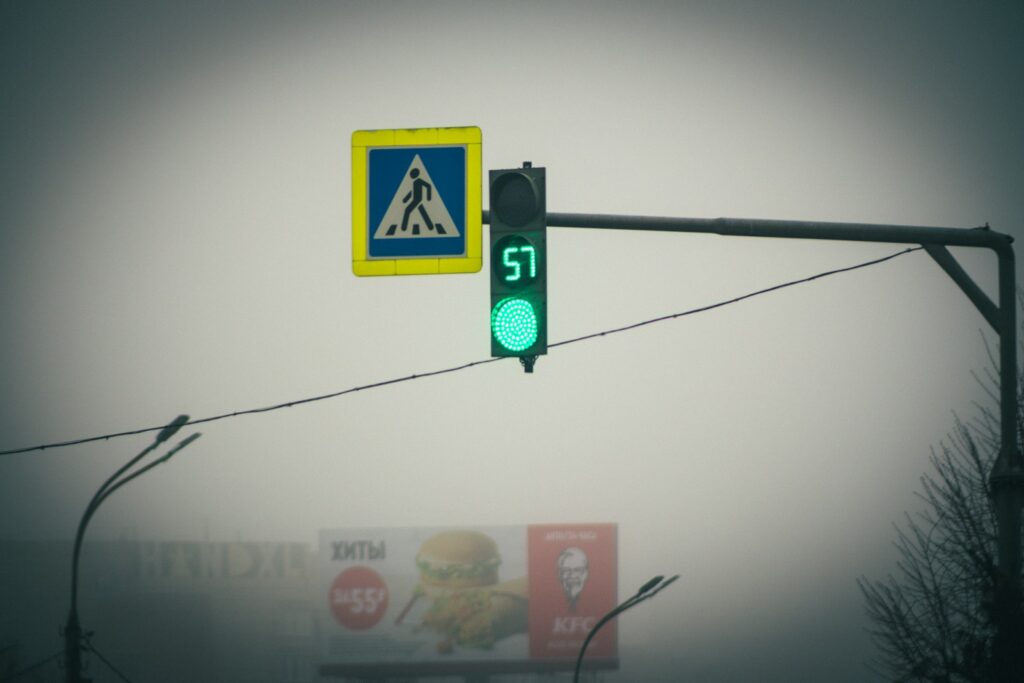
The “yield on green” sign that keeps tripping up drivers
At intersections without a dedicated left-turn arrow, departments of transportation often post a white placard reading “LEFT TURN YIELD ON GREEN.” The sign has been part of the Manual on Uniform Traffic Control Devices (MUTCD) for decades, yet it continues to confuse motorists who assume any green light means a protected movement.
A widely shared photo of one such sign sparked debate on social media in late 2025, with commenters split on whether the instruction was obvious or dangerously ambiguous. The core rule is straightforward: a solid green circle means a driver may proceed but must yield to oncoming traffic and pedestrians already in the intersection. A green arrow, by contrast, signals a protected turn where oncoming traffic is held by a red light. The Wisconsin Department of Transportation and the California Driver Handbook both spell out this distinction, yet surveys of driver knowledge consistently show that many motorists cannot articulate the difference.
“People see green and their foot goes to the gas,” said David Harkey, president of the Insurance Institute for Highway Safety, in a 2024 interview about intersection design. “Anything that adds a conditional message to that reflex needs to be extremely clear, or you’re creating a conflict point.”
Hybrid beacons and adaptive signals add new layers
The challenge extends well beyond static signs. Pedestrian Hybrid Beacons (PHBs), sometimes called HAWK signals, are now installed at more than 6,000 locations nationwide, according to Federal Highway Administration guidance. These devices stay dark until a pedestrian activates them, then cycle through flashing yellow, solid red, and alternating flashing red before going dark again. Drivers are supposed to treat the dark phase as a standard uncontrolled approach, but many do not.
A study of 10 PHB locations in Massachusetts, reported by CBS News Boston, found that nearly one in four drivers failed to respond correctly to the dark or flashing phases, either maintaining speed through a flashing yellow or stopping unnecessarily during the dark phase. Researchers flagged both behaviors as safety concerns, particularly at locations where pedestrians had no other crossing protection.
Meanwhile, cities are layering in adaptive signal technology that changes green-phase timing based on real-time traffic volume. Nashville’s Department of Transportation installed adaptive signals along Lebanon Pike in 2025, using sensors to extend or shorten green lights depending on demand. Local officials told WTVF Nashville the system reduced travel times on the corridor, but some drivers reported feeling uncertain about when a green phase would end, particularly at intersections where the timing no longer followed a predictable pattern.
Further out on the horizon, researchers at North Carolina State University have proposed adding a white signal phase to the traditional red-yellow-green stack. The concept, published in a peer-reviewed paper and discussed on engineering podcasts, envisions connected and autonomous vehicles coordinating their movements through a white indication while human drivers simply follow the car ahead. The idea remains experimental, but it underscores how much the meaning of a traffic signal could change in the coming decade.
Why hesitation at the intersection line matters
Confusion about what green permits does not just slow traffic. It changes driver behavior at the worst possible moment: the seconds spent deciding whether to commit to a turn or proceed through a crosswalk.
When a driver creeps into an intersection on a solid green, expecting protection that does not exist, two things can happen. They may freeze mid-turn as oncoming traffic approaches, blocking the box and stranding cross-street vehicles and emergency responders. Or they may accelerate through a gap that is not really there, creating the kind of left-turn crash that accounts for a disproportionate share of intersection fatalities. Legal guidance from traffic-law attorneys notes that a green arrow gives the turning driver right of way, while a solid green circle does not, a distinction with real liability consequences after a collision.
Blocking the box is also an enforcement priority in a growing number of cities. Police in St. Augustine, Florida, and New York City have both ramped up ticketing for drivers who enter an intersection they cannot clear, even when the light was green at the time. The offense carries fines and, in some jurisdictions, points on a license.
What drivers can do now
Transportation officials and safety advocates offer consistent advice for navigating the new signal landscape:
- Read the sign, not just the light. A solid green circle paired with a “LEFT TURN YIELD ON GREEN” sign means oncoming traffic still has the right of way. Wait for a safe gap before turning.
- Learn the hybrid beacon sequence. Dark means proceed with normal caution. Flashing yellow means slow down and prepare to stop. Solid red means stop. Alternating flashing red means stop, then proceed if the crosswalk is clear.
- Do not enter an intersection you cannot clear. If traffic is backed up on the far side, wait behind the stop line, even on green.
- Treat unfamiliar signals as a reason to slow down, not speed up. New technology is rolling out faster than public education campaigns can keep pace.
The American intersection is getting smarter, but the learning curve is not optional. Until signal designs catch up with how people actually drive, the safest move at any green light is the one drivers have always been told to make but rarely do: look first, then go.
More from Wilder Media Group: