
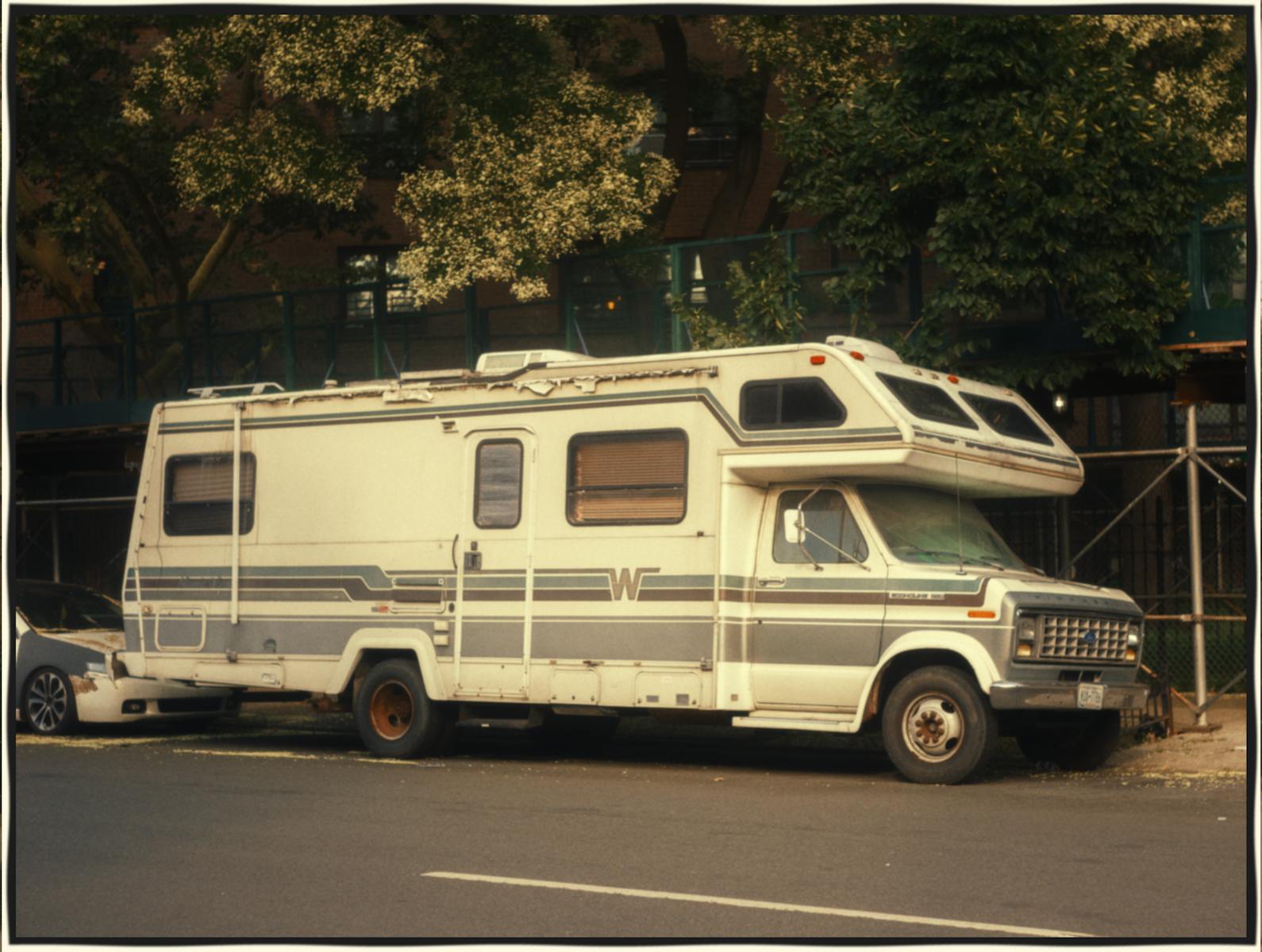

In March 2026, Mountain View, California, is enforcing one of the strictest oversized-vehicle parking bans in the Bay Area, and the fallout is spreading to neighboring cities, East Coast suburbs, and New York City. Local governments across the country are rewriting RV parking codes with a shared goal: fewer recreational vehicles on residential streets. For homeowners who complained about blocked sightlines and trash accumulation, the new rules are a win. For the estimated one million Americans who live in RVs full time, according to the Recreation Vehicle Industry Association, they represent an escalating threat to the only housing they can afford.
The tension is not abstract. In Silicon Valley, RV residents who once parked near tech campuses are being towed or pushed into commercial storage lots. In New York, a city council member has introduced legislation to remove RVs from residential streets entirely. In New Jersey, a township ordinance now targets any vehicle over 25 feet. Taken together, these local actions are turning once-sleepy parking codes into a frontline fight over housing, neighborhood character, and who gets to claim a piece of the public curb.
Silicon Valley’s ban and the cities following its lead
Mountain View’s oversized-vehicle ordinance, which the city council expanded in 2022 and has continued to enforce aggressively, now prohibits RVs and other large vehicles from parking on the vast majority of residential streets. The city’s safe parking program offers a limited number of designated overnight spots as an alternative, but demand far outstrips supply. Residents who once lined Crisanto Avenue and other streets near Google’s campus have been dispersed, many relocating to unincorporated county land or commercial lots that charge monthly fees.
Palo Alto is now weighing similar restrictions. In late 2025, the Palo Alto City Council directed staff to draft an ordinance that would impose strict time limits on oversized vehicles parked on residential streets, according to Palo Alto Online coverage of the council’s policy discussions. Supporters point to complaints about noise, sanitation, and blocked sidewalks. Opponents, including the advocacy group Vehicle Residents of Mountain View, argue that the same tech employers driving the region’s median rent above $3,000 per month depend on a workforce that increasingly cannot afford a traditional apartment. A ban, they say, does not reduce the number of people who need housing. It just forces them to drive to the next jurisdiction.
That pattern is already visible. San Jose, which operates one of California’s larger safe parking programs, has seen increased demand as neighboring cities tighten enforcement. The program pairs designated lots with case management services aimed at transitioning participants into permanent housing, a model that advocates hold up as a more effective alternative to outright bans.
New York and New Jersey write their own playbooks
On the East Coast, the push to restrict RV parking is taking a different shape but arriving at similar outcomes. New York City’s traffic rules already limit any vehicle to a 24-hour stay on city streets before it must be moved, a regulation enforced by the NYC Department of Transportation. But a bill introduced in the New York City Council in early 2025 would go further, treating recreational vehicles and mobile homes parked on residential streets as violations subject to removal. Council Member Robert Holden, who represents parts of Queens, framed the proposal as a response to constituent complaints, stating that “the spread of RVs in our neighborhoods has become a real problem, creating an eyesore and unfairly burdening homeowners who pay” property taxes while rigs occupy curb space without contributing equivalent revenue.
The bill has not yet advanced to a full council vote as of early 2026, but it reflects a broader suburban anxiety. In Howell Township, New Jersey, Ordinance O-24-08, adopted in 2024, established new parking restrictions that apply to any vehicle 25 feet or longer. Smaller vans and trailers fall below the threshold, but Class A motorhomes and large fifth wheels are squarely targeted. The ordinance includes a clause noting that its provisions do not override state or federal regulations, an acknowledgment that local governments are threading new rules through existing legal frameworks.
Across the Hudson River, the Town of Orangetown, New York, passed Local Law 4 of 2024, which prohibits abandoned, unregistered, or expired-registration vehicles from being stored on residential lots. While the law is not RV-specific, it disproportionately affects older motorhomes and trailers that owners may not keep registered year-round, particularly retirees on fixed incomes who use their rigs seasonally.
What RV owners are up against now
For the roughly 11.2 million American households that own an RV, according to a 2023 RVIA ownership survey, the growing patchwork of local ordinances turns a simple parking decision into a compliance puzzle. Rules vary not just by state but by city, and sometimes by neighborhood. Common restrictions include overnight parking bans on public streets, maximum time limits (often 24 to 72 hours), setback requirements from sidewalks and property lines, height and length caps for driveway storage, and homeowners association covenants that may be stricter than municipal code.
Even private driveways are not always safe. Some jurisdictions require that a parked RV sit behind the front building line of the house, effectively banning driveway storage on properties with short front yards. Others mandate that rigs be screened from street view by fencing or landscaping. Owners who fall out of compliance face fines that typically start at $50 to $200 per violation but can escalate with repeated offenses, and in some cities, vehicles can be towed at the owner’s expense after a warning period as short as 48 hours.
For full-time RV residents, the stakes are higher than a parking ticket. Displacement from a familiar street often means losing proximity to jobs, schools, and social services. Advocacy organizations like the National Coalition for the Homeless have warned that vehicle-dwelling bans, without corresponding investments in affordable housing or safe parking alternatives, effectively criminalize poverty. The question facing cities in 2026 is not whether to regulate RV parking. Most already do. It is whether regulation alone can address the housing pressures that put people on the street in the first place.
More from Wilder Media Group: