
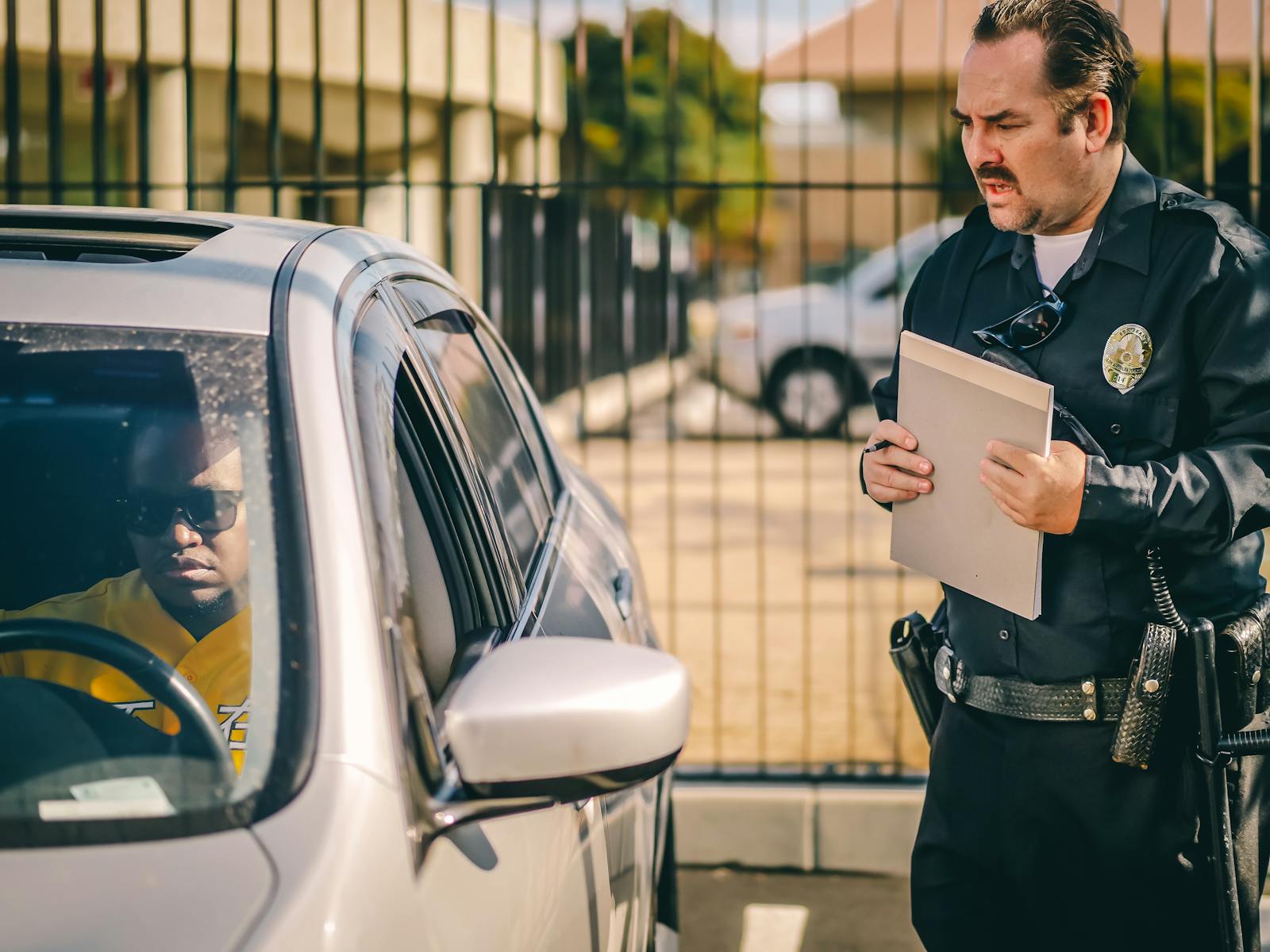

A 21-year-old driver gets pulled over for a routine check. She hands over her details, confident her insurance is sorted. She bought a policy three months ago through an Instagram ad, paid £400 by bank transfer and received a PDF with her name, car registration and a well-known insurer’s logo. But when the officer checks the Motor Insurance Database, nothing comes up. Her car is seized on the spot. She’s issued six penalty points and a fine. The policy she paid for never existed.
Stories like this are becoming alarmingly common across the UK. Criminals known as ghost brokers are selling fake or fraudulently obtained car insurance policies to young drivers, primarily through social media. The scam exploits a painful reality: drivers under 25 face some of the highest premiums in the country, and many are desperate for affordable cover. What looks like a bargain turns out to be no cover at all.
As of late 2025, insurer Aviva reported that ghost broking cases had surged 22% over two years, with the company linking around 7,000 cases in a single year to suspected ghost broking activity. Owen Morris, CEO of UK Personal Lines at Aviva, called it “a fast-growing criminal enterprise that targets young drivers” and warned it could evolve in ways similar to sophisticated banking frauds if enforcement doesn’t keep pace.
What ghost broking actually is
A ghost broker poses as a legitimate insurance intermediary but sells policies that are either entirely fabricated or have been manipulated so severely that they’re worthless. The term “ghost” is apt: the broker vanishes the moment something goes wrong, and the cover they sold turns out to have no substance behind it.
There are three main methods. In the first, the fraudster simply forges documents from scratch, creating fake policy certificates using real insurers’ branding. In the second, they take out a genuine policy on the victim’s behalf but submit a falsified application, lying about the driver’s age, address, claims history or the car’s location to generate an artificially low quote. They charge the victim a higher amount and pocket the difference. In the third variation, they buy a real policy, send the victim proof of cover, then cancel it within the cooling-off period and collect the refund, leaving the driver unknowingly uninsured.
In every scenario, the victim believes they hold valid insurance. The paperwork looks real. The price, while cheap, isn’t so cheap as to seem impossible. And because the transaction often happens through the same digital channels young people use for everything else, it doesn’t feel unusual.
Why young drivers are the primary targets
The economics are straightforward. According to the Association of British Insurers, the average motor insurance premium in the UK reached £511 in Q3 2024, but drivers aged 17 to 24 routinely face quotes of £1,500 to £3,000 or more, depending on their vehicle, location and experience. For a university student or someone in their first job, that’s a brutal cost.
Ghost brokers exploit that pressure directly. Aviva’s research found that three in ten young drivers surveyed said they had purchased car insurance from a ghost broker, a figure that reflects both the scale of the problem and how normalized these transactions have become within certain peer groups. When a friend shares a contact who “sorted their insurance for £300,” the social proof is powerful, especially for someone who has never dealt with a regulated broker before and doesn’t know what the legitimate process should look like.
How the scam plays out on social media
Ghost brokers have moved far beyond word of mouth. They now run what amounts to professional marketing operations on Instagram, TikTok, Snapchat, Facebook and WhatsApp. Profiles are set up to look like small, independent brokerages, complete with logos, testimonial screenshots and photos of young people with their cars. Posts are pushed into student groups, local buy-and-sell pages and money-saving forums with hooks like “no black box,” “points no problem” or “insure any car from £30/month.”
The language is deliberately casual and peer-to-peer. A typical approach might be a Snapchat story saying “DM me for cheap insurance, sorted my mate’s Corsa for £280 fully comp.” Once a potential victim responds, the conversation shifts to WhatsApp or Telegram, where the ghost broker requests photos of the driving licence, V5C logbook and sometimes a bank card. That information is enough to either complete a falsified application with a real insurer or to build convincing forged documents.
Payment is almost always requested by bank transfer or through payment apps like Monzo or Cash App rather than by credit or debit card. This is a critical red flag: card payments offer chargeback protections, while bank transfers are far harder to recover once the money is sent. According to a Guardian investigation published in November 2025, victims often don’t realize anything is wrong for weeks or months, until a claim is denied, a renewal fails to arrive or a police check reveals no valid policy.
The real cost to victims
The financial damage goes well beyond the price of the fake policy. A driver caught without valid insurance faces a fixed penalty of £300 and six points on their licence, or, if the case goes to court, an unlimited fine and possible disqualification. Police can also seize and destroy the vehicle under the Road Traffic Act 1988.
Then there’s the insurance aftermath. A driver whose policy is voided for fraud, even if they were the victim rather than the perpetrator, will face dramatically higher premiums for years. Insurers treat a voided policy as a serious risk marker. Aviva’s data suggests that the combined cost to a typical ghost broking victim, including the worthless premium, vehicle recovery fees, fines and inflated future insurance, averages around £2,000. For a young person relying on their car to get to work or university, losing both the vehicle and that amount of money can be financially devastating.
There is also a road safety dimension. Uninsured drivers who cause accidents leave other road users to claim through the Motor Insurers’ Bureau, which compensates victims of uninsured and untraced drivers. That cost is ultimately passed back to all policyholders through higher premiums, meaning ghost broking doesn’t just harm its direct victims but contributes to rising insurance costs across the board.
How to spot a ghost broker and protect yourself
The Insurance Fraud Bureau and the Financial Conduct Authority both publish guidance on identifying ghost brokers. The warning signs are consistent:
- The price is dramatically lower than quotes from comparison sites. If someone is offering fully comprehensive cover for a fraction of what GoCompare, Compare the Market or MoneySupermarket quotes, that gap needs an explanation. Legitimate brokers can find competitive deals, but they can’t defy actuarial reality.
- Payment is requested by bank transfer only. Regulated brokers and insurers accept card payments. Insistence on bank transfers or payment apps is one of the strongest indicators of fraud.
- The seller operates only through social media DMs. A legitimate broker will have a verifiable business address, a phone number and, crucially, registration with the FCA. You can check the FCA Register online in seconds.
- You’re asked to hand over personal documents via messaging apps. While insurers do need your details, the process should happen through a secure portal or official channels, not through a WhatsApp chat.
- There’s no formal documentation trail. A real policy comes with a policy number you can verify directly with the insurer, a statement of fact you should check for accuracy, and confirmation on the Motor Insurance Database, which you can check yourself at askMID.com.
After purchasing any policy, drivers should verify it independently. Call the insurer listed on the documents using the number from their official website, not a number provided by the broker, and confirm the policy exists and that the details are correct. Check the MID within a few days of the start date; if your vehicle doesn’t appear, something is wrong.
What to do if you think you’ve been scammed
If you suspect you’ve bought insurance from a ghost broker, act quickly. Contact the insurer named on your documents to check whether the policy is genuine. If it isn’t, or if the details have been falsified, report the fraud to Action Fraud (the UK’s national fraud reporting centre) on 0300 123 2040 or through their website. You should also report it to the Insurance Fraud Bureau through their Cheatline.
Do not continue to drive until you have valid cover in place. Driving uninsured, even unknowingly, is a strict liability offence. If your car has been seized, your local police force will explain the process for recovery, but you will need to show proof of valid insurance before the vehicle is released.
It’s also worth reporting the ghost broker’s social media profiles to the relevant platform. While enforcement by tech companies has been inconsistent, reports help build the evidence base that leads to account removals and, in some cases, criminal investigations.
More from Wilder Media Group: