
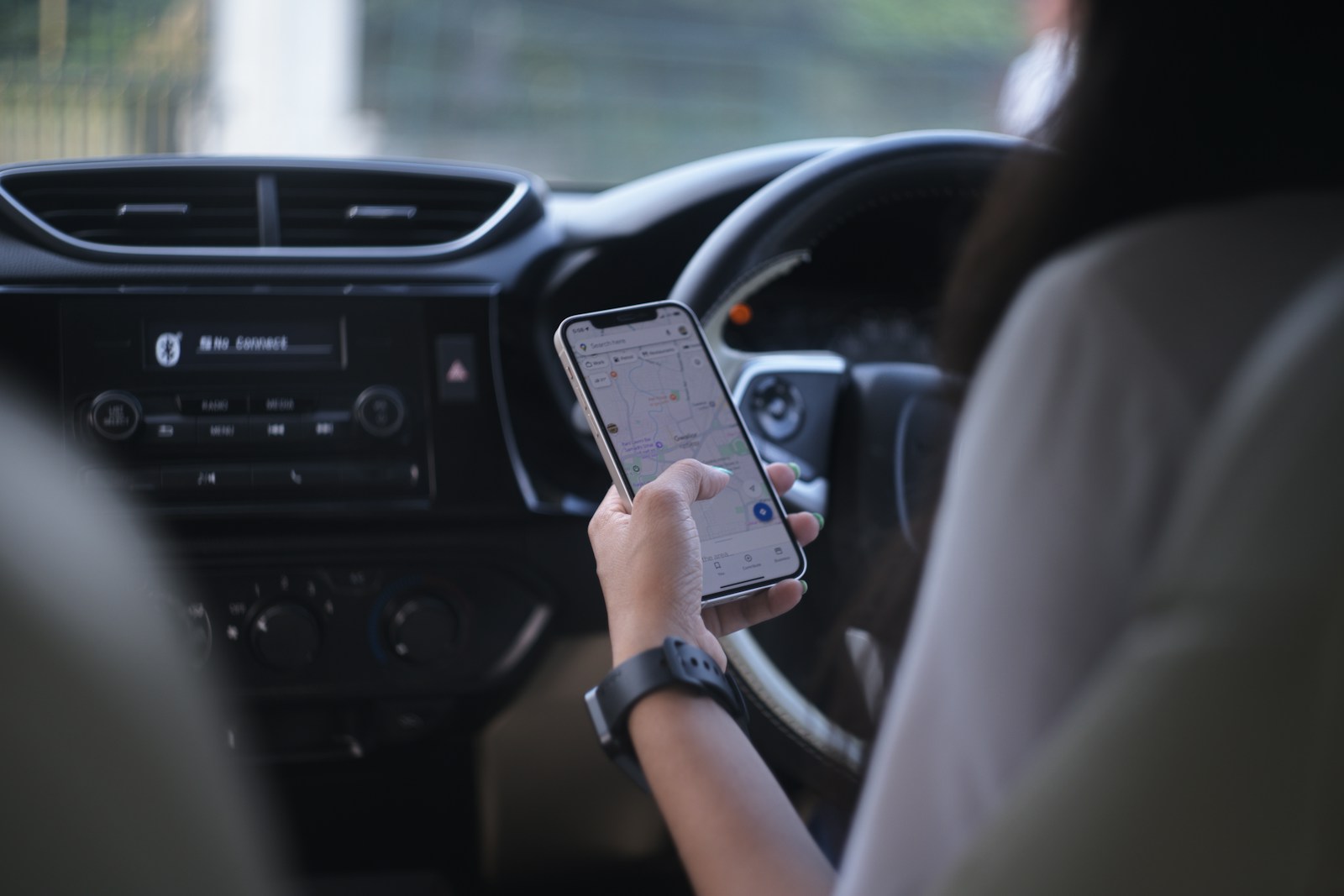

In early 2026, young drivers in the UK face insurance premiums that already rank among the highest in Europe. One behaviour is making those costs even worse: picking up a phone behind the wheel. Survey data from road safety charity IAM RoadSmart, reported by PA Media, found that more than two in five young drivers admitted to using a hand-held mobile phone while driving, with a significant proportion saying they did so on at least half of their journeys.
That is not a one-off lapse. It is a pattern, and insurers are pricing it in.

What the survey actually found
The IAM RoadSmart research, distributed by PA Media and reported by journalist Neil Lancefield, surveyed young motorists about their phone habits on the road. More than 40% admitted to using a hand-held device while driving. Many described extended interactions with apps and messages, not just quick glances at a sat-nav. The reasons cited were boredom in traffic and social pressure to reply quickly, not emergencies.
For insurers, self-reported phone use in an anonymous survey is a powerful signal. If drivers admit to it when no penalty is at stake, the real frequency is almost certainly higher. That makes the group, statistically, far more likely to file a claim.
Drivers know the risk and take it anyway
The IAM RoadSmart findings echo a broader trend. A Nationwide Insurance survey in the US found a similar disconnect: most drivers said they valued safety, yet many admitted to reading or writing emails at the wheel. Modern vehicles, loaded with touchscreens and connectivity features, have blurred the line between a car and a mobile office.
The gap between what drivers believe and what they do is central to how insurers calculate risk. A motorist who considers themselves careful but routinely checks messages in slow traffic presents a very different claims profile from one who keeps the phone in the glovebox. Underwriters know this, even if drivers do not.
UK law is strict on paper, but enforcement lags
The UK tightened its rules on phone use at the wheel in two major steps. In March 2017, the government doubled penalties from three points and a £100 fine to six points and a £200 fine. Then, in March 2022, the law was expanded so that virtually any hand-held phone interaction while driving became an offence, including scrolling through a playlist, taking a photo or checking social media.
Despite those changes, motoring organisations say the problem is getting worse, not better. The AA has warned that distracted driving behaviour was worsening on UK roads, even after repeated awareness campaigns. Part of the issue is visibility: phone use is harder for police to spot than speeding, and the number of dedicated roads policing officers in England and Wales has fallen sharply over the past decade.
At the same time, car manufacturers continue to promote in-car connectivity and hands-free calling as selling points. Research published in The Conversation has highlighted the tension: automakers market features that keep drivers connected while safety evidence shows that even hands-free calls impair reaction times and hazard perception.
The insurance cost of a single conviction
For a newly qualified driver, six penalty points for phone use can be catastrophic. Under the Road Traffic (New Drivers) Act 1995, any new driver who accumulates six or more points within two years of passing their test has their licence revoked automatically. They must then reapply for a provisional licence and pass both theory and practical tests again.
Even without revocation, a phone conviction reshapes a driver’s insurance profile. Industry specialists at Insurance for Convicted Drivers note that young motorists with points on their licence are often pushed into specialist high-risk markets, where premiums can be hundreds of pounds higher. Their advice for rebuilding insurability centres on cleaning up the driving record, considering a telematics (black box) policy and pursuing additional driving qualifications such as Pass Plus.
The financial sting does not end at renewal. Some employers in delivery, logistics and sales roles now run licence checks, meaning a phone conviction can limit job prospects as well as push up insurance costs.
Telematics: turning the phone from problem into proof
The same device that tempts drivers to look away from the road is increasingly being used to prove they did not. Telematics policies, which track driving behaviour through a plug-in device or smartphone app, reward consistent safe driving with lower premiums. Several major insurers now offer these programmes, monitoring metrics such as speed, braking, cornering and time of day.
Newer mobile telematics platforms go further. Companies like Damoov use a phone’s own sensors to build a real-time driving score, and some systems can detect screen activation or phone handling while the vehicle is in motion. For young drivers willing to keep the phone locked and stowed, the payoff is tangible: measurably lower premiums and a data trail that proves good habits to future insurers.
The challenge is adoption. Telematics policies require drivers to accept constant monitoring, and take-up remains patchy among the very age group that would benefit most. Insurers are experimenting with short-term incentives, such as monthly premium rebates, to make the trade-off feel worthwhile from the first bill.
What needs to change
Survey data, penalty structures and insurance pricing all point in the same direction: phone use behind the wheel is a normalised risk among young UK drivers, and current deterrents are not enough to break the habit. Tougher laws have not closed the gap between what drivers know and what they do.
For individual motorists, the arithmetic is straightforward. A single phone conviction can double a young driver’s premium, trigger licence revocation and narrow employment options. A telematics policy that rewards phone-free driving can cut costs by a meaningful margin. The choice is not abstract. It shows up on every renewal quote.
More from Wilder Media Group: