

Most drivers assume their car insurance will cover them when it counts. But standard auto policies are riddled with exclusions that can leave families paying tens of thousands of dollars out of pocket after a crash, a theft, or even a routine fender bender involving the wrong person behind the wheel.
These are not obscure technicalities. They are common, well-documented gaps that catch people off guard every day. Here are five of the most costly, along with what you can do about each one before a claim forces the issue.
1. Driving for a delivery app can void your personal policy
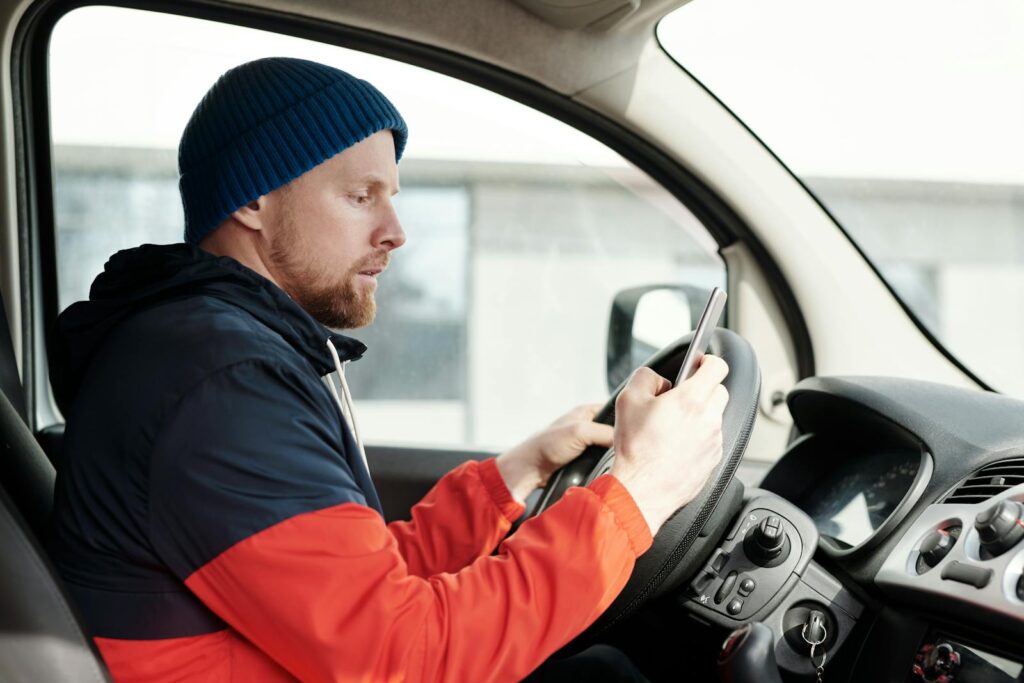
Millions of Americans earn money through DoorDash, Uber Eats, Instacart, and similar platforms. Most of them are driving on personal auto policies that explicitly exclude commercial use.
The distinction matters the moment something goes wrong. If you are logged into a delivery app and cause an accident, your personal insurer can deny the claim entirely, including damage to your own vehicle. The delivery platform’s insurance may cover part of the loss, but only during certain phases of a trip. If you are waiting for an order or driving to a pickup, you may fall into a window where neither policy applies.
According to the Insurance Information Institute, most personal auto policies were never designed to cover vehicles used for hire, and insurers treat app-based delivery the same way they treat taxi or livery work: as a commercial activity that requires a separate endorsement or policy.
The fix is straightforward but not free. A rideshare or delivery endorsement typically costs between $15 and $30 per month, depending on the carrier and state. Companies like Progressive, State Farm, and Geico now offer them. Without one, a single accident while delivering groceries could mean covering both vehicles’ repairs, the other driver’s medical bills, and your own lost income.
2. “Intentional act” clauses are broader than you think
Auto insurance covers accidents. It does not cover damage you cause on purpose. That principle sounds obvious, but the language insurers use to enforce it can sweep in situations drivers do not expect.
If you deliberately ram another car during a road-rage incident, your insurer will refuse to pay for the other driver’s injuries or your own vehicle damage. Yahoo Finance’s coverage guide lists intentional damage as one of the clearest exclusions in any standard policy. But the clause does not stop at dramatic scenarios. Some policies include broad “misconduct” or “misrepresentation” language that allows the insurer to void coverage if it determines you were using the vehicle in a way that contradicts what you told them when you bought the policy.
For example, if you told your insurer the car was garaged at home but you have been parking it at a second property or lending it regularly to someone not on the policy, a denied claim could follow. The National Association of Insurance Commissioners (NAIC) advises policyholders to review their declarations page annually and update their insurer about any changes in vehicle use, garaging address, or regular drivers.
3. An excluded or undisclosed driver can leave you holding the bill
When someone in your household is not listed on your policy, or is specifically named as an excluded driver, any accident they cause in your car may not be covered at all.
This happens more often than people realize. A common scenario: a family excludes a teenage driver to keep premiums affordable. The teen borrows the car, runs a red light, and causes a multi-vehicle crash. The insurer checks the policy, sees the exclusion, and denies the claim. The family is now personally liable for every dollar of damage and medical costs.
The same risk applies to roommates, live-in partners, or adult children who have moved back home. Most insurers require that every licensed person in the household be either listed on the policy or formally excluded. If someone is simply never mentioned, the insurer may treat any accident involving that person as grounds for denial.
Adding a young or high-risk driver to a policy is expensive, sometimes increasing premiums by 50% or more. But the alternative, absorbing a five- or six-figure liability judgment, is worse. If cost is the barrier, ask your agent about usage-based or pay-per-mile options that can reduce the premium for drivers who do not use the car often.
4. Minimum liability limits that collapse in a serious crash
Every state requires drivers to carry some amount of liability insurance, but the legal minimum is often shockingly low relative to what a serious accident actually costs.
As of early 2026, several states still allow bodily injury liability limits as low as $25,000 per person. According to Consumer Reports, if you carry $25,000 in bodily injury coverage and cause $100,000 in harm, your insurer pays the first $25,000 and you owe the remaining $75,000 personally. Wages can be garnished. Assets can be seized. A lawsuit can follow you for years.
The problem has gotten worse as medical costs and vehicle repair bills have climbed. Data from CCC Intelligent Solutions shows that average collision repair costs have risen sharply since 2020, driven partly by the sensors, cameras, and aluminum body panels found in newer vehicles. A fender bender that once cost $3,000 to fix can now run $8,000 or more.
Insurance professionals and consumer advocates widely recommend carrying at least 100/300/100 liability coverage ($100,000 per person, $300,000 per accident for bodily injury, $100,000 for property damage). Drivers with significant assets, such as a home or retirement savings, should also consider an umbrella policy, which typically adds $1 million in liability protection for $200 to $400 per year.
A related gap: uninsured and underinsured motorist (UM/UIM) coverage. If the driver who hits you carries no insurance or only a bare minimum, your own UM/UIM coverage is what pays your medical bills and lost wages. The NAIC estimates that roughly one in eight drivers on U.S. roads is uninsured. Skipping UM/UIM coverage to save $50 a year is one of the most common and most costly gambles drivers make.
5. Personal belongings stolen from your car are not covered by auto insurance
If someone smashes your window and steals a laptop, a camera bag, or a set of power tools from the back seat, your auto policy will typically pay to replace the glass but nothing else.
Standard auto insurance, including comprehensive coverage, protects the vehicle itself against theft, vandalism, fire, and weather damage. It does not cover personal property inside the car. Experian’s insurance guide notes that items like phones, clothing, and electronics are considered personal belongings, not part of the vehicle, and fall under homeowners or renters insurance instead.
This catches people off guard after smash-and-grab thefts, which remain a persistent problem in cities like San Francisco, Chicago, and Houston. A photographer who loses $5,000 in gear from a parked car at a trailhead may recover $300 for the broken window from their auto insurer and nothing else, unless they carry a renters or homeowners policy with adequate personal property limits.
If you regularly transport expensive equipment, check your renters or homeowners policy for per-item limits and consider a scheduled personal property endorsement (sometimes called a “floater”) for high-value items. These typically cost a few dollars per month per item and cover theft regardless of where it happens.
How to close these gaps before you need to file a claim
The pattern across all five of these gaps is the same: drivers assume they are covered, never read the exclusions, and find out the truth only after something goes wrong. A few steps taken now can prevent that.
- Read your declarations page and exclusions. This is the section of your policy that lists exactly what is and is not covered, who is listed as a driver, and what your limits are. If you cannot find it, call your agent and ask them to walk through it with you.
- Disclose every driver in your household. Even if adding someone raises your premium, an undisclosed driver is a ticking time bomb for a denied claim.
- Add a rideshare or delivery endorsement if you do gig work. Do not rely on the platform’s insurance to fill every gap.
- Raise your liability limits. Going from state minimum to 100/300/100 often costs less than $30 per month, depending on your driving record and location.
- Consider an umbrella policy. For drivers with a home, savings, or other assets worth protecting, an umbrella policy is one of the cheapest forms of high-value coverage available.
- Check your renters or homeowners policy for personal property coverage. Make sure it covers theft from a vehicle and that per-item limits are high enough for what you actually carry.
Car insurance works, but only within the boundaries the contract sets. The five gaps above are not rare or surprising to insurers. They are baked into the product by design. The only surprise is how many drivers discover them for the first time in the middle of a crisis.
More from Wilder Media Group: