
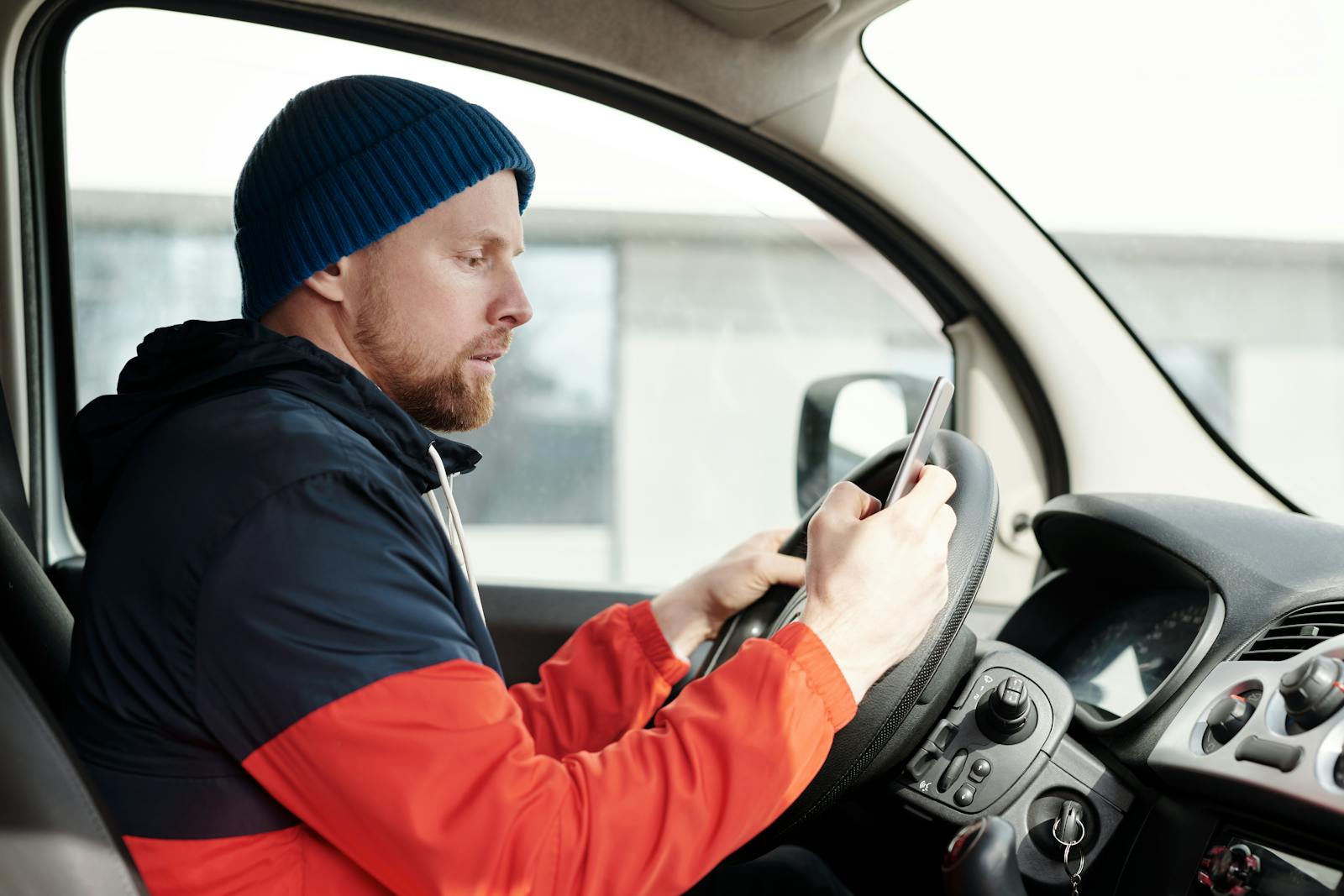

Four driving rules are generating fierce debate heading into spring 2026. Each targets a different hazard, but they share a common thread: they would give governments and vehicle software more power over what individual drivers can do behind the wheel. Here is what is on the table, what the evidence says, and why millions of motorists are pushing back.
1. Hands-free-only phone laws are spreading fast

A growing number of states are moving beyond texting bans to outright prohibitions on touching a phone while driving. Under so-called “hands-free” laws, picking up a device for any reason while a vehicle is in motion, or even stopped at a red light, counts as a violation. As of early 2026, at least 30 states and the District of Columbia have some form of hands-free statute on the books, according to the Governors Highway Safety Association, and several more have bills advancing through their legislatures this session.
The safety case is hard to dismiss. The National Highway Traffic Safety Administration reported that distraction-affected crashes killed 3,308 people in 2022, the most recent year with finalized data. Research from the Virginia Tech Transportation Institute has shown that taking your eyes off the road for just two seconds doubles crash risk. Proponents argue that hands-free systems like Apple CarPlay and Android Auto now work well enough that there is no legitimate reason to handle a phone while driving.
Critics see it differently. Civil liberties groups warn that broad definitions of “use” could penalize a driver who briefly silences a ringing phone or glances at a mounted GPS screen. Enforcement is another sore point. States including Maryland have adopted escalating fine structures, with repeat offenses reaching $300, and some jurisdictions are exploring camera-based detection, raising concerns that the laws could become revenue generators rather than safety tools.
The core tension is not whether phone distraction kills. It does. The question is whether criminalizing any momentary contact with a device is proportionate, or whether it sweeps in behavior that poses little real danger.
2. Congress mandated anti-impairment tech in new cars. Now what?
Section 24220 of the Infrastructure Investment and Jobs Act, signed in November 2021, directed the National Highway Traffic Safety Administration to develop a rule requiring “advanced drunk and impaired driving prevention technology” in all new passenger vehicles. The law gave NHTSA three years to finalize that standard, but as of March 2026, the agency has not published a final rule, and no firm compliance date for automakers has been set.
The concept is straightforward: sensors built into the vehicle would monitor indicators such as steering input, lane-keeping behavior, and possibly blood-alcohol concentration through touch-based or breath-based systems. If the software determines the driver is impaired, it could issue warnings, limit speed, or prevent the car from moving at all. The nonprofit organization Mothers Against Drunk Driving has championed the provision, noting that alcohol-impaired crashes killed 13,524 people in 2022, according to NHTSA data.
Opposition has been bipartisan and vocal. Critics in Congress and in automotive forums have labeled the technology a “government kill switch,” arguing that it would give an algorithm the authority to strand a sober driver based on a false positive. Privacy advocates point out that the system would need to collect continuous behavioral data on every trip, not just those involving alcohol, creating a surveillance record with unclear data-retention rules. Automakers, meanwhile, have raised liability questions: if a vehicle’s software wrongly prevents someone from driving and that person is harmed as a result, who is responsible?
The delay in rulemaking has left the provision in limbo. Congress has not repealed Section 24220, but neither has NHTSA moved to enforce it. For consumers shopping for a new car in 2026, the technology is not yet required, though some manufacturers are voluntarily testing driver-monitoring systems that overlap with the law’s intent.
3. Speed limiters: California’s push and Europe’s precedent
In California, state legislators have floated proposals that would require new vehicles sold in the state to include intelligent speed-assistance technology, essentially a system that knows the posted speed limit and restricts the car from exceeding it by more than a set margin. A previous version of this idea, SB 961, introduced by Senator Scott Wiener in 2024, did not advance, but supporters have signaled they intend to bring similar legislation back.
Europe is already further down this road. Since July 2024, the European Union’s General Safety Regulation (GSR2) has required all new cars sold in the EU to include Intelligent Speed Assistance, which uses GPS data and camera-read speed signs to warn drivers or gently limit acceleration when they exceed the posted limit. Drivers can override the system, but it reactivates each time the vehicle is started.
Proponents cite NHTSA data showing that speeding was a factor in 29% of all traffic fatalities in 2022, killing 12,151 people. They argue that if the car already knows the speed limit through its navigation system, using that information to physically discourage speeding is a logical next step. Separately, several states and the United Kingdom are expanding automated speed-camera networks and increasing fines for repeat offenders, making habitual speeding more expensive even without in-car limiters.
Drivers who oppose the idea raise practical objections: brief acceleration is sometimes necessary to merge safely or pass a slow-moving vehicle on a two-lane road. They also question whether speed-limit databases are accurate enough to trust, particularly in construction zones or on roads where limits have recently changed. The deeper objection is philosophical. For many motorists, the accelerator pedal is the last piece of driving that feels fully under their control, and handing any part of that authority to software crosses a line.
4. Tougher license renewals for older drivers
Governments in several countries are reconsidering how they assess older motorists. In the United States, license-renewal requirements for seniors vary widely by state. According to the Insurance Institute for Highway Safety, some states require more frequent renewal or in-person vision tests after a certain age, typically 65 or 70, while others impose no age-specific requirements at all. A handful of states, including Illinois, require a road test for drivers over 75 at each renewal.
In the United Kingdom and Australia, the conversation has intensified. Several Australian states already require annual medical assessments for drivers over 75, including evaluations by a general practitioner and, in some cases, on-road driving tests triggered by a doctor’s or family member’s concern. In the UK, politicians have debated whether the current self-declaration system, under which drivers over 70 simply confirm they are fit to drive every three years, is rigorous enough.
The safety data provides some support for closer scrutiny. Drivers aged 80 and older have higher fatal crash rates per mile driven than all but the youngest age group, according to the IIHS. Age-related declines in vision, reaction time, and cognitive processing can make complex intersections, highway merging, and night driving significantly more dangerous.
But advocacy groups like AARP push back hard against blanket age thresholds. They argue that health varies enormously among people over 75 and that mandatory retesting based solely on age is discriminatory. They also stress the real-world consequences: in rural areas and communities with limited public transit, losing a license can mean losing access to medical care, groceries, and social connection. Some policy experts have proposed graduated restrictions, such as daytime-only or local-area licenses, as a middle ground between full driving privileges and a total ban.
Why these four rules have motorists so divided
Each of these proposals follows the same pattern. A genuine safety problem, backed by crash data, meets a proposed solution that shifts control away from the individual driver and toward the state or a piece of software. Distracted driving kills, so ban all phone contact. Drunk driving kills, so let the car decide if you are sober. Speeding kills, so cap the accelerator electronically. Age-related decline kills, so test seniors more often.
The resistance in every case is not mainly about denying the problem. It is about who gets to decide the fix and how much autonomy drivers must surrender in exchange for safer roads. False positives, uneven enforcement, privacy erosion, and the risk of stranding people without alternatives are not hypothetical concerns. They are the practical costs that will determine whether these rules earn public trust or provoke a backlash.
What happens next depends less on the technology, which largely exists already, and more on whether lawmakers can write rules precise enough to target genuinely dangerous behavior without sweeping in the rest of us. That balance has never been easy to strike, and in 2026, the stakes on both sides are higher than they have been in years.
More from Wilder Media Group: