
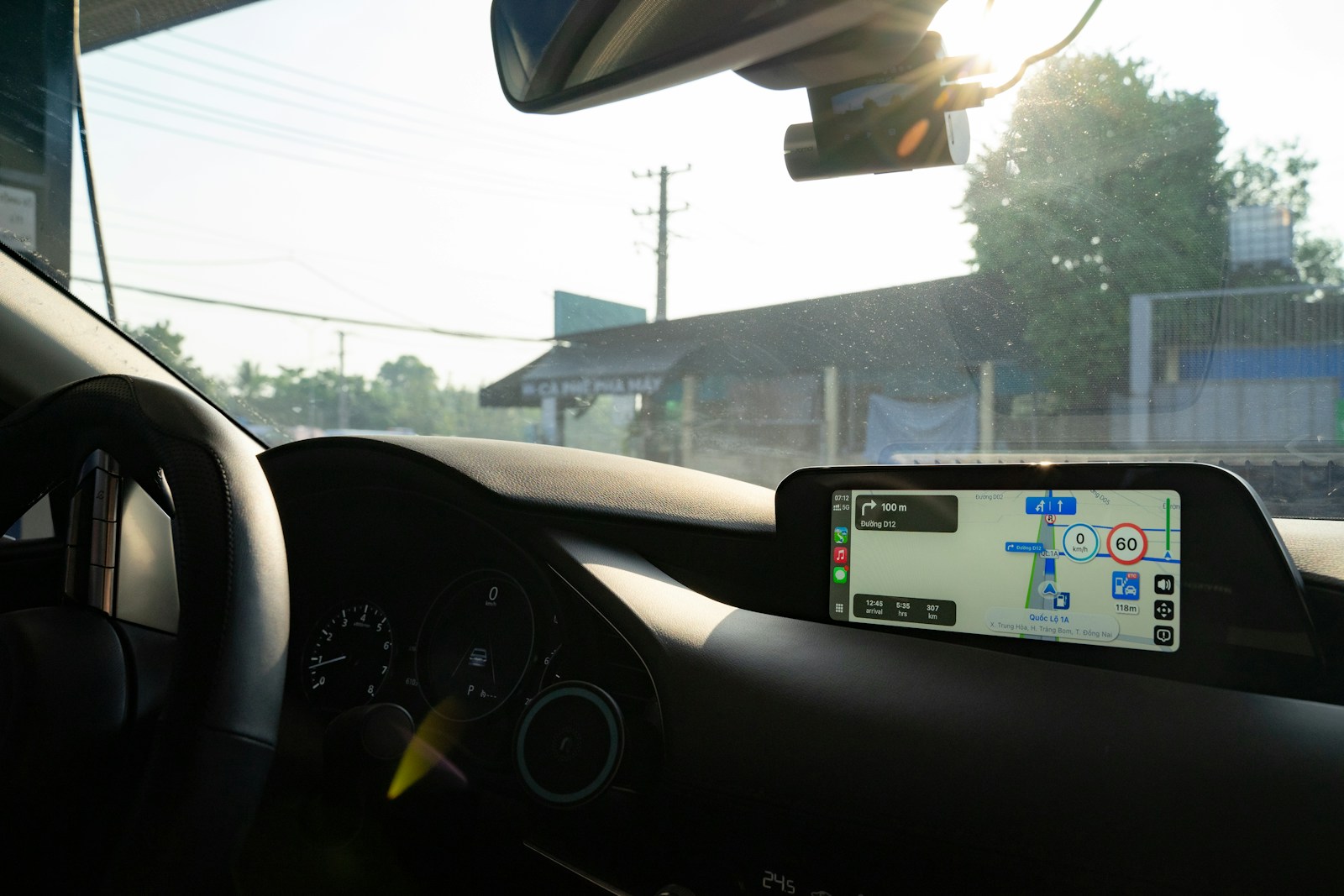

A driver merging onto a busy highway should not need to navigate two menu layers to turn up the defroster. Yet in a growing number of new vehicles, that is exactly what happens. The shift toward touchscreen-dominated dashboards, aggressive driver-assistance alerts, and auto stop-start systems has left many owners feeling like their cars are working against them at the moments that matter most.
The complaints are not coming from technophobes. They are coming from everyday commuters, long-haul road-trippers, and even automotive journalists who test dozens of models a year. And the frustration is drawing attention from safety regulators on both sides of the Atlantic, raising a pointed question: when does “advanced” technology start making driving less safe?
Touchscreen Dashboards That Pull Eyes Off the Road
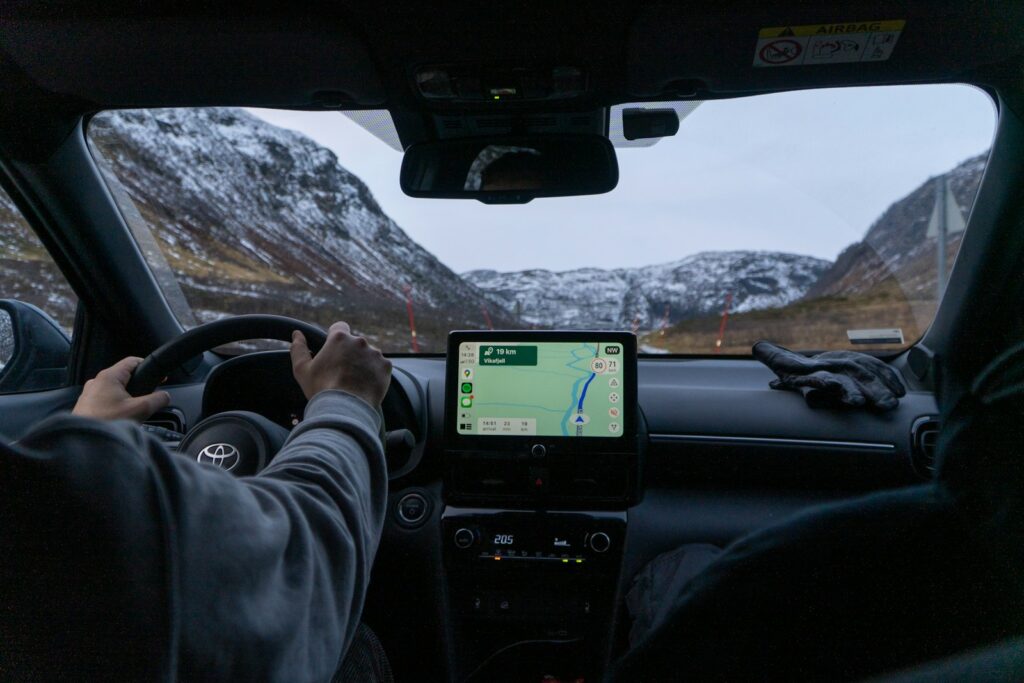
The single most common gripe among new-car owners is the disappearance of physical knobs and buttons. Climate control, heated seats, wiper speed, and even hazard lights have migrated into layered digital menus on tablet-sized screens. The result looks sleek in a showroom. On a rain-soaked interstate, it becomes a liability.
A Virginia Tech Transportation Institute study found that any secondary task requiring a driver to look away from the road for more than two seconds significantly increases crash risk. Research conducted by the AAA Foundation for Traffic Safety and the University of Utah measured some infotainment tasks, like programming navigation or adjusting audio through a touchscreen, demanding cumulative glance times of more than 40 seconds. At highway speed, two seconds of inattention covers roughly 180 feet of unmonitored road.
The backlash has reached automakers. Hyundai restored physical climate-control buttons in its latest Ioniq 5 refresh. Porsche never fully abandoned toggle switches in the Cayenne and Macan. And Volkswagen’s CEO publicly acknowledged in 2023 that the brand’s touch-only controls were a mistake, promising a return to physical buttons across its lineup. Euro NCAP, the European crash-test authority, announced that starting in 2026 it will penalize vehicles that force drivers to use touchscreens for basic functions like turn signals, hazard lights, and windshield wipers.
Guides aimed at buyers who want straightforward controls, such as those highlighting models that retain analog switches, have become surprisingly popular in enthusiast forums. The appeal is simple: a physical dial gives tactile feedback without requiring a single glance.
Auto Stop-Start Systems That Feel Intrusive in Traffic
Automatic stop-start technology cuts the engine at red lights and restarts it when the driver lifts off the brake. The fuel savings are real but modest, typically between 3 and 10 percent in city driving according to the U.S. Department of Energy. For many drivers, the tradeoff is not worth the shudder.
Owners describe the restart as jerky and poorly timed, especially in stop-and-go traffic where the engine cycles on and off dozens of times in a single commute. The system can also introduce a split-second delay when a driver needs to accelerate quickly, such as when completing a left turn across oncoming traffic. That hesitation, even if it lasts less than a second, erodes trust.
Most automakers include a button to disable stop-start, but in the majority of models the setting resets every time the ignition cycles. The design is intentional: keeping stop-start active by default helps manufacturers meet EPA fuel-economy testing standards. The result is a small, repetitive annoyance. Owners on forums like Car Talk describe a startup ritual of pressing the stop-start disable button, turning off lane-keep assist, and adjusting drive modes before pulling out of the driveway.
Aftermarket devices that remember the “off” setting have become a niche cottage industry, a telling sign that the feature’s default behavior is out of step with what drivers actually want.
Driver-Assistance Alerts That Add Noise Instead of Safety
Lane-keep assist, forward-collision warning, adaptive cruise control, and blind-spot monitoring are now standard or near-standard on most new vehicles sold in the United States. The Insurance Institute for Highway Safety (IIHS) has documented meaningful crash reductions tied to automatic emergency braking and forward-collision warning. These systems save lives.
The problem is not the technology itself. It is how many vehicles communicate with the driver. A barrage of beeps, chimes, vibrating seats, flashing icons, and steering-wheel tugs can arrive simultaneously or in rapid succession, leaving the driver to decode which system is complaining and why. A 2024 J.D. Power U.S. Tech Experience Index study found that unwanted or poorly understood alerts were among the top reasons owners disabled safety features entirely, defeating the purpose of having them.
Lane-keep assist draws particular ire. On roads with faded lane markings, construction zones, or uneven pavement, the system can tug the steering wheel unpredictably. Drivers on rural highways and in northern states where road paint wears quickly report constant false interventions. Rather than building confidence, the system trains some drivers to fight their own car.
Some manufacturers are refining the approach. Driver monitoring systems (DMS) that use interior cameras to track eye position and head angle can intervene only when genuine inattention is detected, rather than issuing blanket warnings. Euro NCAP now requires DMS for a five-star safety rating, and NHTSA has signaled interest in similar standards for the U.S. market. When calibrated well, these systems replace a wall of noise with a single, well-timed nudge.
When “Smart” Safety Tech Erodes Driver Confidence
Each individual system may be well-intentioned. Stacked together, they can create an environment where the driver is no longer sure what the car will do next. Will it brake on its own if the car ahead slows? Will it steer back into the lane if the driver drifts slightly to avoid a pothole? Will the adaptive headlights dim at the wrong moment?
That uncertainty has a name in human-factors research: mode confusion. When drivers do not have a clear mental model of which automated functions are active and how they will behave, reaction times slow and errors increase. A NHTSA standing general order issued in 2021 now requires manufacturers to report crashes involving vehicles with Level 2 driver-assistance systems, partly to track whether the technology is introducing new failure modes even as it prevents others.
The risk of over-reliance is real. Drivers who grow accustomed to automatic emergency braking may follow more closely. Those who lean on blind-spot indicators may stop shoulder-checking. A widely shared discussion among automotive enthusiasts explored whether features like ABS and stability control, by raising the threshold at which a car loses grip, subtly encourage faster driving. The academic term is risk compensation, and while the net safety effect of ABS and ESC is overwhelmingly positive at a population level, the behavioral question remains relevant as autonomy creeps higher.
The clearest path forward is better interface design, not less technology. Automakers that give drivers simple, persistent controls to customize alert thresholds, that use heads-up displays instead of burying warnings in a center screen, and that default to unobtrusive monitoring rather than constant chiming are earning higher satisfaction scores in owner surveys. The technology works best when drivers barely notice it is there, right up until the moment it matters.
What Drivers Can Do Now
For anyone shopping for a new car in spring 2026, a few practical steps can help cut through the frustration:
- Test the controls before you test the engine. Sit in the driver’s seat and try adjusting the climate, changing a radio station, and turning on the heated seats without looking at the screen. If it takes more than a glance, that friction will multiply over thousands of miles.
- Ask about persistent settings. Find out whether stop-start, lane-keep assist, and alert volumes can be set once and remembered across ignition cycles. Some brands now offer this; many still do not.
- Read the owner’s manual for ADAS. Understanding exactly what each system does, and does not do, reduces mode confusion and helps drivers make informed choices about which features to leave active.
- Look for models with physical backup controls. A growing number of 2025 and 2026 models have reintroduced buttons and knobs for high-use functions. Prioritize those if screen fatigue is a concern.
Modern vehicle technology has made cars measurably safer in aggregate. Automatic emergency braking alone prevents thousands of rear-end collisions every year. But safety gains at the fleet level do not automatically translate into a better experience inside the cabin. The cars that will earn long-term loyalty are the ones that treat the driver as a partner, not a problem to be managed.
More from Wilder Media Group: