
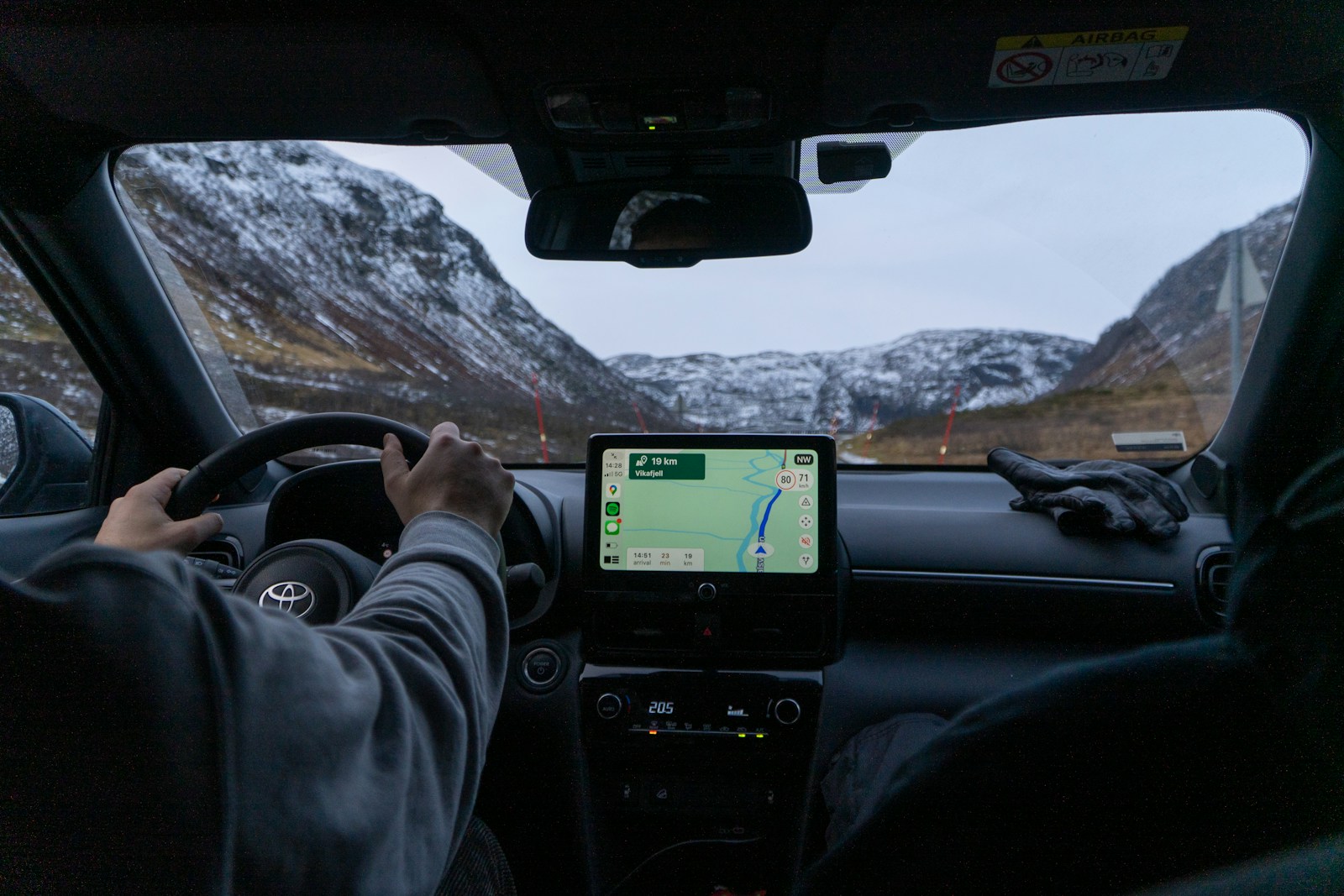

Buy a new car in 2026 and you will almost certainly sit down in front of a tablet-sized touchscreen, a camera pointed at your face, and a long list of alerts you never asked for. Automakers have spent the last decade cramming software, sensors and subscription prompts into every cabin surface. Many drivers say the result is not progress but a daily source of frustration, distraction and, in some cases, genuine danger.
Five categories of in-car technology draw the most complaints: touchscreen-dominated dashboards, advanced driver-assistance systems, driver-monitoring cameras, subscription-locked features and relentless audible alerts. Each was designed to improve the driving experience. In practice, poor execution is pushing owners to disable features, avoid upgrades or simply long for the cars they traded in.
1. Touchscreens That Pull Your Eyes Off the Road
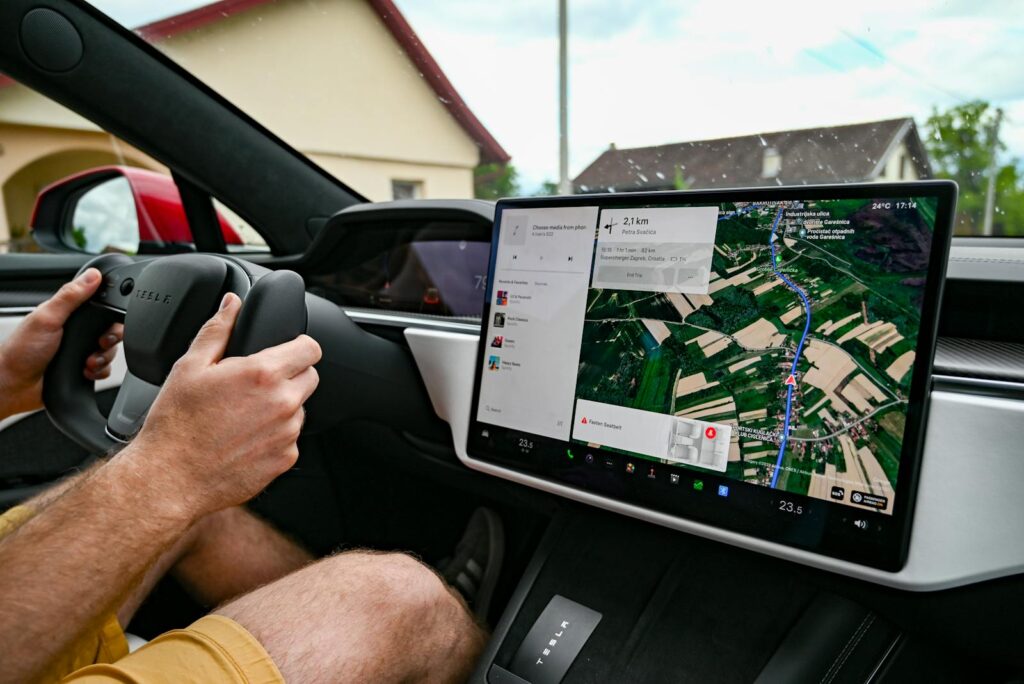
The giant center screen has become the defining interior feature of modern vehicles. Automakers favor it because a single display can replace dozens of physical switches, cut manufacturing costs and receive over-the-air updates. But consolidating climate, seat heat, wiper speed and even mirror adjustments behind layers of on-screen menus forces drivers to look away from the road for tasks that once required a blind reach to a knob.
Research from the UK’s Transport Research Laboratory, commissioned by road-safety group IAM RoadSmart, measured how touchscreen interactions affect driving. Participants using complex on-screen menus showed degraded lane-keeping and slower reaction times, with driving performance dropping by as much as 17 percent under high cognitive load. For context, that level of impairment approaches what researchers have observed in drivers at the legal alcohol limit in some jurisdictions.
The problems go beyond distraction. The Center for Auto Safety’s executive director, Michael Brooks, has called touchscreen reliability a major safety concern, pointing to reports of screens that freeze, go black or reboot while driving, stripping access to navigation, climate and even the rearview camera. When the only interface in the car locks up, drivers are left tapping and swiping instead of watching the road.
Some manufacturers have started to acknowledge the backlash. Porsche retained physical climate controls in the Cayenne refresh. Hyundai’s latest models bring back buttons for frequently used functions. Mazda has long resisted the all-touch trend, keeping a rotary controller in its lineup. But across much of the industry, the screen-first approach remains the default, and owners continue to voice frustration. In a widely discussed Reddit thread on the worst modern car features, overly bright screens, laggy menus and buried controls ranked among the top complaints. Many commenters said they would trade screen size for a handful of physical knobs without hesitation.
2. Driver-Assistance Systems That Erode Trust
Advanced driver-assistance systems, commonly called ADAS, were pitched as a safety net: lane-keeping assist to catch a drowsy drift, adaptive cruise control to smooth highway traffic, automatic emergency braking to prevent rear-end collisions. The technology can work well under ideal conditions. The trouble is that conditions are rarely ideal.
Inconsistency is the core complaint. A lane-keeping system that tracks perfectly on a freshly painted interstate may lose the plot on a patched county road or in moderate rain. Adaptive cruise control can hesitate at highway merges or brake hard for an overpass shadow. Analysts tracking common ADAS grievances identify poor reliability as the leading issue, noting that unpredictable behavior trains drivers to either over-rely on the system or ignore it entirely. Both responses are dangerous.
The stakes are not theoretical. The National Highway Traffic Safety Administration has opened multiple investigations into crashes involving partially automated driving features, and in 2024 expanded its Standing General Order requiring manufacturers to report serious crashes where ADAS was active. Safety researchers have documented instances where automated features failed to detect obstacles, contributing to collisions that caused injuries and deaths, including to pedestrians. That track record makes it difficult for drivers to know when to trust the car and when to take over.
Driver behavior is shifting in response. A 2023 study covered by Repairer Driven News found that 15 percent of surveyed drivers admitted to heavily relying on ADAS, while others said the technology was actively encouraging distraction and complacency. When a driver assumes the car will handle a situation and the system misreads it, even a small error can cascade quickly.
3. Driver Monitoring That Feels Like Surveillance
To prevent misuse of semi-automated features, automakers are installing driver-monitoring systems that watch the person behind the wheel. Some track steering-wheel input. Others use interior cameras and infrared sensors to follow eye movement and head position. The goal is to confirm the driver is paying attention. The experience, for many owners, feels like being watched by a hall monitor with no sense of proportion.
Not all monitoring approaches work equally well. A AAA study found that systems relying solely on steering-wheel torque were ineffective at detecting inattention when semi-automated driving software was engaged. That finding has pushed safety organizations, including Euro NCAP, to require camera-based monitoring in vehicles seeking top safety ratings starting in 2024. But camera systems introduce their own friction: questions about where footage is stored, who can access it and whether insurers or employers might eventually use the data.
Consumer Reports has tried to find a middle ground, awarding points to vehicles that pair direct driver monitoring with features like adaptive cruise control and lane centering. The argument is that camera-based checks, designed with strict privacy limits, can keep drivers engaged without enabling full inattention. Convincing owners of that, though, requires transparency that most automakers have not yet provided.
Meanwhile, the alerts themselves are wearing people down. Fleet-safety platform Nauto has documented how constant early warnings create alert fatigue, annoying drivers to the point where they tune out the very system meant to protect them. When a car scolds you for glancing at a side mirror or adjusting your sunglasses, the instinct is not to pay closer attention. It is to find the off switch.
4. Subscriptions and Paywalled Features
The hardware is in the car. The heated seats are under the leather. The remote-start module is wired in. But increasingly, the software that activates those components is locked behind a monthly or annual fee. Automakers see recurring revenue as a way to boost margins long after the initial sale. Owners see it as paying rent on something they already bought.
BMW drew widespread criticism when it began charging a monthly subscription for heated seats in certain markets in 2022, though it later reversed course after backlash. Other manufacturers have been more cautious but are still testing the waters. Toyota briefly required a subscription for remote start on certain key-fob-equipped vehicles before reversing the policy. Tesla charges for its Full Self-Driving software and has experimented with a monthly subscription tier. The pattern is clear: automakers are probing how much recurring revenue the market will tolerate.
The connected nature of these features also introduces cybersecurity risk. Every subscription that phones home to verify activation is another connection between the vehicle and the internet. Cybersecurity researchers have noted that these regular check-in connections expand the digital attack surface, creating potential entry points for hackers alongside the convenience of over-the-air updates.
For used-car buyers, the situation is especially murky. A second owner may inherit a vehicle with hardware that was active under the original buyer’s subscription but is now locked. Without clear disclosure at the point of sale, features that appear on the spec sheet may not actually function. That kind of fragmentation risks turning a car’s feature list into a patchwork of paywalls, eroding the straightforward ownership experience drivers have expected for decades.
5. Constant Alerts, Beeps and Artificial Feedback
Lane-departure warnings buzz the steering wheel. Parking sensors chirp. Seat-belt chimes escalate. Speed-limit indicators flash. Some performance models pipe synthetic engine noise through the speakers to compensate for quieter turbocharged or electric powertrains. Individually, each alert has a rationale. Together, they create a cabin environment that many drivers describe as nagging, stressful and counterproductive.
The frustration is not subtle. In the same Reddit discussion of disliked modern car features, owners listed constant beeping, wireless phone chargers that trigger error tones when a device is slightly misaligned, artificial engine noise and voice-activated assistants among the additions they resent most. A recurring theme: the first thing many buyers do with a new car is spend 20 minutes in the settings menu trying to silence it.
There is a real cost to this overload. Research on alert fatigue in other high-stakes fields, from aviation to hospital medicine, consistently shows that when warnings are too frequent or too sensitive, people stop responding to them. A lane-departure chime that fires on every gentle curve trains the driver to ignore it, which means it may go unheeded during the one genuine drift that matters. Automakers that treat every possible risk as worthy of an audible alert may be undermining the very safety culture they claim to support.
Why Drivers Are Pushing Back
The common thread across all five complaints is not that the technology is inherently bad. It is that the implementation prioritizes what engineers can build and what finance teams can monetize over what the person in the driver’s seat actually needs. A touchscreen is fine until it buries the defrost button three taps deep on a foggy morning. Lane-keeping assist is valuable until it jerks the wheel on a road with faded markings. Driver monitoring makes sense until it punishes you for checking your blind spot.
Drivers are not anti-technology. Surveys consistently show that buyers want safety features, connectivity and modern interfaces. What they reject is friction: systems that demand attention instead of reducing it, alerts that create anxiety instead of confidence, and business models that treat a paid-off car like a subscription platform.
Some automakers are listening. The return of physical controls at Hyundai, Porsche and Mazda suggests that the all-touchscreen era may have peaked. Euro NCAP’s updated protocols are pressuring manufacturers to design ADAS and monitoring systems that work together more seamlessly. And public backlash has already killed or paused several subscription experiments.
But the broader trajectory of the industry, toward more software, more connectivity and more data collection, is not reversing. The question for the next generation of vehicles is whether automakers will treat driver frustration as a design flaw worth fixing or as an acceptable cost of doing business. Based on what owners are saying in March 2026, patience is running thin.
More from Wilder Media Group: