

In January 2023, a numbers-matching 1970 Oldsmobile 442 W30 convertible crossed the block at Barrett-Jackson Scottsdale and sold for $203,500. The buyer, according to the auction catalog, was a retired engineer from Ohio who had wanted that exact car since he was 16. He is not unusual. Across the collector-car world, baby boomers now ranging from roughly 62 to 80 years old have spent the last two decades turning teenage longing into six-figure purchases, and three models keep surfacing at the top of every wish list.
Hagerty, the collector-vehicle insurer whose valuation data underpins much of the market, has tracked this pattern for years. Its analysts have noted that collectors tend to chase the cars they coveted between the ages of 15 and 25, and that boomers’ peak buying years pushed prices for 1960s and early-1970s American performance cars to record levels. Even as some of those buyers begin downsizing their collections, the emotional gravity of a few specific nameplates keeps demand strong.
The Ford Mustang: Affordable Icon Turned Lifelong Obsession
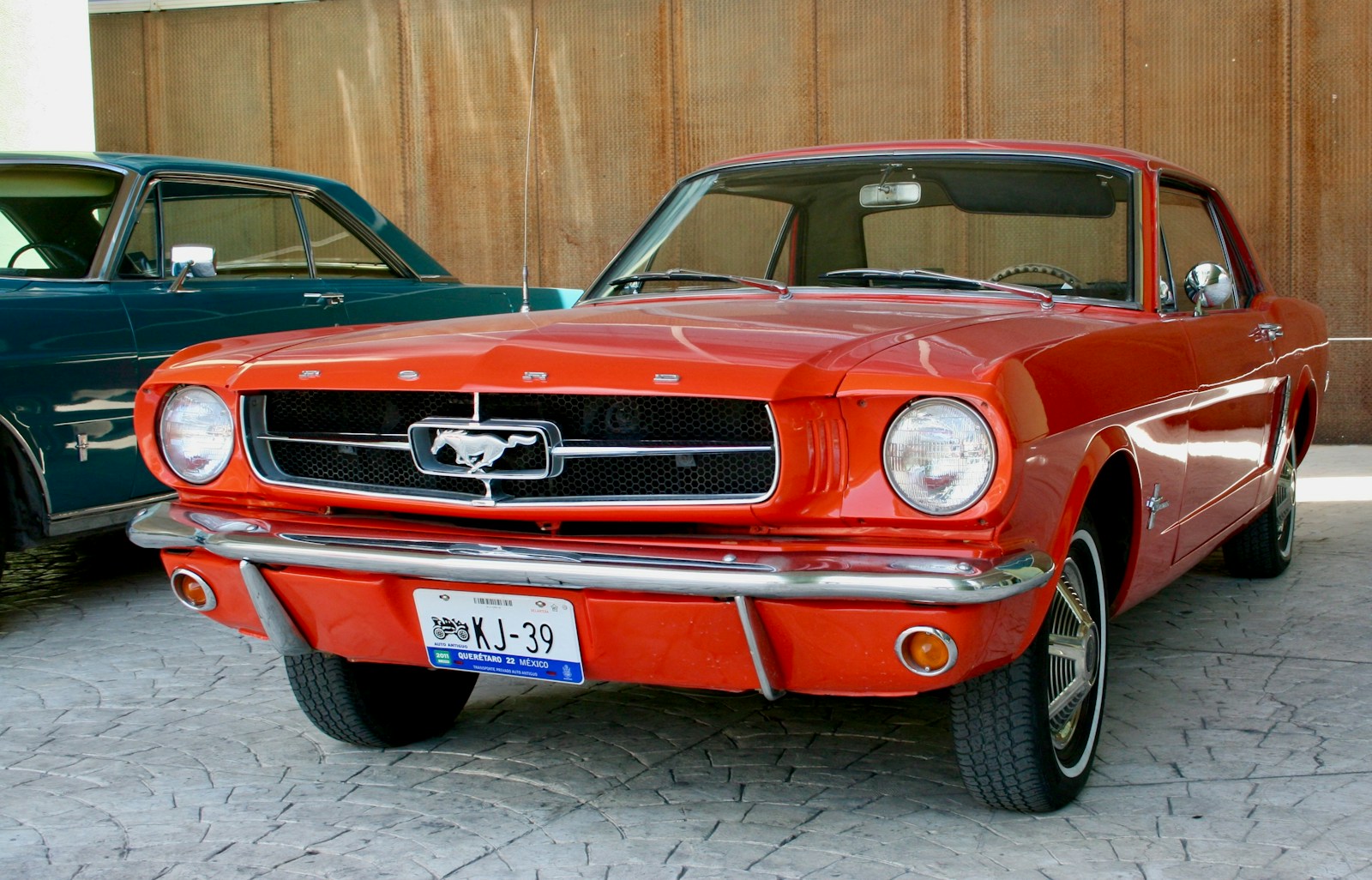
When Ford unveiled the Mustang at the 1964 World’s Fair in New York, it sold over 22,000 units on the first day. The car was designed to be attainable: a long hood, a short deck, and a base price under $2,400, which put it within reach of young buyers or at least within range of their parents’ generosity. That accessibility is exactly what made it the definitive boomer dream car.
The Mustang slotted perfectly into a youth culture built around cruising. In towns across the country, weekend nights meant slow laps down the same familiar strip, windows down, radio up. A Mustang in the driveway instantly elevated a teenager’s social standing in that world. As automotive historian and former Motor Trend editor Matt Stone has noted, the Mustang “wasn’t just a car; it was a passport to a lifestyle Ford had invented from scratch.”
For many boomers, though, the passport stayed out of reach. Insurance premiums on V8 models were brutal for drivers under 25, and parental veto power did the rest. Decades later, those same people have driven a sustained market for clean, largely stock first-generation Mustangs. According to Hagerty’s valuation tools, a condition-2 (excellent) 1965 Mustang GT fastback was valued at roughly $68,000 as of early 2025, while a 1967 Shelby GT500 in similar condition could top $200,000. A massive reproduction-parts industry, led by suppliers like Dynacorn and CJ Pony Parts, means that even rough examples can be restored to factory condition, which keeps the Mustang one of the most accessible dream cars for boomers to finally own and actually drive.
The 1970 Oldsmobile 442 W30: Muscle Car Myth Made Real
If the Mustang was the accessible fantasy, the 1970 Oldsmobile 442 W30 was the car you only saw once, rumbling through the intersection before it disappeared. Oldsmobile’s W30 package added forced-air induction, a hotter camshaft, and lighter internals to the already potent 455-cubic-inch V8, producing a factory-rated 370 horsepower that most enthusiasts believe was deliberately understated. On the street, a W30 could run deep into the 13-second quarter-mile range on stock tires.
Production numbers were small. Oldsmobile built only about 2,933 hardtop coupes and 264 convertibles with the W30 option in 1970, according to figures compiled by the Oldsmobile Club of America. That scarcity, combined with the car’s fearsome reputation, has pushed values well into six figures. The $203,500 Barrett-Jackson result mentioned above is not an outlier; Bring a Trailer listings for documented W30s have regularly cleared $150,000 in recent years.
The 442 also occupied a slightly different cultural niche than its GM siblings. Where the Pontiac GTO was the original muscle car and the Chevelle SS was the blue-collar brawler, the Oldsmobile badge gave the 442 a more upscale image. It appealed to teenagers who wanted to look a bit more grown up without sacrificing quarter-mile bragging rights. That blend of power and polish helps explain why, once boomers had the disposable income to build collections, the 442 W30 moved quickly from “someday” car to centerpiece.
There is a practical catch, however. Because so few W30s were built, the market is rife with clones: standard 442s upgraded with W30 components or outright fakes. Buyers at this price level typically require a Protect-O-Plate (Oldsmobile’s factory build sheet) or a PHS (Pontiac Historical Services, which also documents Oldsmobile builds) verification before writing a check. That authentication process has become its own cottage industry, a sign of just how much money is at stake when boomers chase the cars of their youth.
The 1957 Chevrolet Bel Air: Chrome, Fins, and First Freedom
Before the horsepower wars of the 1960s, a different shape defined the American road. The 1957 Chevrolet Bel Air, with its tailfins, chrome spears, and optional fuel-injected 283 V8, became the rolling symbol of postwar optimism. For the oldest boomers, born in 1946, the ’57 Chevy was the car in the driveway during their childhood, the car their father washed on Saturday mornings, and often the first car they were allowed to borrow on a Friday night.
That early exposure left a deep mark. The Bel Air arrived just as American families were flooding into the suburbs, and the car became inseparable from the era’s sense of possibility. It looked futuristic in 1957, and its design has aged so well that it still draws crowds at any cruise-in. A Hagerty condition-2 valuation for a 1957 Bel Air convertible with the 283 V8 sat near $120,000 as of early 2025, while fuel-injected examples, of which Chevrolet built fewer than 1,600, can command significantly more.
The Bel Air also benefits from one of the deepest aftermarket support networks in the hobby. Companies like Danchuk and Eckler’s stock virtually every trim piece, weatherstrip, and mechanical component, which means a complete frame-off restoration is labor-intensive but rarely stalled by parts availability. That practicality matters to boomer buyers who want to drive their cars, not just display them.
Alongside the Bel Air, enthusiasts of the same era often point to the 1957 Studebaker Silver Hawk and the Volkswagen Beetle as cars that traded on personality rather than raw power. But neither has matched the Bel Air’s staying power in the collector market. Where the Cadillac Eldorado of the late 1950s projected wealth and the Corvette projected speed, the Bel Air projected something more universal: the promise that a middle-class family could own something beautiful.
Why These Three Cars Still Matter to Boomers
Taken together, the Ford Mustang, the 1970 Oldsmobile 442 W30, and the 1957 Chevrolet Bel Air cover the full arc of boomer car culture. The Bel Air preserved the innocence of early postwar cruising. The Mustang captured the excitement of youth-oriented design in the mid-1960s. The 442 W30 embodied the peak of the muscle car arms race just before emissions regulations and insurance surcharges brought the era to a close.
Each car spoke to a different moment in the lives of drivers who were just discovering what an automobile could represent: independence, identity, rebellion, or simply the thrill of a V8 at full throttle. The fact that boomers are still willing to pay six figures for that feeling, decades after the original sticker prices have faded from memory, says less about the cars themselves than about the power of the years in which they first encountered them.
The collector market is not static, though. As the oldest boomers move into their 80s, estate sales and collection dispersals are beginning to add supply. Meanwhile, Gen X buyers, whose formative cars include the Fox-body Mustang and the Buick Grand National, are entering their own peak collecting years. Whether the ’57 Chevy and the 442 W30 hold their current values will depend on whether younger enthusiasts develop the same emotional attachment, or whether these cars become museum pieces admired from a distance rather than driven on warm evenings. For now, the keys still belong to the generation that dreamed about them first.
More from Wilder Media Group: