


In the first quarter of 2026, a used Tesla Model 3 with 40,000 miles on the odometer can be had for under $20,000 at dealerships across the country. Three years ago, that same car sold new for nearly twice as much. That collapse in price, multiplied across dozens of models and millions of listings, is rewriting who buys electric and how they get there.
While political battles over EV mandates and tariffs dominate headlines, a quieter shift is playing out on dealer lots and online marketplaces: pre-owned electric vehicles are selling in record numbers. The used EV market is no longer a niche for early-adopter bargain hunters. It is becoming a mainstream path to electrification, driven by plunging prices, a flood of lease returns, and a federal tax credit that knocks up to $4,000 off qualifying purchases.
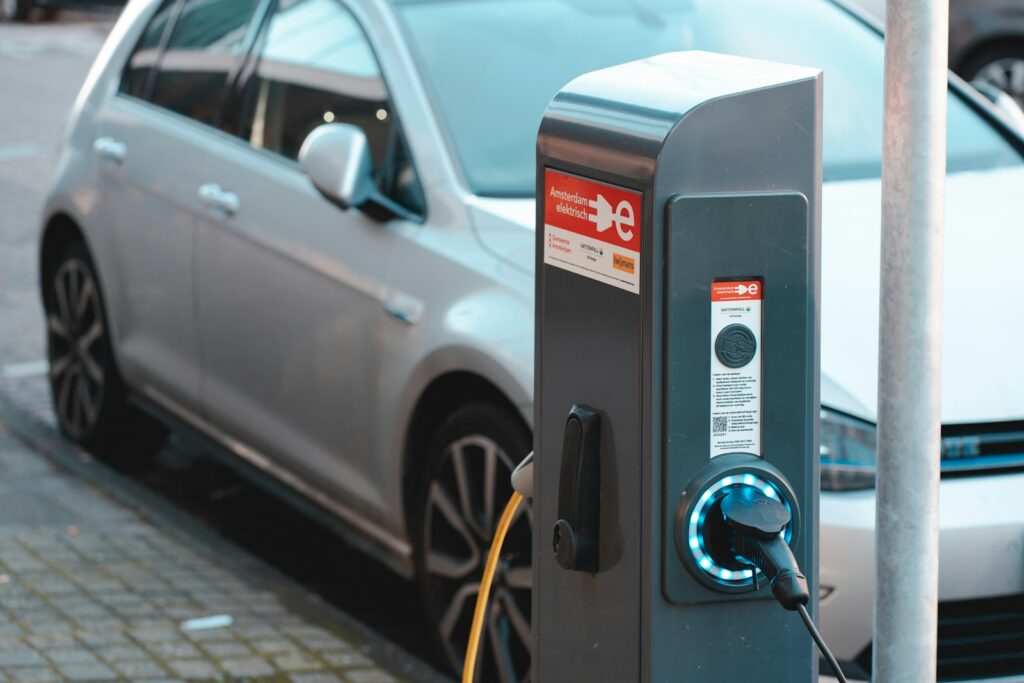
Record sales volumes across the U.S. and Europe
The numbers are hard to dismiss. Almost 89,000 used EVs changed hands in the United States during the fourth quarter of 2025 alone, a 13.5% jump from the same period a year earlier, according to data reported by the Los Angeles Times. Much of that growth was concentrated in vehicles priced under $25,000, the segment where most American car buyers actually shop.
Across the full year, analysts at Recurrent and other tracking firms described U.S. used EV transaction volumes as reaching an all-time high, a milestone covered in a February 2025 analysis in Forbes by clean-transportation analyst Stacy Noblet. The growth was not limited to one region or brand. Tesla still dominates the used EV market by sheer volume, but Chevrolet Bolt EVs, Hyundai Ioniq 5s, and Ford Mustang Mach-Es are increasingly common on certified pre-owned lots.
Europe is seeing an even sharper acceleration. The UK’s Society of Motor Manufacturers and Traders reported that used battery-electric car sales rose 44% in 2025 compared with the prior year. Continent-wide, the European Automobile Manufacturers’ Association tracked a 45% surge in used EV transactions over the same period. These are not marginal gains. They suggest that the wave of new EVs sold between 2021 and 2023 is now cycling into secondhand ownership at scale.
Why dealer lots are filling up with pre-owned plug-ins
The supply side of this equation is straightforward: millions of EVs sold on two- and three-year leases between 2022 and 2024 are coming back. Nathan Reid, CEO of the logistics division at uShip, told USA Today in February 2026 that “we are going to see thousands of used EVs enter the market this year,” citing lease returns, fleet rotations, and trade-ins from early adopters chasing longer-range models.
That inventory surge is most visible in coastal metro areas where new EV adoption was highest. In markets like Los Angeles, San Francisco, and the New York suburbs, three-year-old premium electric sedans and crossovers are now listed at prices that would have bought a mid-trim gasoline SUV just two years ago. For dealers, the glut creates both opportunity and pressure: more price points to offer shoppers, but also more competition to move aging stock before values drop further.
The federal used clean vehicle tax credit, which provides up to $4,000 for qualifying purchases of EVs priced at $25,000 or less from licensed dealers, has added fuel. That incentive, established under the Inflation Reduction Act, effectively lowers the entry price of many used EVs into the mid-teens, a range that opens the door for buyers who never considered electric before.
Prices have dropped fast, and the gap with gas cars is narrowing
Depreciation has been the used EV market’s best recruiter. A pricing analysis published by Recharged found that one- to five-year-old electric cars lost an average of 15.1% of their value over the prior year, compared with roughly 0.5% for equivalent gasoline models. That steep depreciation curve, painful for original owners, is a windfall for secondhand buyers.
Several forces are pushing prices down simultaneously. First-generation EVs with shorter ranges (under 200 miles) have lost value quickly as newer models offer 300 miles or more. Increased competition among automakers has compressed new EV pricing, which in turn drags down used values. And the expiration or restructuring of some new-vehicle purchase incentives has made lightly used models look even more attractive by comparison.
New EVs, meanwhile, still carry a meaningful premium. Industry data heading into 2026 pegged the average new EV transaction price at roughly $6,000 more than a comparable new gasoline vehicle. That gap is a powerful nudge toward the used lot, especially for buyers willing to accept a model year or two of age and slightly less range in exchange for thousands of dollars in savings.
None of this happens without the new-vehicle boom that preceded it. Global electric car sales exceeded 17 million units in 2024, and more than one in five new cars sold worldwide was electric, according to the International Energy Agency’s Global EV Outlook 2025. In the United States, battery-electric vehicles continued to grow their share of new sales even as the overall pace of adoption moderated.
The pattern mirrors previous technology transitions. Early adopters buy new at a premium, absorb the steepest depreciation, then trade up when the next generation arrives. Their cast-offs become the entry point for a much larger pool of mainstream buyers who were priced out or simply waiting for the technology to prove itself. That cycle is now fully underway with EVs, and the used market is where most of the conversion from gasoline is likely to happen over the next several years.
Buyer skepticism is real, but it is shifting
Enthusiasm on the used lot has not erased doubt. A 2025 survey by AAA found that price and charging access remain the top concerns cited by Americans considering an EV purchase, and that overall skepticism toward electric vehicles had reached its highest level since 2022, even as the number of respondents who personally know an EV owner continues to climb.
But the nature of that skepticism is evolving. A separate consumer study found that a majority of self-described EV skeptics said they expected to seriously consider an electric vehicle within three to five years, framing their hesitation as a matter of timing rather than outright rejection. And CDK Global’s “Car Shopper Shifts on EVs” study, based on responses from 1,300 in-market shoppers, found that many who test-drove an EV came away impressed by the driving experience but still worried about long-term battery replacement costs.
That specific concern, battery longevity, matters more in the used market than anywhere else. Buyers considering a pre-owned EV want to know how much range the battery has lost and what a replacement would cost. Companies like Recurrent now offer free battery health reports for used EVs, and many certified pre-owned programs from automakers include battery warranties of eight years or 100,000 miles, which often still have years of coverage remaining on a three-year-old vehicle. Those safeguards are gradually lowering the perceived risk.
What the used EV boom signals about the road ahead
The used EV market in early 2026 looks like a tipping point, not a peak. Record transaction volumes, falling prices, growing inventory, and a federal tax credit are converging to make pre-owned electric vehicles accessible to a far broader slice of American buyers than new EVs ever reached on their own.
That does not mean the transition is inevitable or smooth. Policy uncertainty, charging infrastructure gaps in rural areas, and the sheer inertia of a country with 280 million registered gasoline vehicles all act as brakes. But the secondhand market has a way of settling debates that showroom floors cannot. When a family can buy a three-year-old electric crossover for less than a new gasoline compact, the calculation changes, not because of ideology, but because of math.
For millions of drivers, the question is no longer whether EVs work. It is whether the price is right. Increasingly, on the used lot, it is.
More from Wilder Media Group: