


Britain’s plan to stop selling new petrol and diesel cars has been rewritten so many times that many drivers have stopped trying to keep up. The policy was supposed to offer certainty: a fixed date after which every new car on a forecourt would be electric. Instead, shifting deadlines and partisan point-scoring have turned the transition into one of the most polarising domestic policy fights of the decade.
As of spring 2026, the basic framework is this: the Labour government has committed to ending sales of new purely petrol and diesel cars by 2030, with new hybrids allowed until 2035, after which every new car and van sold must be fully zero-emission. But between the headline and the reality sits a tangle of confusion, cost anxiety and infrastructure gaps that no slogan has managed to smooth over.
What is actually being banned, and what is not
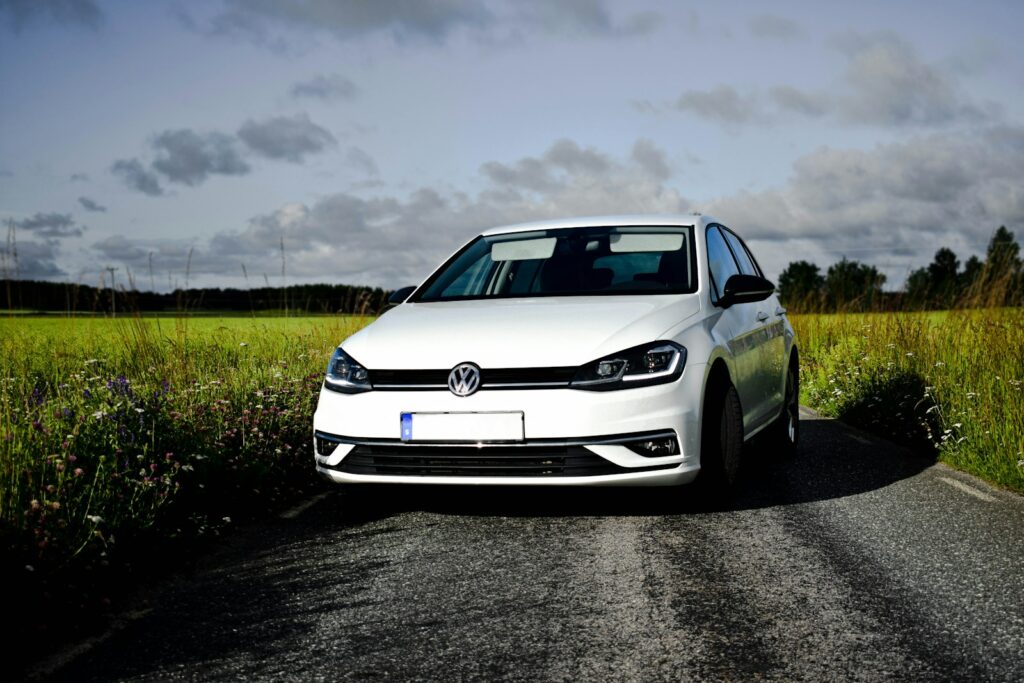
The single biggest misunderstanding is that existing cars will be outlawed. They will not. The ban applies only to the sale of new petrol and diesel vehicles. A driver who buys a used 2019 Volkswagen Golf in 2032 will be perfectly entitled to insure it, MOT it and fill it up at any open petrol station. Servicing, spare parts and fuel supplies are expected to continue for decades after the new-sales deadline passes.
The target itself has already moved more than once. The original 2030 date for all new combustion-engine cars was loosened under the previous Conservative government, which pushed the deadline for some vehicles to 2035. Labour reversed that decision after taking office, restoring the 2030 cut-off for pure internal combustion models while keeping 2035 as the end date for hybrids. Full Fact’s government policy tracker provides a detailed timeline of each shift.
The distinction matters because it shapes what manufacturers build. Carmakers need years of lead time to design platforms, retool factories and negotiate battery supply contracts. Every time the deadline shifts, investment decisions get delayed or redirected, which is one reason the industry has pushed for the government to pick a date and stick with it.
How cars became a culture war
Once the phase-out entered party manifestos, the argument stopped being purely about emissions and became a proxy fight over identity, fairness and the cost of living. The Conservative Party has pledged to scrap the petrol and diesel sales ban entirely if it returns to power, framing the policy as part of a broader “war on motorists” that penalises ordinary households. Labour counters that clear deadlines are the only way to drive the investment needed to bring EV prices down.
Polling suggests neither side has won the public decisively. Surveys conducted in 2024 and 2025 found that a significant share of respondents still believe electric vehicles produce roughly the same lifetime emissions as petrol or diesel cars, a claim that does not hold up against lifecycle analyses from bodies such as the International Council on Clean Transportation. At the same time, many drivers say they would prefer to keep a combustion engine even if new petrol cars disappear from showrooms, largely because of sticker price and charging worries rather than climate scepticism.
That gap between policy ambition and public readiness is where campaign groups have found their audience.
The pushback: campaign groups and industry voices
FairFuelUK, which represents drivers who feel squeezed by fuel duty, low-emission zones and rising motoring costs, has called on the government to rethink hard cut-off dates. The group argues that cleaner combustion technology and synthetic fuels deserve a longer runway, and that the UK should follow the EU’s example of allowing some flexibility. In a recent statement, FairFuelUK called for a U-turn on the ban, urging ministers to keep options open for engines that can run on lower-carbon fuels.
Business leaders in the automotive aftermarket echo that concern. Garages across the country still depend on oil changes, exhaust repairs and timing belt replacements. A rapid drop in new combustion-engine sales could shrink that work pipeline years before electric vehicle volumes are large enough to replace it, leaving thousands of independent workshops in a difficult transition of their own.
EV advocates push back hard. They point to the UK’s Zero Emission Vehicle (ZEV) mandate, which sets legally binding annual targets for the share of new cars that must be battery electric, ramping from 22% in 2024 to 80% by 2030 and 100% by 2035. The mandate, they argue, proves the industry is already building toward an electric majority regardless of political noise. Delay, in their view, simply locks drivers into higher running costs and continued exposure to volatile fuel prices.
Charging: the gap between promise and pavement
Even drivers who want to go electric often hit a practical wall. The UK had around 73,000 public charge points by late 2025, a number that has grown quickly but remains unevenly distributed. Rapid chargers cluster along motorways and in supermarket car parks; residential streets in older towns and cities are frequently left out.
During debate on the Planning and Infrastructure Bill in the House of Lords in October 2025, peers warned that the shortage of reliable public charging is not a future risk but a present-day barrier. Several speakers argued that planning rules have not kept pace with the rollout, and that regulations for accessible charging points remain voluntary, meaning disabled drivers and those without off-street parking are left relying on goodwill rather than enforceable standards.
For a driver in a terraced street, that policy gap shows up as a cable trailed across the pavement or a 15-minute drive to the nearest rapid charger. Until those frictions are addressed, the promise of cheap overnight home charging will feel like a perk for homeowners with driveways rather than a universal benefit.
The European backdrop and the e-fuel wildcard
Britain is not having this argument alone. The European Union has legislated a ban on the registration of new petrol and diesel cars from 2035, a decision that shapes which models global manufacturers develop. Because carmakers rarely build entirely separate vehicle platforms for a single market, the EU’s timeline exerts gravitational pull on the UK regardless of domestic politics. Eurac Research’s analysis of EU e-mobility policy sets out the rationale behind the 2035 deadline.
Within that framework, a handful of high-performance brands have carved out a potential escape route. Porsche and Ferrari led a late lobbying push before a key EU vote to secure an exemption for engines running on synthetic e-fuels, which are produced using captured carbon and renewable energy. If certified as carbon-neutral, those fuels could allow a narrow category of combustion engines to survive past 2035. The exemption remains limited in scope, but it signals that the transition will not be perfectly uniform, even in Europe.
Globally, the direction of travel is similar. At COP26 in November 2021, more than 30 national governments and six major automakers pledged to phase out new petrol and diesel car sales by 2040 worldwide and by 2035 in leading markets. Not every signatory has followed through with binding legislation, but the declaration underlined that the UK’s debate sits inside a broader international shift rather than a solo experiment.
Where drivers go from here
The honest answer is that nobody can guarantee the 2030 date will hold. It has already moved once, and another change of government could move it again. What is harder to reverse is the direction of the car industry itself. Battery costs have fallen by roughly 90% since 2010, according to BloombergNEF data. Major manufacturers including Ford, Volkswagen and Stellantis have committed billions to electric platforms. Even if the UK softened its domestic deadline, the cars arriving on forecourts in the early 2030s will be overwhelmingly electric simply because that is what the global supply chain is tooling up to build.
For drivers weighing their next purchase, the practical calculus comes down to a few questions: Can I charge reliably where I live? Does the upfront cost work for my budget? And do I trust the second-hand market to keep my current car viable for another decade? The policy debate matters, but for most households the decision will be made in the driveway, not in Parliament.
More from Wilder Media Group: