
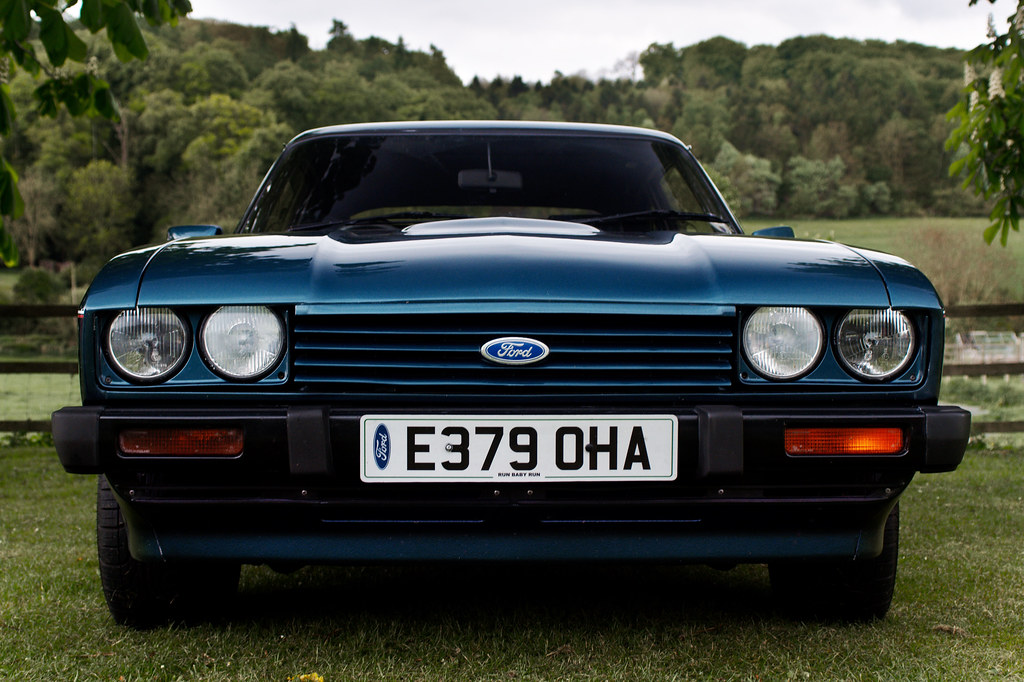

Ford revived the Capri name in 2024, and the result is nothing like the low-slung coupe that made the badge famous in the 1970s. The new Capri is a fully electric crossover, built on Volkswagen’s MEB platform and sold exclusively in European markets. It pairs retro styling cues with a modern EV powertrain, and for 2026, Ford has sharpened the lineup with upgraded battery technology and a more compelling standard-range model.
The revival has split opinion. Some longtime fans see an iconic coupe name bolted onto a tall, battery-powered SUV and call it a betrayal. Others see a smart play: take a badge with emotional pull and attach it to the vehicle format that actually sells. Either way, the Capri is here, and it is trying to carve space in one of the most competitive segments in the European EV market.
What the Capri actually is
The new Capri shares its underpinnings with the Volkswagen ID.5 and, more directly, with the Ford Explorer EV that launched alongside it. Both Ford models ride on VW’s MEB architecture as part of a strategic partnership between Ford and Volkswagen that gives Ford access to VW’s electric platform in exchange for commercial vehicle collaboration.
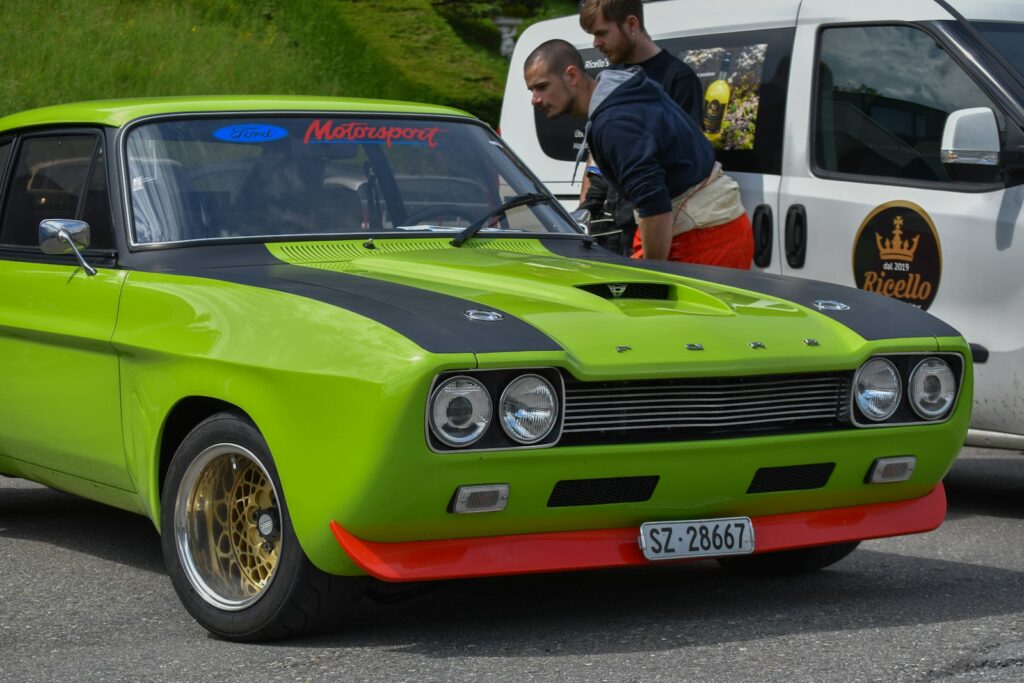
Where the Explorer is a more upright, family-oriented SUV, the Capri takes a sportier stance. It uses a fastback roofline, a long hood and muscular rear haunches that reference the original coupe’s proportions, even though the car sits considerably higher and wider than its 1970s ancestor. Ford’s design team has described the approach as “rebellious to its Capri core,” using bold color options and graphic details to emphasize the car’s sculpted rear and sloping roofline.
The Capri is currently available in the United Kingdom, Germany and several other European markets. Ford has not announced plans to sell it in the United States or Canada.
Powertrain and range
Ford offers the Capri in two configurations. The Standard Range model uses a rear-mounted electric motor producing 170 kW (approximately 228 horsepower) and draws from a smaller battery pack. For 2026, Ford has upgraded this entry-level variant with lithium iron phosphate (LFP) battery cells, which are cheaper to produce and more durable over repeated charge cycles than the nickel-manganese-cobalt chemistry used in earlier versions.
The Extended Range model is the one that grabs attention on paper. It produces 210 kW (approximately 286 horsepower), drives the rear wheels and carries a 77 kWh usable battery that delivers up to 627 kilometers (about 390 miles) of range under the European WLTP testing cycle, according to Ford’s official UK specifications. Real-world range will vary, particularly at motorway speeds or in cold weather, but the WLTP figure puts the Capri among the longer-range options in its class.
Both versions support DC fast charging at up to 185 kW, which Ford says can add roughly 200 kilometers of range in about 10 minutes under optimal conditions. That charging speed is competitive with the Hyundai Ioniq 5 and slightly behind the best 800-volt architectures from Kia and Porsche, but it is adequate for the road-trip use case most crossover buyers care about.
How it drives, according to early reviews
European automotive journalists have been testing the Capri since its launch in late 2024, and the consensus is broadly positive with some caveats. Autocar’s review praised the Capri’s composed ride and quiet cabin, noting that the MEB platform delivers a refined, comfortable experience that suits the car’s grand-touring character. Acceleration in the Extended Range model is brisk rather than violent, with the 0-to-100 km/h sprint taking around 6.4 seconds.
Criticism has centered on two areas. First, the steering feels somewhat numb at higher speeds, a trait shared with other MEB-based vehicles. Second, the rear cargo area, while reasonably spacious at 572 liters with the seats up, loses some practicality due to the sloping roofline. Families who need maximum cargo flexibility may find the boxier Ford Explorer EV a better fit.
The sliding central touchscreen, which moves to reveal a small hidden storage compartment underneath, has drawn attention as a clever design detail. It is not a gimmick that changes the ownership experience, but it is the kind of thoughtful touch that gives the cabin personality.
Pricing and competition
In the United Kingdom, the Capri starts at approximately £42,000 for the Standard Range model, with the Extended Range version climbing toward £48,000 depending on trim and options, based on Ford UK’s current pricing. In Germany and other eurozone markets, prices start around €42,000 and extend past €50,000 for higher specifications.
That positions the Capri directly against the Volkswagen ID.5, which shares its platform but lacks the Capri’s styling differentiation, and the Tesla Model Y, which offers a larger dealer and Supercharger network but a more polarizing interior design. The Hyundai Ioniq 5 and Kia EV6 also compete in this bracket, both offering 800-volt charging architecture that the Capri cannot match.
Ford’s value argument rests on standard equipment. The Capri comes well-specified even in base trim, with a large infotainment screen, adaptive cruise control and a suite of driver-assistance features that would require paid upgrades on some rivals. Whether that equation holds depends on how aggressively competitors adjust pricing through 2026, a year in which European EV incentives and tariff structures remain in flux.
The bigger picture for Ford in Europe
The Capri is not just a nostalgia play. It is part of Ford’s broader push to transition its European lineup toward electrification, a strategy that also includes the Explorer EV and the smaller, more affordable electric models Ford has previewed for later in the decade. The partnership with Volkswagen gives Ford a shortcut: rather than developing an entirely new EV platform from scratch, it can leverage MEB and focus resources on design, software and brand positioning.
That approach carries risk. Ford does not control the underlying engineering, and any platform-level issues that affect VW’s EVs will also affect Ford’s. But it allows Ford to field competitive electric crossovers years earlier than it could have managed alone, and the Capri’s distinctive styling ensures it does not simply look like a rebadged Volkswagen.
For buyers in Europe shopping for a mid-size electric crossover in early 2026, the Capri offers a genuine alternative to the usual suspects. It is not perfect, and it is certainly not the coupe some fans wanted. But as a statement of intent from Ford’s European division, it is hard to ignore.
More from Wilder Media Group: