
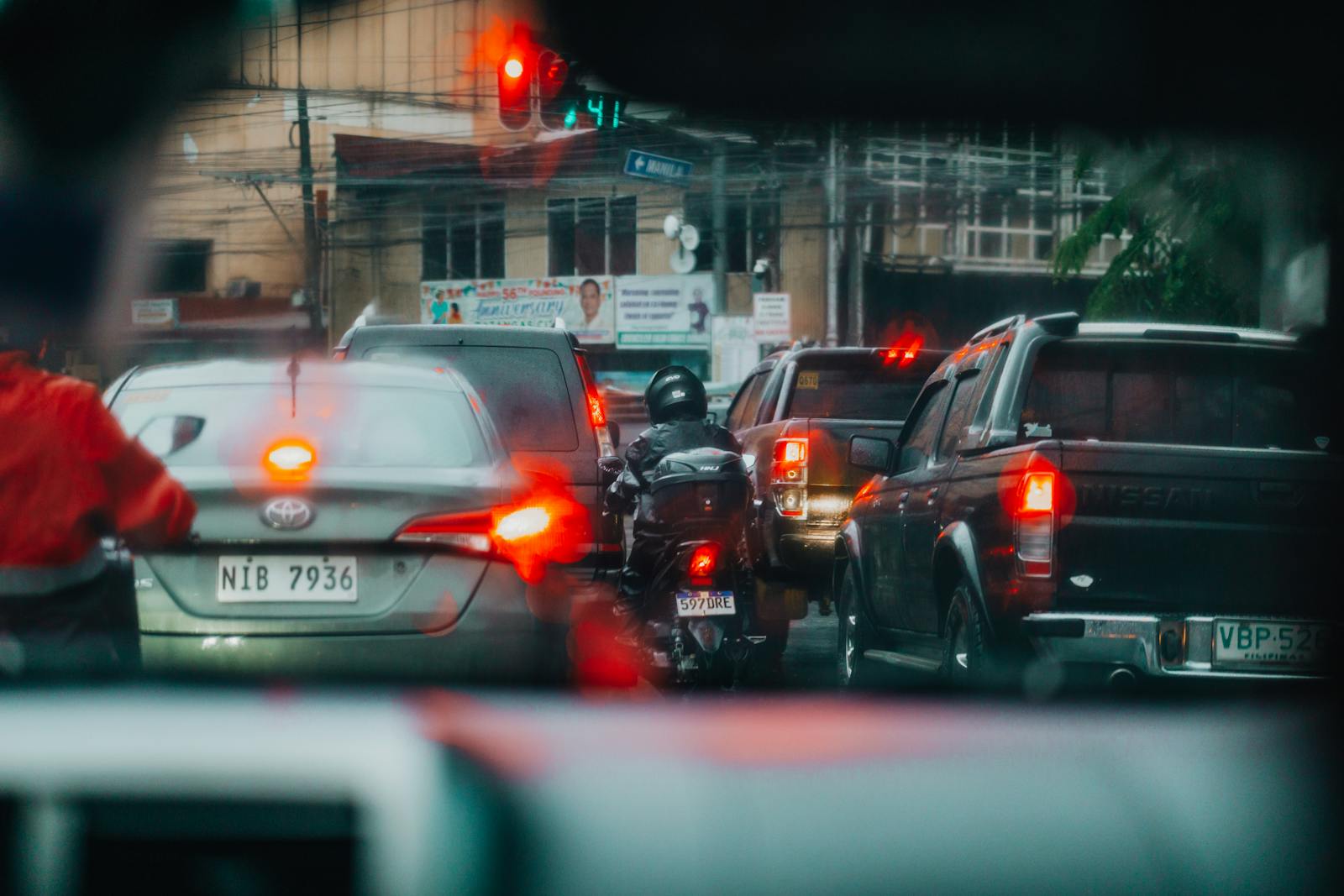

Traffic signals are designed to remove guesswork from busy intersections, especially in areas where visibility, speed, or crossing patterns make quick decisions risky. But when drivers treat those signals as optional, even a routine stop can turn into a near-miss.
“No turn on red” signs are typically placed where sightlines are limited or where oncoming traffic moves faster than expected. Ignoring them doesn’t just break a rule; it removes a layer of protection built specifically for that intersection.
Moments like this show how quickly a small decision can create a much bigger risk.
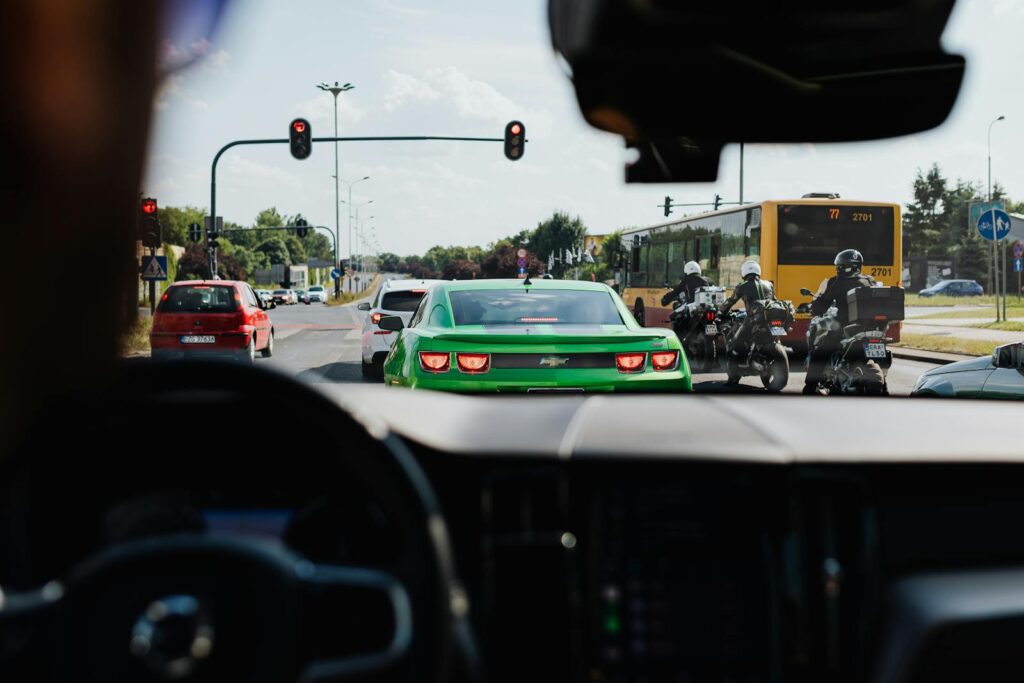
Dashcam Shows Car Turning on Red Despite Clear Restriction
A video shared by @itsbuchi.png captures a tense moment at an intersection where traffic appears calm before a rule is ignored.

@itsbuchi.png Do we just not pay attention anymore? 😭😭#creatorsearchinsights #dashcamfootage #baddriving #carsfyp #subaruwrxsti
In the footage, the driver approaches a red light and comes to a stop behind another vehicle. A clearly posted “no turn on red” sign is visible at the intersection, indicating that turning, even if the road looks clear, is not permitted.
Despite this, the car ahead proceeds to turn right while the light remains red. The movement is quick and deliberate, with no visible hesitation. The driver behind remains stopped, appearing to follow the signal correctly.
The moment creates a brief but notable contrast, one driver following the rules, the other choosing to bypass them. While no immediate collision occurs, the situation highlights how easily a different timing or unseen vehicle could have turned it into something more serious.
Why Ignoring “No Turn on Red” Signs Can Be Risky
Restrictions like “no turn on red” are usually based on real safety concerns, not convenience. These signs are often installed at intersections with poor visibility, complex traffic flow, or a history of collisions.
According to the National Highway Traffic Safety Administration, a large share of crashes occur at intersections, and most are linked to driver-related factors such as recognition and decision errors.
When drivers ignore these restrictions, they rely entirely on their own judgment, often without full visibility of approaching traffic, pedestrians, or blind spots. Even if the road appears clear, there may be vehicles or hazards that aren’t immediately visible.
In situations like this, the risk isn’t always obvious in the moment, but it’s built into the design of the intersection itself.
Viewers React to the Close Call
The video sparked a divided reaction, with many viewers debating whether the turn was actually a problem.
Some commenters dismissed the moment entirely, arguing that if no cars were coming, the turn was harmless. Others took a stricter stance, pointing out that the sign exists for a reason and should be followed regardless of traffic conditions.
Several viewers shared personal experiences, including being honked at for obeying similar signs or even receiving tickets for making the same mistake.
Some comments also highlighted a broader issue: how often drivers choose convenience over rules, especially when they believe they won’t face consequences.
For many, the discussion went beyond this one moment, reflecting a larger divide in how seriously people take everyday traffic laws and the risks that come with ignoring them.