
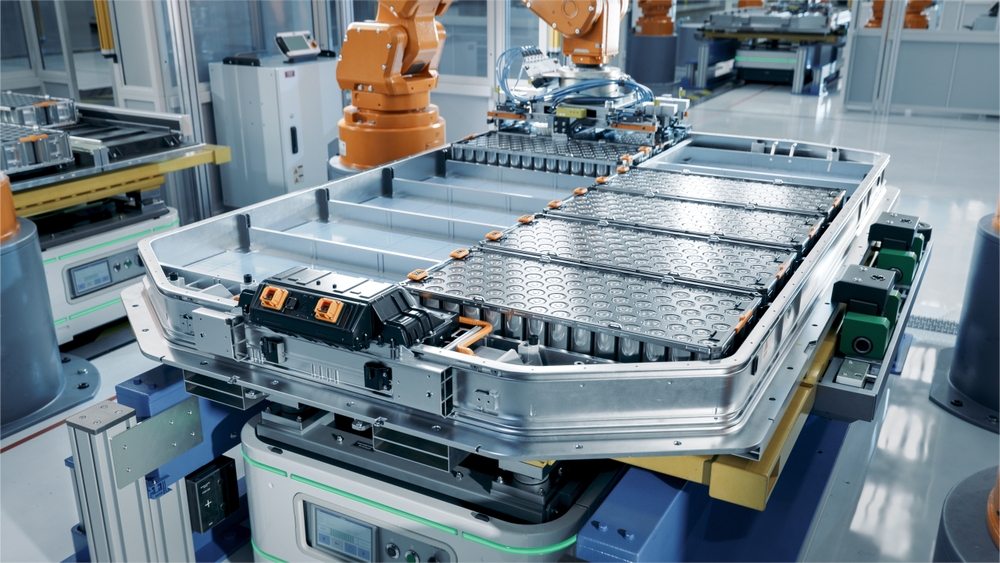

Electric vehicles may soon travel more than 800 miles on a single charge, a range that seemed impossible just a few years ago. Chinese automaker Chery recently unveiled a solid-state battery prototype with 600 Wh/kg energy density, nearly double what current lithium-ion batteries can achieve. The technology is moving faster than anticipated, with pilot production expected to begin in 2026 and mass production targeted for 2027.
The shift from traditional lithium-ion batteries to solid-state technology represents more than just extended range. These batteries replace flammable liquid electrolytes with solid materials, addressing long-standing safety concerns while packing significantly more energy into smaller, lighter packages. Tests show the new cells can withstand extreme conditions without catching fire or emitting smoke.
While the breakthroughs sound promising, they’re raising questions about whether the industry can scale production, reduce costs, and adapt charging infrastructure quickly enough. Major automakers and battery developers are racing to commercialize the technology, but significant hurdles remain between lab success and showroom availability.
Solid-State EV Batteries With 800 Miles of Range: The Breakthroughs and Major Players
Multiple Chinese automakers have begun testing battery prototypes that claim over 800 miles of range, while Western manufacturers partner with startups to catch up. Energy density levels reaching 600 wh/kg represent a massive leap beyond today’s lithium-ion batteries.
How Solid-State Batteries Unlock Extreme Driving Range
Solid-state batteries replace the liquid electrolyte found in conventional lithium-ion batteries with a solid electrolyte. This change allows manufacturers to pack more energy into the same physical space, directly translating to longer range.
The energy density advantage is substantial. Traditional lithium-ion batteries typically offer around 250-300 wh/kg, while solid-state EV batteries are reaching 350-600 wh/kg. Factorial Energy’s Solstice platform achieves up to 450 wh/kg, which the company says is 80% higher than traditional batteries and capable of delivering over 600 miles of range.
The math is straightforward: double the energy density means roughly double the driving range in the same battery pack size. Chery’s all-solid-state battery with 600 wh/kg energy density claims over 932 miles of CLTC driving range. That’s more than triple what many current electric vehicles offer.
Key Automakers and Battery Companies Advancing the Tech
BYD and CATL, which together controlled over 55% of global EV battery sales last year, both plan to begin small-scale production in 2027. These battery giants are racing against automakers developing their own technology.
Chinese Automakers Leading Testing:
- Dongfeng Motors – Testing prototype with 350 wh/kg density, claiming over 620 miles
- Changan Automobile – “Golden Bell” battery at 400 wh/kg, targeting 932 miles, trial installations by Q3 2026
- Chery – 600 wh/kg all-solid-state battery, testing begins 2027 with Exeed ES8
Western companies are pursuing partnerships. Mercedes-Benz drove a modified EQS over 745 miles using 106 Ah solid-state cells from Factorial Energy. Factorial launched the first commercial solid-state battery program in the US with Karma Automotive, which expects to launch the Kaveya in late 2027.
Factorial has secured partnerships with Mercedes-Benz, Stellantis, Hyundai, and Kia. Toyota has also announced ambitious plans for solid-state technology, though with a 2027 launch schedule.
Energy Density Advances: What 600 Wh/kg Means for Range
The progression from today’s batteries to 600 wh/kg represents a fundamental shift in what electric vehicles can achieve. Each improvement in wh/kg directly correlates to increased driving range without adding weight or size to the battery pack.
Dongfeng Motors’ 350 wh/kg battery delivers over 620 miles. Changan’s 400 wh/kg “Golden Bell” all-solid-state battery pushes that to 932 miles. Chery’s 600 wh/kg battery maintains the same 932-mile claim, suggesting other factors like vehicle efficiency also play a role.
The energy density improvements also enable faster charging. Chery’s Rhino E liquid semi-solid-state battery supports up to 1,200 kW of charging power, adding 310 miles of range in just 8 minutes. BYD’s lithium-iron phosphate Blade Battery 2.0 pairs with 1,500 kW charging stations that can charge from 10% to 70% in 5 minutes.
Higher energy density also contributes to safety and longevity, as solid-state batteries eliminate the flammable liquid electrolyte that poses fire risks in traditional lithium-ion batteries.
Solid-State, Semi-Solid-State, and All-Solid-State: What’s the Difference?
The terminology matters because not all batteries marketed as “solid-state” offer the same benefits. All-solid-state batteries contain no liquid electrolyte whatsoever, while semi-solid-state batteries still incorporate some liquid components.
Battery Type Comparison:
| Type | Liquid Electrolyte | Energy Density | Timeline |
|---|---|---|---|
| Lithium-ion | 100% liquid | 250-300 wh/kg | Current |
| Semi-solid-state | Partial liquid | 350-450 wh/kg | 2026-2027 |
| All-solid-state | 0% liquid | 400-600+ wh/kg | 2027-2028 |
Chery’s Rhino series illustrates this spectrum. The company offers a 400 wh/kg solid-state “S-Series” battery and a Rhino “E liquid” semi-solid-state battery launching this year in the Exceed EX7. The true all-solid-state battery with 600 wh/kg won’t begin vehicle testing until 2027.
Semi-solid-state batteries serve as a bridge technology. They’re easier to manufacture at scale and offer significant improvements over conventional lithium-ion batteries. All-solid-state batteries promise maximum performance but face more manufacturing challenges.
The solid electrolyte used in these batteries varies by manufacturer, with different companies exploring ceramic, polymer, and composite materials. Each approach offers trade-offs in performance, cost, and manufacturability.
What’s Next for Solid-State Batteries: Commercialization, Challenges, and Big Questions
The race to bring solid-state technology to market is heating up, with automakers like Subaru already launching their first models in August 2025 and several manufacturers now testing prototypes that could eliminate range anxiety. But scaling up battery production and solving thermal management issues remain significant obstacles before these batteries power mainstream vehicles.
Commercialization Timelines and Ongoing Testing
Early adoption is happening in high-end consumer electronics and niche EV models between 2025 and 2027, setting the stage for broader deployment. Several automakers have already committed to commercial solid-state battery programs with specific launch dates.
Subaru kicked things off by launching its first solid-state battery models in August 2025. Toyota has announced plans to introduce vehicles with these advanced battery chemistries in the second half of the decade. QuantumScape continues testing solid-state prototypes with automotive partners, focusing on high-energy-density cells that could deliver the promised 800-mile range.
The IM Motors L6 and other premium electric vehicles are expected to be among the first to feature production-ready solid-state batteries. Even performance vehicles like the Dodge Charger Daytona EV could eventually benefit from the technology’s higher energy density and faster charging capabilities.
Manufacturing Hurdles and Scalability Issues
Several critical developments in design, safety, and standards-building must occur before solid-state batteries can displace lithium-ion technology at scale. Building a gigafactory capable of producing these batteries at competitive costs represents one of the biggest challenges facing manufacturers.
The manufacturing process for solid-state batteries differs significantly from conventional lithium-ion production. Creating consistent interfaces between solid electrolytes and electrodes requires precision equipment and quality control measures that haven’t been fully developed yet. Contact resistance at these interfaces can reduce performance if not properly managed.
Battery production costs remain substantially higher than traditional lithium-ion cells. Companies must invest billions in new manufacturing facilities and tooling before prices drop to levels that make sense for mass-market vehicles. Semi-solid-state batteries are emerging as a practical interim solution that offers some benefits while being closer to market readiness.
Safety, Fast Charging, and Thermal Management Innovations
Solid-state batteries eliminate the flammable liquid electrolyte found in conventional cells, drastically reducing the risk of thermal runaway. These next-generation cells promise intrinsic safety with no flammable liquid inside, addressing one of the most significant concerns about EV battery fires.
The solid electrolyte enables faster charging without the degradation issues that plague liquid electrolyte systems. Vehicles like the Lucid Air Grand Touring already demonstrate impressive charging speeds with conventional batteries, but solid-state technology could push charging times even lower while maintaining battery longevity.
Thermal management remains an active area of research. While solid-state batteries generate less heat during operation, they still require careful temperature control for optimal performance. Engineers are developing new cooling systems that work specifically with solid electrolytes, which behave differently than liquid systems under various temperature conditions.
More from Steel Horse Rides:
- 13 Most Powerful Muscle Cars of All Time
- 13 Underrated JDM Cars That Deserve More Love
- 15 JDM Cars That Were Illegal in the U.S.
- 13 SUVs From the ’90s That Are Surprisingly Cool Today