
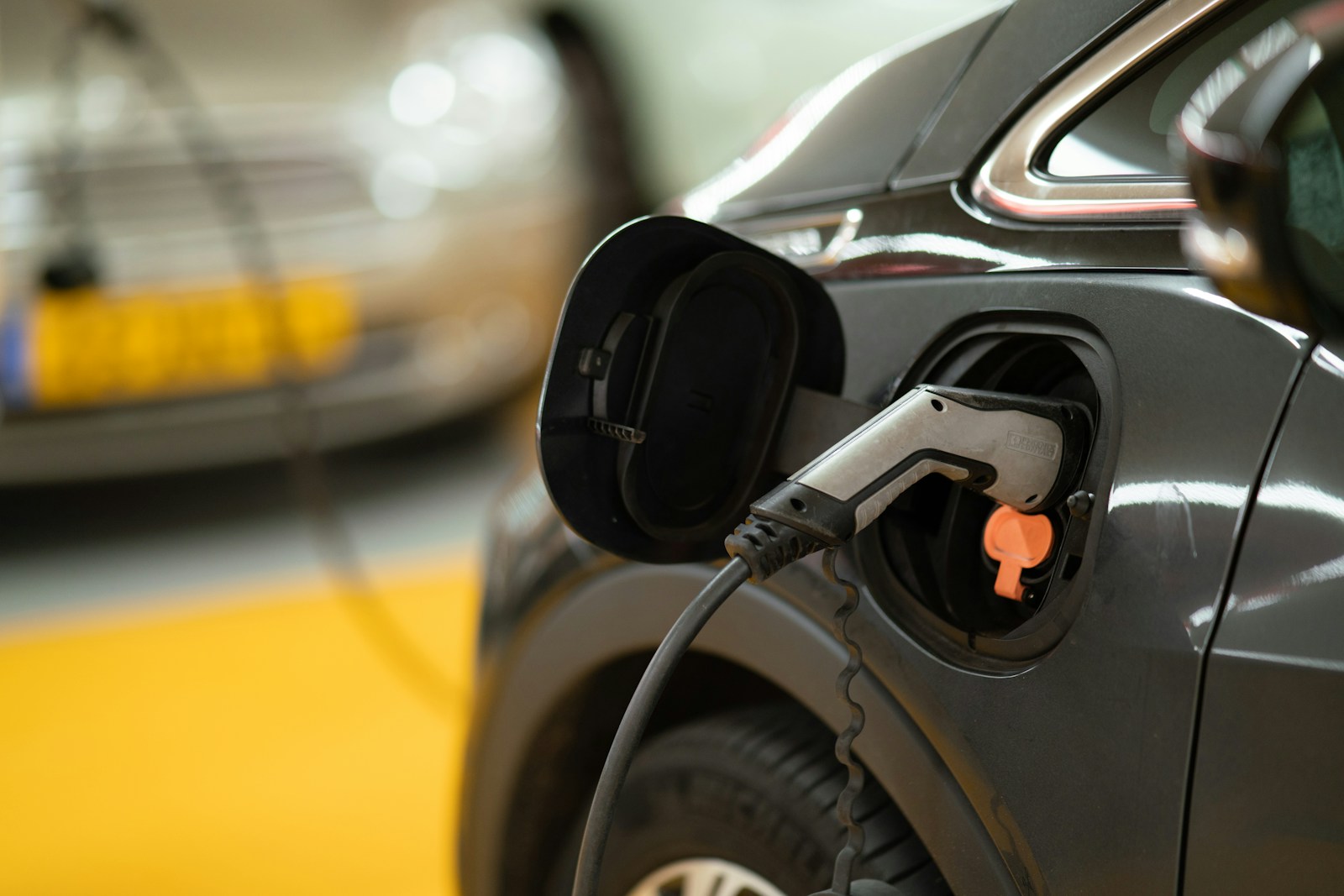

Electric vehicle owners across the United States could soon face annual fees that significantly exceed what traditional gas-powered car drivers pay in federal fuel taxes. New proposals in Congress and several state legislatures would charge EV owners between $200 and $250 per year, which amounts to two to three times more than the roughly $95 the average gas car driver contributes annually through the federal gas tax.
The proposed federal EV fee introduced by House Transportation and Infrastructure Committee Chairman Sam Graves would impose a flat $200 annual charge on electric vehicle owners. Meanwhile, 36 states have already implemented their own EV registration fees, with some like Texas charging $400 initially plus $200 annually, and New Jersey setting the nation’s highest at $250 per year.
The timing of these proposals has sparked debate among drivers, policy experts, and environmental advocates. With EVs representing just 10% of new car sales in the US, critics argue these fees discourage adoption of cleaner vehicles at a critical moment, while supporters claim they’re necessary to fund road infrastructure as gas tax revenue remains frozen at 1993 levels.
Understanding New EV Fee Proposals
Federal and state lawmakers are pushing annual fees of $200 to $250 for electric vehicle owners, amounts that significantly exceed what typical gas-powered car drivers contribute through fuel taxes. These flat EV fees charge owners 2-3x the federal gas tax average, raising questions about fairness as EVs make up just 10% of new car sales.
How the EV Fees Compare to Gas Taxes
The federal gas tax sits at 18.4 cents per gallon and hasn’t budged since 1993. When you do the math, the average American driver covers 11,484 miles annually at 22.3 mpg, which translates to roughly $95 per year in federal gas tax contributions.
The proposed federal EV fee introduced by House Transportation and Infrastructure Committee Chairman Sam Graves would hit electric vehicle owners with $200 annually. That’s more than double what gas car drivers pay into federal road funding. Some versions of the proposal pushed that number even higher to $250.
A $200 annual fee equals the federal gas tax on about 1,087 gallons of gasoline. That’s enough fuel to drive over 100,000 miles in an average gas car, yet no driver racks up that kind of mileage in a single year.
The Role of the Highway Trust Fund
The Highway Trust Fund relies heavily on gas tax revenue to maintain roads and infrastructure. The problem is that the federal gas tax hasn’t increased in 32 years, cutting its purchasing power in half when adjusted for inflation.
This creates a genuine funding shortfall. But EV owners could soon face charges while the country has only about 4 million electric vehicles on the road, representing roughly 1.4% of the total vehicle fleet. A single penny increase to the gas tax would generate twice the revenue of the proposed EV fee, but that would affect 280 million registered vehicles instead of just a small fraction of EV owners.
Flat Fees Versus Road Usage Costs
Flat fees don’t scale with actual road usage. A driver putting 3,000 miles on their EV pays the same $200 as someone driving 25,000 miles. Gas taxes, despite their limitations, at least increase with how much someone drives.
Oregon implemented a smarter approach through its OReGO program, charging EV drivers 2.3 cents per mile. Utah and Hawaii adopted similar models. These per-mile charging systems treat every driver equally regardless of fuel type and scale directly with road wear.
Meanwhile, 36 states impose EV registration fee structures that result in EV drivers paying more annually than gas car drivers contribute through fuel taxes. Texas charges $400 upfront plus $200 yearly, while New Jersey approved the nation’s highest EV registration fee at $250, climbing to $290 by 2028.
Impacts and Debates Around Fairness
The proposed fees have sparked intense debate over whether EV owners should pay significantly more than gas vehicle drivers, with arguments centering on cost equity, adoption rates, and the political motivations behind the legislation.
Concerns Over Higher Costs for EV Owners
The federal gas tax stands at 18.4 cents per gallon and hasn’t increased since 1993. Based on average driving patterns of 11,484 miles annually at 22.3 mpg, typical gas car drivers pay roughly $95 per year in federal gas tax.
The proposed federal EV fee would charge owners $200 to $250 annually. That’s more than double what gas drivers contribute to federal road funding.
The disparity becomes more glaring when considering actual usage. A $200 annual fee equals the federal gas tax on about 1,087 gallons of gasoline, enough to drive over 100,000 miles in an average gas car. The fundamental problem lies in the flat fee structure—a driver using their EV for 3,000 miles pays the same as someone driving 25,000 miles annually.
State fees compound the issue. Currently, 36 states impose EV registration fees that result in higher annual costs than what gas drivers pay through fuel taxes. Texas charges $400 initially plus $200 annually, while New Jersey approved a $250 fee rising $10 yearly until capping at $290 in 2028.
Effect on EV Adoption and Market Growth
The US already lags global markets in electric vehicle penetration. While EVs comprised 25% of global car sales in 2025, the US reached only 10%. China approaches peak oil demand, Vietnam hit 38% EV sales share, and the EU reached 26%.
The timing of these new fee proposals coincides with other policy changes that discourage EV adoption. The Big Beautiful Bill eliminated the $7,500 EV tax credit in September 2025, and the 30C charging infrastructure credit faces phase-out.
For many potential buyers, concerns have been raised about fairness when EV owners face penalties while gas vehicles remain exempt from similar flat fees. The cumulative effect creates a financial barrier at precisely the moment when the country needs to accelerate electrification.
Research published in Nature found that large-scale EV adoption could deliver $84 billion to $188 billion in health benefits by 2050 through reduced air pollution. Vehicle-related air pollution currently causes nearly 20,000 premature deaths annually in the country.
State and Federal Political Dynamics
House Transportation and Infrastructure Committee Chairman Sam Graves introduced the federal proposal. According to OpenSecrets data, Graves has received $163,300 from the oil and gas industry.
The political calculation appears straightforward. Raising the gas tax requires addressing 280 million registered vehicles, while targeting 4 million EV owners represents the path of least resistance. A single penny increase to the federal gas tax would generate twice the revenue of the proposed $200 EV fee.
Republicans are pushing these fees as a “fairness issue,” arguing EV drivers should “pay their share” for road maintenance. However, the math reveals EV owners would contribute disproportionately more than their gas-driving counterparts for the same infrastructure usage.
The federal gas tax’s purchasing power has been cut in half over 32 years of stagnation. That shortfall in the Highway Trust Fund stems from inflation eroding the tax’s value, not from the 4 million EVs representing roughly 1.4% of total vehicles on the road.
Exploring Alternative Solutions
Oregon implemented the OReGO program, which charges EV drivers 2.3 cents per mile. This directly proportional approach mirrors how gas taxes work—drivers pay based on actual road usage rather than a flat annual amount.
Utah and Hawaii have adopted similar per-mile models. These systems treat every driver equally regardless of fuel type and scale with how much they actually drive the vehicle.
Per-mile charging addresses the core equity concern without creating penalties for choosing cleaner vehicles. If road funding equity is the genuine goal, distance-based fees provide a clear answer that applies the same standard to all drivers.
The flat fee approach reveals different motivations. When lawmakers choose blunt instruments over fair solutions already proven effective in multiple states, it signals either lazy policymaking or intentional disincentives for EV adoption. Pennsylvania started collecting a $250 EV fee in 2026, and Minnesota doubled its EV registration surcharges this year, showing the trend accelerating rather than moving toward usage-based alternatives.
More from Steel Horse Rides:
- 13 Most Powerful Muscle Cars of All Time
- 13 Underrated JDM Cars That Deserve More Love
- 15 JDM Cars That Were Illegal in the U.S.
- 13 SUVs From the ’90s That Are Surprisingly Cool Today