

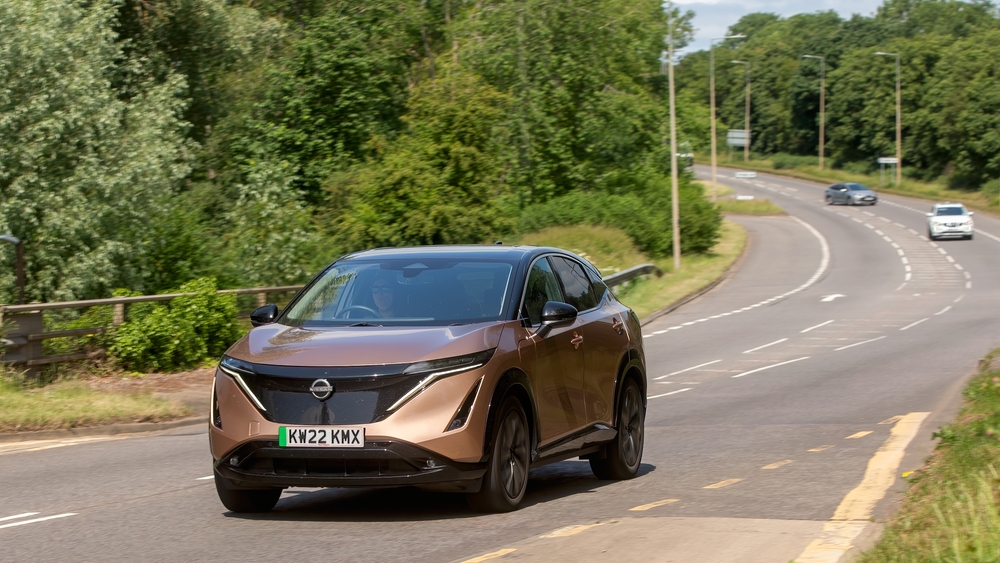
Nissan’s electric SUV journey has taken an unexpected turn. The Ariya is now reaching profitability milestones ahead of the automaker’s internal projections, marking a significant shift for a vehicle that faced early sales challenges against competitors like the Tesla Model Y and Ford Mustang Mach-E.
The timing couldn’t be better for Nissan, which has been navigating auto tariffs and intense global competition in the EV market. While the Ariya sold 9,345 units in 2024, lagging behind rivals, recent production efficiencies and strategic pricing adjustments have transformed the vehicle’s financial performance. The electric SUV is now contributing to Nissan’s bottom line faster than analysts anticipated.
This profitability breakthrough comes as Nissan refines its broader EV strategy, balancing the Ariya’s success with plans for other electric vehicles. The company is demonstrating that even in a crowded market, focused improvements to manufacturing costs and customer value can turn around an underperforming model’s financial trajectory.
Why Nissan’s Ariya Is Becoming Profitable Faster Than Expected
The ariya’s path to profitability has accelerated through a combination of ramping production capabilities, strategic price adjustments, and unexpectedly strong sales momentum that outpaced initial forecasts.
Sales Growth and Market Impact
The nissan ariya saw sales jump 47% in 2024, reaching 19,798 units compared to 13,464 the previous year. Fourth quarter performance was particularly strong, with sales climbing 30.2% from 3,765 to 4,901 units.
This growth came at a critical time for Nissan’s broader EV strategy. The ariya’s growth offset broader sales declines in Nissan’s traditional lineup during 2024. The electric suv captured buyers who might have otherwise looked at the hyundai ioniq 5, kia ev6, or ford mustang mach-e.
The nissan leaf also contributed to the company’s EV momentum with a 57% annual increase. Together, the two models pushed Nissan’s total EV sales past 30,000 units for the year. While that remains modest compared to Tesla’s volume, it represented meaningful progress for a manufacturer that had struggled with its electric vehicle offerings.
Cost Reductions and Manufacturing Improvements
Nissan’s Intelligent Factory finally hit its stride after initial production challenges slowed the ariya’s launch. The facility overcame early bottlenecks that had limited output and drove up per-unit costs during the model’s first year.
Manufacturing efficiency improved significantly as production volumes increased. Higher output allowed Nissan to spread fixed costs across more vehicles, directly improving profit margins on each ariya sold. The company also benefited from learning curve effects as workers became more familiar with EV assembly processes.
Nissan implemented strategic price cuts for 2024 models to boost demand while maintaining acceptable margins. These pricing adjustments made the electric crossover more competitive without sacrificing the gains from improved manufacturing efficiency. The ariya engage and other trim levels became more accessible to buyers who previously found the pricing too steep.
How Ariya Compares to Competitors
The ariya positioned itself against established rivals like the volkswagen id.4, hyundai ioniq 5, and kia ev6 in the competitive electric suv segment. Its EPA-estimated range of up to 304 miles put it in the middle of the pack for the class.
Pricing became a key differentiator after adjustments. The 2025 nissan ariya offered dual battery configurations and optional e-4ORCE all-wheel drive across five trim levels. This gave buyers more flexibility than some competitors who offered fewer configuration options.
The ariya’s feature set included ProPILOT Assist 2.0 on select models, matching advanced driver assistance capabilities found in premium rivals. Build quality and interior materials helped justify its positioning as a more upscale option compared to budget-focused EVs.
Role of Global EV Trends and Shifting Demand
The broader EV market showed stronger growth than many analysts predicted for 2024. Ford, Kia, and GM all reported significant increases in their electric vehicle sales, creating a rising tide that lifted multiple manufacturers including Nissan.
Consumer education efforts paid off as more buyers became comfortable with electric vehicle technology. Range anxiety decreased as charging infrastructure expanded and battery technology improved across the industry. The ariya benefited from this shifting sentiment among car shoppers.
However, recent reports indicate Nissan has halted ariya imports for the 2026 model year, citing tariffs and the end of federal tax credits. The company appears to be reallocating resources toward the 2026 nissan leaf and potential hybrid models as it navigates changing market conditions.
Features, Value, and The Future for the Ariya
The Ariya delivers a competitive package of technology and comfort across its lineup, while Nissan’s broader EV strategy signals significant changes ahead for the brand’s electric vehicle offerings.
Key Features and User Experience
The 2025 Nissan Ariya comes standard with dual 12.3-inch displays for infotainment and instrumentation. Every trim now includes wireless charging, a feature that became standard equipment across all models for 2025 with only a $180 price increase.
Connectivity options include wireless Apple CarPlay, though Android Auto requires a wired connection. The base Engage trim provides a head-up display and ambient lighting, features typically reserved for higher-end models in competing EVs.
Upper trims like the Platinum+ add a 10-speaker Bose audio system and a 360-degree camera. The cabin features a motorized sliding center armrest and premium materials that reviewers have praised for their quality. One quirk buyers should know about is the E-Step mode, which adjusts brake pedal position based on regenerative braking intensity—a feature that’s optional but strikes some drivers as unnecessary.
The Ariya range varies significantly by battery size, with the smaller 66-kWh pack providing 205-216 miles and the larger 91-kWh battery delivering 257-289 miles depending on drivetrain configuration.
Trim Levels and Pricing Breakdown
Nissan streamlined the Ariya’s trim levels from six to four for 2025. The lineup now consists of Engage, Evolve+, Engage+, and Platinum+ models.
The base Engage uses a 66-kWh battery with front-wheel drive producing 214 horsepower. Engage+ steps up to the 91-kWh pack with all-wheel drive and 389 hp, priced just under $48,000. This mid-range trim offers the best balance of range, performance, and features.
Charging speeds max out at 130 kW on DC fast charging, which trails competitors. The smaller battery charges from 20-80% in about 35 minutes, while the larger pack takes roughly 40 minutes. Nissan added access to 17,800 Tesla Superchargers through the Nissan Energy Charge Network, with a NACS adapter kit available for $235.
The Platinum+ AWD variant tops the range at 267 miles with the 91-kWh battery and dual motors producing 389 hp.
The Future of Nissan EVs
Nissan paused Ariya production, meaning there won’t be a 2026 model year. The company is redirecting focus toward an SUV-styled redesign of the Nissan Leaf, which has historically been the brand’s core electric vehicle.
Whether a 2027 Ariya returns depends on how the electric SUV market develops. The pause reflects Nissan’s strategic shift as it works to improve profitability across its EV lineup. The upcoming 2026 Nissan Leaf represents a pivot toward more practical, potentially more profitable EV offerings.
The transition to NACS charging ports will happen later in 2025, replacing the current CCS standard. This change addresses one of the Ariya’s competitive weaknesses by expanding charging infrastructure access significantly.
More from Steel Horse Rides:
- 13 Most Powerful Muscle Cars of All Time
- 13 Underrated JDM Cars That Deserve More Love
- 15 JDM Cars That Were Illegal in the U.S.
- 13 SUVs From the ’90s That Are Surprisingly Cool Today