
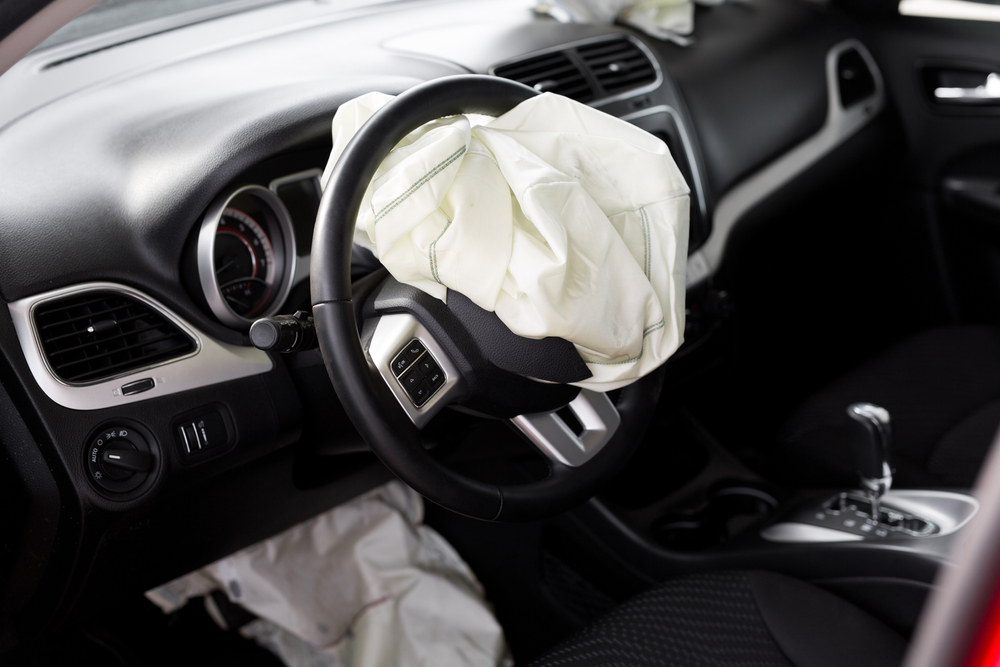

Airbag safety has become a pressing issue as federal regulators turn their attention to delays in replacement parts and the dangerous consequences drivers are facing. The National Highway Traffic Safety Administration and FBI are investigating counterfeit airbag inflators from Chinese manufacturer DTN that have been linked to at least five U.S. deaths, with cheap aftermarket parts exploding violently during crashes. The problem has exposed a troubling gap in the automotive repair industry where fake components are slipping through undetected.
The investigation comes as Transportation Secretary Sean Duffy issued stark warnings about faulty Chinese equipment entering the country and being installed in American vehicles. These counterfeit inflators, sometimes costing as little as $100 compared to $1,000 for genuine parts, are being sold online and making their way into repair shops. The packaging and construction mimic legitimate OEM components closely enough that even professionals can be fooled.
Meanwhile, regulators have also backed away from pursuing a massive recall of nearly 50 million airbag inflators from other manufacturers as the industry raised questions about whether all the inflators are truly defective. The dual nature of these developments highlights how airbag safety remains a complex challenge affecting millions of drivers across the country.
Why Federal Regulators Are Investigating Airbag Replacement Delays
Federal safety agencies have launched investigations after identifying at least seven incidents involving deadly airbag failures, with five fatalities now connected to counterfeit replacement parts that exploded during crashes. The probes are focusing on how fake Chinese-made inflators entered the U.S. market and were installed in vehicles during routine repairs.
Key Safety Concerns Tied to Airbag Replacement Delays
The NHTSA has documented multiple cases where aftermarket airbags ruptured and failed during collisions instead of protecting occupants. These counterfeit inflators reportedly explode “like a grenade,” sending metal and plastic shrapnel into vehicle cabins.
The problem stems from replacement parts that look nearly identical to authentic airbag modules but lack proper engineering and quality control. Federal investigators are concerned about the scale of the issue since counterfeit devices are designed to mimic genuine parts. Regulators say it’s difficult to measure how many fake inflators have entered the repair supply chain.
Transportation Secretary Sean Duffy warned that whoever is bringing these faulty components into the country and installing them is putting American families in danger and committing a serious crime. The NHTSA is now coordinating with other federal agencies to trace the counterfeit products and prevent additional shipments from reaching U.S. repair shops.
Recent Deaths and Serious Incidents Linked to Counterfeit Airbags
At least five fatalities are now tied to Chinese-made DTN parts, with two recent crash deaths prompting the current investigation. One victim was 22-year-old Florida mother Destiny Byassee, who died in 2023 after a replacement DTN inflator in her Chevrolet Malibu exploded during a low-speed collision.
The family’s lawsuit says the counterfeit airbag fatally slashed her neck with shrapnel. Attorneys representing the Byassee family report they are pursuing multiple similar cases nationwide involving the same type of defective inflators.
The FBI is now investigating alongside NHTSA after determining that at least eight serious incidents are related to devices produced by Jilin Province Detiannuo Automobile Safety System Co. Federal agencies are treating these cases as potential criminal matters involving illegally imported automotive safety equipment.
The Role of Aftermarket and Counterfeit Airbags
Counterfeit airbags are often sold online for as little as $100, compared with more than $1,000 for authentic manufacturer-certified modules. This price difference makes them attractive to budget-focused repair shops and individual buyers.
Bob Stewart, president of the Automotive Anti-Counterfeiting Council and General Motors’ brand protection manager, explained that these fakes are often constructed with poor-quality materials and are more likely to fail because they’re only imitations of the engineering that goes into the real product. The devices rely on explosive chemicals to inflate airbags but lack the precise manufacturing standards required for safe deployment.
DTN has denied doing business in the U.S., claiming its products are not authorized for sale domestically. However, regulators warn the devices continue to surface through online sellers and gray-market importers who bypass official distribution channels.
Involvement of Key Automakers in the Ongoing Investigations
The investigation has drawn attention to replacement part issues across multiple brands, with incidents reported in Chevrolet vehicles and concerns extending to other manufacturers. The situation recalls the massive Takata airbag recall that began in 2014 and affected vehicles from Honda, Toyota, Ford, BMW, Mercedes-Benz, Nissan, Chrysler, Dodge, Jeep, Ram, Volkswagen, Hyundai, Kia, Buick, GMC, Land Rover, Jaguar, Lincoln, Tesla, and Mercury.
General Motors has been particularly vocal about counterfeit auto parts through Stewart’s work with the Automotive Anti-Counterfeiting Council. The company and other automakers are working with federal agencies to identify and track fake components entering the repair supply chain.
Regulators warn that the problem extends beyond a single manufacturer since counterfeit inflators can be installed in virtually any vehicle during collision repairs or airbag replacements.
How Airbag Replacement Delays Are Affecting Drivers and the Industry
The shortage of legitimate replacement parts has created openings for counterfeit components to enter the market, while five deaths have been linked to Chinese-made DTN airbag inflators that exploded during crashes. Vehicle owners are finding themselves caught between long wait times for certified parts and the risk of unknowingly receiving dangerous knockoffs during repairs.
Challenges in Identifying and Preventing Counterfeit Airbag Installations
Many repair shops have been importing cheap airbag inflators from overseas without realizing they’re getting fakes. DTN Airbag products closely mimic genuine parts but sell for as little as one-tenth the cost of authentic replacements.
Bob Stewart, president of the Automotive Anti-Counterfeiting Council and global brand protection manager at General Motors, explained that these fakes are constructed with poor-quality materials and only imitate the engineering that goes into real products. The problem has affected multiple vehicle brands including Chevrolet, Ford, BMW, Buick, Chrysler, Dodge, GMC, Jaguar, Jeep, Kia, Land Rover, Lincoln, Mercedes-Benz, Nissan, Toyota, Ram, Volkswagen, and Honda.
Counterfeit airbag inflators from DTN contain volatile chemicals that can ignite during deployment. The inflators cause airbags to inflate violently and without control, turning what should be a lifesaving device into a deadly projectile.
An authentic airbag module can cost upward of $1,000, creating financial pressure for repair shops and customers to seek cheaper alternatives.
Impact on Vehicle Safety and Consumer Confidence
A 22-year-old mother named Destiny Byassee was killed in a crash while traveling at just 30 mph in her 2020 Chevrolet Malibu. Investigators allege that a counterfeit DTN inflator had been installed and that it exploded “like a grenade,” sending sharp pieces of metal and plastic into her neck.
The incident happened as recently as July 2025, and the NHTSA has connected DTN to seven incidents and five fatalities involving the airbag inflators. The crashes exposed catastrophic failures that turned routine accidents into fatal events.
This comes as the industry is still dealing with the Takata airbag recall, which remains the largest in automotive history. The Takata recall covers more than 67 million airbag inflators across tens of millions of U.S. vehicles as of spring 2026.
Vehicle owners have lost confidence in the safety of their airbag systems, unsure whether they received genuine replacement parts during previous repairs.
Response from Auto Manufacturers and Federal Agencies
Transportation Secretary Sean Duffy issued a sharp warning about the devices, calling them dangerous. “My message to the auto repair industry is clear: whoever is bringing this faulty Chinese equipment into the country and installing them is putting American families in danger and committing a serious crime,” he stated.
The National Highway Traffic Safety Administration, alongside the Federal Bureau of Investigation, has opened an investigation into illegally imported aftermarket Chinese airbags. The probe follows the series of crashes that exposed the failures.
DTN maintains that its products are banned from sale in the U.S. and insists it does not conduct business within the country. However, federal investigators continue to find the company’s inflators installed in American vehicles.
Regulators have urged repair shops and distributors to remain vigilant, emphasizing that DTN inflators pose a direct risk to public safety. Car companies and regulators say drivers in need of an airbag should seek out manufacturer-certified replacements, though no word has been given on how many vehicles may have been fitted with the counterfeit parts.
More from Steel Horse Rides: