
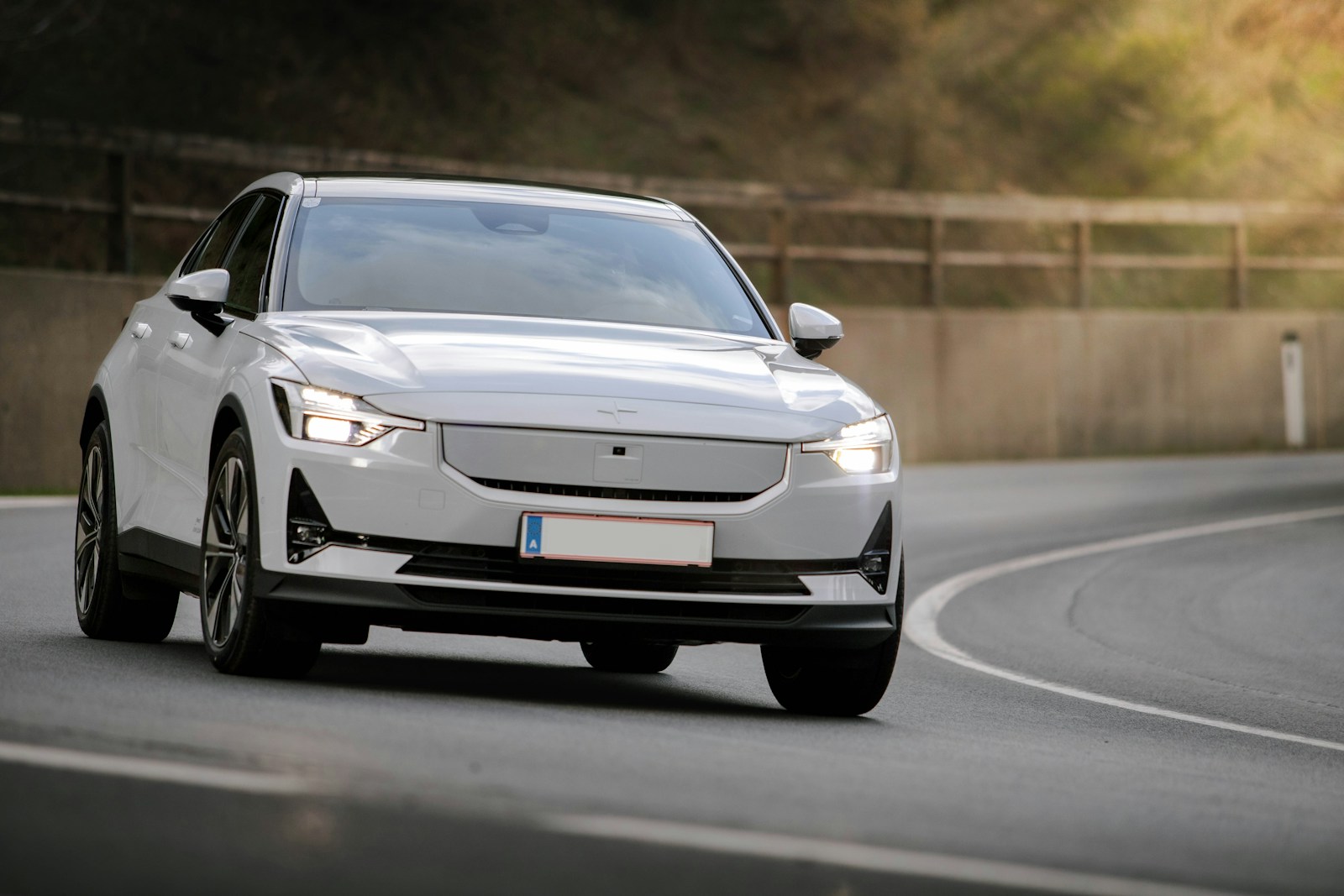

The debate over whether to lease or buy a car has always existed, but in 2026 it’s turned into something messier. Drivers are discovering that the old financial wisdom doesn’t quite fit anymore, and the traditional advice to “never lease” is colliding with rapid changes in electric vehicle technology and shifting market conditions.
The choice between leasing and buying in 2026 depends heavily on individual circumstances like mileage, how long someone plans to keep the vehicle, and their comfort with technological obsolescence—especially with EVs. What worked for car buyers five years ago doesn’t necessarily translate to today’s market, where battery improvements and software updates can make a three-year-old electric vehicle feel outdated.
The conversation has gotten particularly heated around electric vehicles, where leasing can quietly win thanks to federal tax credit transfers and concerns about depreciation. At the same time, used EV prices are dropping as off-lease vehicles flood the market, creating opportunities for buyers willing to accept slightly older technology.

Why Lease vs Buy in 2026 Is So Complicated Now
The traditional calculations that made lease or buy decisions straightforward have shifted dramatically. Between revised tax incentives, changing interest rate structures, and manufacturer strategy pivots, drivers are finding the old rules no longer apply.
Evolving Buying and Leasing Math
The math behind leasing has become harder to decode because dealers are adjusting the money factor—the leasing equivalent of an interest rate—more frequently than in previous years. A 36-month lease that might have carried a money factor of .00125 in 2024 could now range anywhere from .00180 to .00250 depending on the manufacturer and credit tier. That translates to effective APRs between 4.3% and 6%, making direct comparisons to purchase financing less obvious.
The EV tax credit has added another layer of complexity. Buyers who purchase qualifying electric vehicles can claim up to $7,500 at tax time, but lessees allow the dealer to capture that credit and theoretically fold it into lower monthly payments. Whether that $7,500 actually reduces the capitalized cost or gets absorbed by the acquisition fee—which has climbed from $595 to over $1,000 at some brands—isn’t always transparent on lease paperwork.
Market Changes Impacting Drivers’ Decisions
Automakers have shifted their inventory strategies in ways that favor one option over the other depending on the brand. Some manufacturers are offering aggressive lease incentives in 2026 to move specific models, while others have pulled back lease support entirely to prioritize outright sales.
Residual value forecasts—the predicted worth of a vehicle at lease end—have become less reliable as used car prices swing more unpredictably. A three-year-old sedan that automakers projected would retain 52% of its value might only hit 47%, which affects lease pricing today. Drivers considering whether to lease or buy are facing a moving target that makes long-term cost projections murkier than they’ve been in years.
Breaking Down the Real Numbers in 2026
The financial comparison between leasing and buying has shifted dramatically as interest rates hover around 6.5% to 7% for auto loans and lease money factors have climbed proportionally. What used to be a straightforward calculation now involves multiple variables that can swing the decision either way depending on individual circumstances.
Total Cost of Ownership: Lease vs Buy
The total cost of ownership for a purchased vehicle extends far beyond monthly payments. Buyers face depreciation hitting hardest in the first three years, when a new car typically loses 40% to 50% of its value. A $45,000 SUV purchased in 2026 might be worth only $27,000 after three years, representing an $18,000 loss.
Lessees avoid this depreciation risk entirely. They pay only for the vehicle’s use during the lease term, not its total value. A three-year lease on that same $45,000 SUV might total $15,000 in payments plus a $3,000 down payment, for $18,000 total. The catch is that lessees walk away with nothing at the end, while buyers still own an asset worth $27,000.
Maintenance costs also factor differently. Leased vehicles typically remain under warranty for the entire lease term, keeping repair costs minimal. Buyers face escalating maintenance expenses after year three, when major services and component replacements begin. The same comparison framework used for housing decisions applies here—buyers trade higher long-term costs for eventual ownership.
Monthly Payments and Down Payments Explained
Monthly lease payments in 2026 average $200 to $300 lower than loan payments on equivalent vehicles. A buyer financing that $45,000 SUV with 10% down over 60 months at 6.8% pays roughly $780 per month. A lessee might pay $480 monthly with a similar down payment, freeing up $300 for other expenses or investments.
Down payment requirements differ significantly. Buyers putting down less than 20% often pay for private insurance or face higher interest rates. Lessees can sometimes negotiate zero-down deals, though manufacturers typically recommend $2,000 to $4,000 to keep monthly payments reasonable.
The math changes when considering what happens to that extra $300 monthly. If invested rather than spent on higher car payments, it could grow substantially over time. However, this assumes disciplined saving behavior that many drivers don’t maintain.
Risks and Benefits: Residual Value and Negative Equity
Residual value—what a vehicle is worth at lease end—determines lease payment amounts. Manufacturers set these projections years in advance, creating risk. If a leased 2026 electric vehicle sees rapid depreciation due to battery technology advances, the lessee benefits by returning a car worth less than expected. Buyers face the opposite problem, holding negative equity when trade-in value falls below the loan balance.
Negative equity has become increasingly common as loan terms stretch to 72 or 84 months. Drivers who buy and then need to sell early often owe $5,000 to $10,000 more than their vehicle’s worth. Lessees face mileage cap penalties instead—typically 15 cents to 25 cents per mile over the limit, which can add $1,500 to $3,000 at turn-in for drivers exceeding a 12,000-mile annual cap by 10,000 miles.
The certified pre-owned market offers a middle path. Buyers of three-year-old off-lease vehicles get near-new cars at 30% to 40% discounts, avoiding the steepest depreciation while still building equity.
More from Steel Horse Rides: