
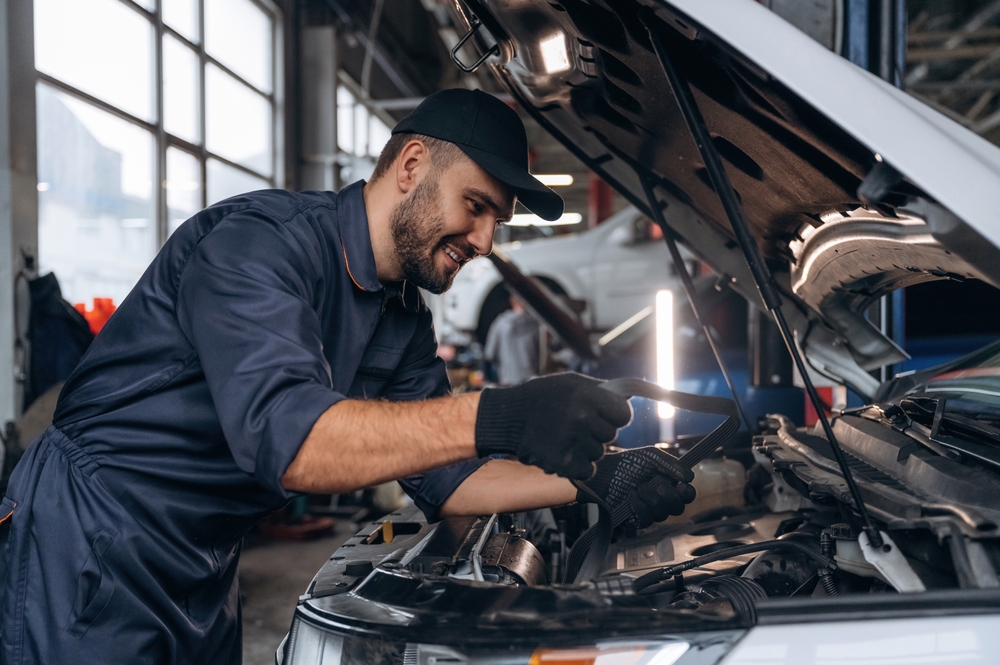

You don’t have to be the kind of driver who redlines every stoplight to wear out a car. A lot of the damage mechanics see comes from everyday habits that feel totally normal—sometimes even “careful”—but slowly chew through expensive parts. The tricky part is that your car usually won’t complain until the bill is big enough to ruin your week.
I spoke with a few longtime techs and shop owners who all said some version of the same thing: most major repairs are really just small, repeated stresses adding up. Here are six of the biggest culprits, and what to do instead if you’d like your car to stick around for the long haul.

1) Riding the brakes (especially downhill)
If you’re the person who keeps a light foot on the brake “just to be safe,” you’re not alone—and your brake system knows it. Riding the brakes creates constant friction and heat, which eats through pads quickly and can warp rotors. Once heat gets excessive, brake fluid can also degrade faster, and braking performance can get spongy at the worst time.
Mechanics say the fix is simple: brake in firm, controlled bursts, then get off the pedal and let the car roll. On long descents, downshift (or use “L”/manual mode in an automatic) so the engine helps hold speed. Your brakes are a tool, not a blanket—don’t keep them on “just in case.”
2) Flooring it on a cold engine
That first minute after you start the car is when everything’s still waking up—oil is circulating, clearances are changing, and parts haven’t fully reached operating temperature. Punching the accelerator right away can increase wear on internal engine components because lubrication isn’t at its best yet. Turbocharged engines are especially sensitive, since turbos spin fast and rely heavily on clean, warm oil.
You don’t need a 10-minute warm-up idling in the driveway, either. Most mechanics recommend driving gently for the first few miles: smooth throttle, moderate RPM, no “I’m late” launches. Think of it like stretching before a run—your car will thank you for the warm-up.
3) Ignoring small warning signs (because the car still “feels fine”)
A tiny squeak, a slight vibration, a faint burning smell—these are the breadcrumbs that lead to a cheap fix. The longer you ignore them, the more likely a worn part takes something else with it. A failing wheel bearing can damage a hub, a misfire can kill a catalytic converter, and a “minor” coolant leak can turn into an overheated engine in one traffic jam.
Mechanics aren’t saying you need to panic over every sound. But if something is new and repeatable—especially if it changes with speed, braking, or turning—get it checked. The earlier you catch things, the more you stay in control of the timeline and the cost.
4) Using the transmission like a punching bag
Shifting from Reverse to Drive before you’ve fully stopped is a classic transmission stress test—one your wallet didn’t sign up for. That quick “R-to-D” (or “D-to-R”) move slams internal components while fluid pressure is still stabilizing. Over time, it contributes to premature wear, harsh shifting, and in worst cases, expensive internal damage.
Also on the list: using “Drive” to hold the car on a hill instead of the brake, or doing aggressive launches repeatedly in a normal commuter car. Come to a full stop before shifting, use the brake on inclines, and let your transmission do its job without forcing it to absorb your impatience.
5) Skipping fluid changes because nothing’s leaking
A car can have perfect, dry pavement under it and still be running old, tired fluids that are past their prime. Engine oil is the obvious one, but mechanics also point to transmission fluid, brake fluid, coolant, and power steering fluid (if your car still uses it). Fluids don’t just “exist” in the system—they carry heat away, lubricate, and prevent corrosion, and they all break down over time.
The problem is that fluid neglect is quiet. Your car may drive normally right up until it doesn’t, and then you’re looking at a transmission rebuild, overheating issues, or brake problems that could’ve been avoided with a relatively cheap service. Follow your owner’s manual (the severe-service schedule is often the realistic one), and if you bought the car used, consider doing a baseline fluid refresh.
6) Driving on underinflated tires (and pretending you can’t see the light)
Underinflated tires are like wearing shoes with the soles half peeled off and saying, “It’s fine, I can still walk.” Low tire pressure increases rolling resistance, which makes your engine work harder and your fuel economy worse. It also builds heat in the tire, accelerates uneven wear, and can stress suspension components because the tire isn’t supporting loads the way it should.
Mechanics say the tire pressure monitoring light is one of the most ignored warnings on the dashboard—and one of the easiest to fix. Check pressures monthly (yes, even if the light’s off), and always set them to the sticker inside the driver’s door jamb, not the maximum printed on the tire. Your tires will last longer, and your car won’t feel like it’s fighting the road.
The small habit shift that saves the big money
None of these habits are dramatic, which is exactly why they’re so common. They’re the kind of things you do while thinking about dinner, work, or that one text you shouldn’t have sent. But cars are basically collections of heat, friction, and fluids—so when you reduce heat, reduce friction, and keep fluids healthy, you’re stacking the odds in your favor.
If you want a simple rule of thumb mechanics love: be smooth. Smooth acceleration, smooth braking, smooth shifting, and steady maintenance beats “driving carefully” in the vague, anxious sense. Your car doesn’t need you to be perfect—it just needs you to stop accidentally grinding it down one commute at a time.
More from Steel Horse Rides: