

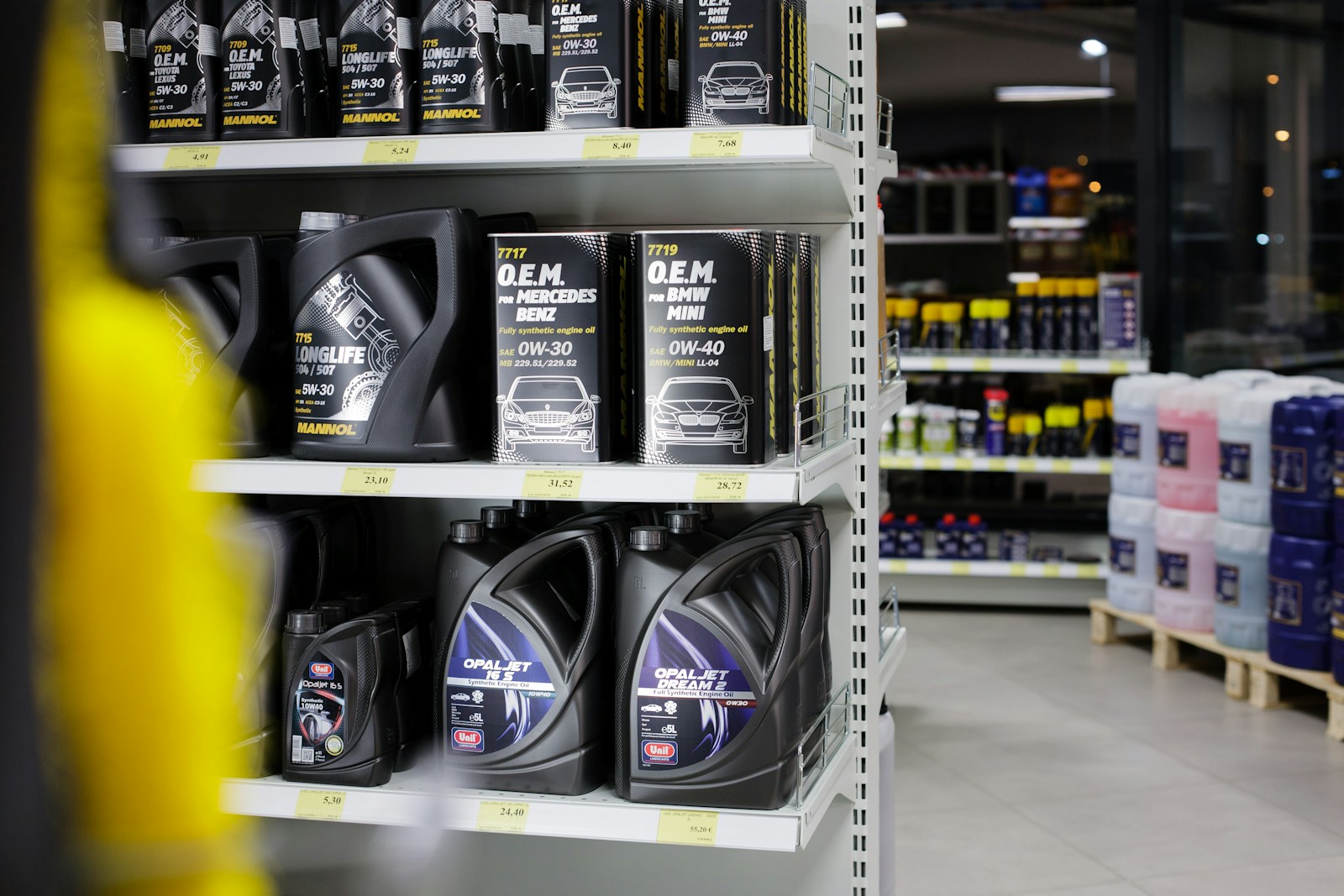
You know that little rush you get when you spot an “unbeatable” deal on motor oil? Same. It feels like you’ve outsmarted the system—until your engine starts sounding a bit… crunchy.
Here’s the thing: not all “cheap” oil is automatically bad, and not all expensive oil is automatically great. But there are a few types of bargain oils that tend to cut corners in ways your engine will remember. Usually right after your warranty ends. Funny how that works.
Why bargain oil can turn into an expensive problem
Motor oil isn’t just “slippery stuff.” It has to handle heat, pressure, soot, fuel dilution, and modern emissions hardware—all while keeping metal surfaces from turning into a friction-based science experiment.
The price difference often comes down to base oil quality and the additive package (detergents, anti-wear protection, viscosity improvers, etc.). Cheaper oils can still meet a basic minimum spec, but some do it with less margin for real-world stress—short trips, towing, turbo heat, or longer oil-change intervals.
1) Off-brand oil with vague labeling (no clear approvals)
If the label looks like it was designed in 1998 and it doesn’t clearly list industry specs (API SP, ILSAC GF-6, or a manufacturer approval like dexos1 Gen 3), that’s your first red flag. Some products rely on fuzzy language like “meets the requirements of” without actually being licensed or tested under those standards.
That doesn’t mean it’s definitely junk—but it does mean you’re taking a guess with an expensive machine. If you can’t easily confirm the exact spec your owner’s manual asks for, skip it.
2) “Universal” oil that claims to fit everything
Any oil that screams “FOR ALL ENGINES!” a little too loudly is worth side-eyeing. Modern engines aren’t one-size-fits-all anymore—especially with turbochargers, variable valve timing, direct injection, and tight tolerances.
Even viscosity isn’t universal. If your car calls for 0W-20 or 0W-16 and the bargain jug is 10W-40 “because it’s basically the same,” it’s not basically the same. Cold-start flow and fuel economy aside, mismatched viscosity can affect timing systems and oil-controlled components.
3) Super-cheap conventional oil in engines that really want synthetic
Some engines can happily run conventional oil, especially older designs with looser tolerances and simpler emissions systems. But if your owner’s manual specifies synthetic (or if you’re running a turbo, doing lots of short trips, or driving in extreme heat/cold), bargain conventional oil is playing on hard mode.
Synthetic oils generally resist breakdown better at high temps and keep viscosity more stable over time. Conventional oil can shear down or oxidize faster, which can mean more deposits and less protection—especially if you’re not religious about short oil-change intervals.
4) High-mileage oil that’s cheap for a reason
High-mileage oil can be great. It often includes seal conditioners and a stronger detergent package to help older engines stay clean and leak less. The problem is the “high-mileage” label is sometimes used as marketing confetti—sprinkled onto a low-cost formula that doesn’t actually offer much extra protection.
If a high-mileage oil is priced suspiciously close to the cheapest conventional option, check the fine print. Look for clear specs and reputable brands; otherwise, you may just be buying a label, not a better additive package.
5) No-name “synthetic blend” that’s mostly blend, barely synthetic
Synthetic blends can be a solid middle ground. But “blend” isn’t a tightly defined promise to consumers—one product might have a meaningful synthetic portion, another might have a token amount and call it a day.
Where this bites you is longer intervals. If you treat a bargain blend like a full synthetic and push your oil changes out to the edge of what the car allows, you could see more varnish, sludge, and consumption over time. It’s not dramatic overnight; it’s more like slow-motion regret.
6) “Racing” oil for the street (cheap track-style oil)
This one surprises people: “racing” oil isn’t automatically better for daily driving. Some racing oils are designed for short, intense intervals and may have additive profiles that aren’t ideal for long street use—especially in engines with catalytic converters or modern emissions systems.
If you see a bargain “performance” or “race” oil with unclear street certifications, be careful. Your engine might love it for 200 miles and hate it for 5,000. Also, your catalytic converter would like to live, thanks.
How to spot a good oil without turning it into a homework assignment
First: match the viscosity grade in your owner’s manual. Not “close enough,” not “what your uncle uses,” not “what was on sale.” The exact grade matters more than most people want to admit.
Second: look for current certifications on the bottle. For many gasoline cars, API SP and ILSAC GF-6 are common. Some manufacturers require their own approvals (GM dexos, certain European specs like VW 504/507, BMW LL, Mercedes approvals), and those aren’t optional if you want best protection and fewer headaches.
Third: buy from places that move a lot of inventory. Big-box retailers and reputable auto parts stores tend to have fresher stock and less chance of counterfeit or mishandled product than a random online listing that ships from… somewhere.
The real trick: cheap oil isn’t always bad—cheap habits are
If you’re using a budget oil from a reputable brand that clearly meets the right spec and you change it on time, you’re probably fine. Plenty of engines live long, happy lives on reasonably priced oil. The key is not treating bargain oil like premium oil when it comes to intervals and abuse.
But if you’re stacking the deck—mystery brand, questionable specs, long intervals, lots of short trips—that’s when “saving money” turns into timing chain wear, stuck rings, sludge, or the classic dashboard light that ruins your weekend.
If you tell me your car’s year/make/model and how you drive (short trips, highway, towing, hot/cold climate), I can help you pick an oil spec and a couple budget-friendly options that won’t come back to haunt you later.