

If you’ve ever been pulled over and thought, “Really? For that?” you’re not alone. Traffic stops often feel random from the driver’s seat, but many officers say the same handful of behaviors keep showing up right before a citation gets written. It’s not always about going 15 over—sometimes it’s the little stuff that signals, “This is going to be a problem.”
To be clear, every stop is different, and laws vary by state. But officers and traffic safety experts tend to agree on a pattern: certain actions make you stand out, make a stop feel riskier, or make it harder for an officer to justify cutting you a break. Here are seven of the most common ticket-magnets.
1) Driving like you’re in a hurry… and making it everyone else’s problem
Speeding is obvious, but officers often say it’s the way you speed that gets attention. Weaving through lanes, tailgating, or rocketing up to a red light only to slam on the brakes reads as aggressive and unpredictable. Even if you’re not the fastest car on the road, the “impatient energy” can be what gets you singled out.
And yes, it’s unfair, but it’s real: aggressive driving can make an officer less inclined to give a warning. If the behavior looks like it could cause a crash, a ticket starts to feel less like punishment and more like prevention.
2) Looking distracted (even if you swear you’re not)
Officers are trained to spot cues of impairment and distraction, and phone-related habits are a big one. Glancing down repeatedly, drifting within your lane, slow reaction at green lights, or “correcting” your steering at the last second can all raise a flag. Even if you’re just changing a song or checking directions, it can look identical to texting.
Some states allow hands-free use, some don’t, and some have strict “no handheld” rules with limited exceptions. The safest move—legally and practically—is to get your navigation and playlist set before you roll, then leave your phone alone. If you must interact with it, pull over; it’s annoying, but less annoying than points on your license.
3) Equipment issues that practically glow in the dark
Burned-out headlights or taillights, missing plates, cracked windshields, and expired registration stickers are the classic “easy stop.” Officers don’t need a radar gun or a complicated explanation—either your brake light works or it doesn’t. And once you’re stopped for an equipment issue, anything else going on can come into play.
This is also where a lot of “I didn’t know!” tickets come from. Many people genuinely don’t notice a dead taillight until someone tells them—unfortunately, that someone might be an officer with a citation book. A quick walk-around check every so often (or during an oil change) can save you money.
4) Not using signals—or using them like a last-second confession
Turn signals are one of those things everyone agrees are important… right up until they’re late for something. Officers often mention that failure to signal, or signaling at the last possible moment, is a common reason for a stop. It’s a safety issue because it forces other drivers to guess what you’re about to do, and guessing is how fender-benders happen.
Also, inconsistent signaling makes you stand out. If you’re driving smoothly, signaling early, and generally being predictable, you blend into traffic. If you’re darting around without signaling, you become memorable—and not in the “wow, what a great driver” way.
5) “Creative” lane behavior at lights and in traffic
Cutting into a turn lane at the last second, using a shoulder to bypass congestion, blocking an intersection, or rolling through a right-on-red without a full stop can all draw attention fast. These moves might feel minor when you’re the one doing them, but from an officer’s perspective they’re exactly the sort of shortcuts that trigger crashes and road rage.
One big example: following too closely in stop-and-go traffic, then popping into another lane to gain one car length. It doesn’t just look aggressive—it looks like you’re not fully in control of your spacing. Officers tend to have less patience for “I was just trying to get around…” because that explanation is basically the plot of half the accident reports they write.
6) Being difficult during the stop (even in small ways)
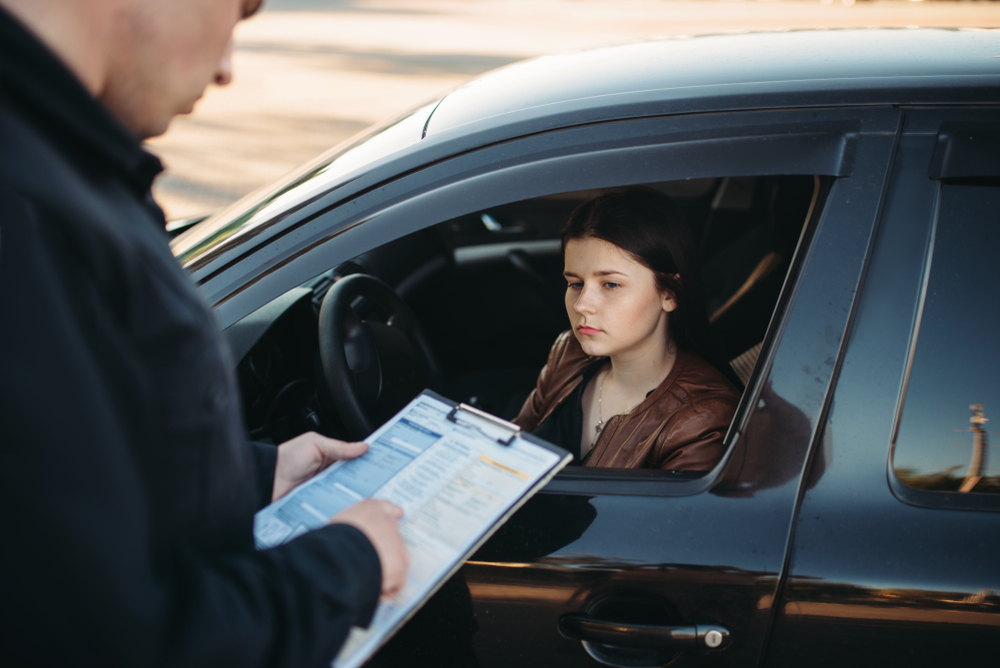
This one’s uncomfortable, but it comes up a lot: your attitude can influence the outcome. Officers say drivers who argue, interrupt, reach around the cabin, refuse simple requests, or act combative are more likely to leave with a ticket. Not because officers are on a power trip, but because a tense stop feels less safe and less likely to end with a friendly warning.
You don’t have to be overly cheerful or pretend you’re having a great time. Just keep your hands visible, speak calmly, and save the debate for court if you truly disagree. A traffic stop isn’t a great stage for a courtroom drama—especially because the person holding the pen is also the one trying to get home safely.
7) Giving “something’s off” signals: inconsistent speed, odd braking, or hidden plates
Officers often talk about “indicators” rather than single violations. Things like fluctuating speed, braking for no reason, driving far under the limit without a clear cause, or repeatedly changing lanes can suggest impairment, distraction, or vehicle trouble. Even if you’re completely fine, those patterns can prompt an officer to take a closer look.
Another big one: anything that makes your plate hard to read—tinted covers, heavy grime, bent plates, or obstructed tags. It may seem harmless (or purely aesthetic), but it’s a quick way to draw attention because it’s tied to identification and enforcement. If your plate can’t be read easily, expect someone to want to know why.
So what actually helps you avoid a ticket?
Officers will tell you the boring truth: be predictable, be visible, and don’t create problems for other drivers. Keep your car’s basics in order, signal early, maintain steady speed and spacing, and treat your phone like it’s made of lava. You don’t need to drive like a saint—just don’t drive like a question mark.
And if you do get stopped, your best “hack” is simple: stay calm and make the stop easy. Most people aren’t trying to be reckless; they’re just rushed, distracted, or running on autopilot. Flip that switch back to intentional driving, and you’ll lower your chances of getting a ticket—and, honestly, you’ll probably arrive less stressed anyway.
More from Steel Horse Rides: