
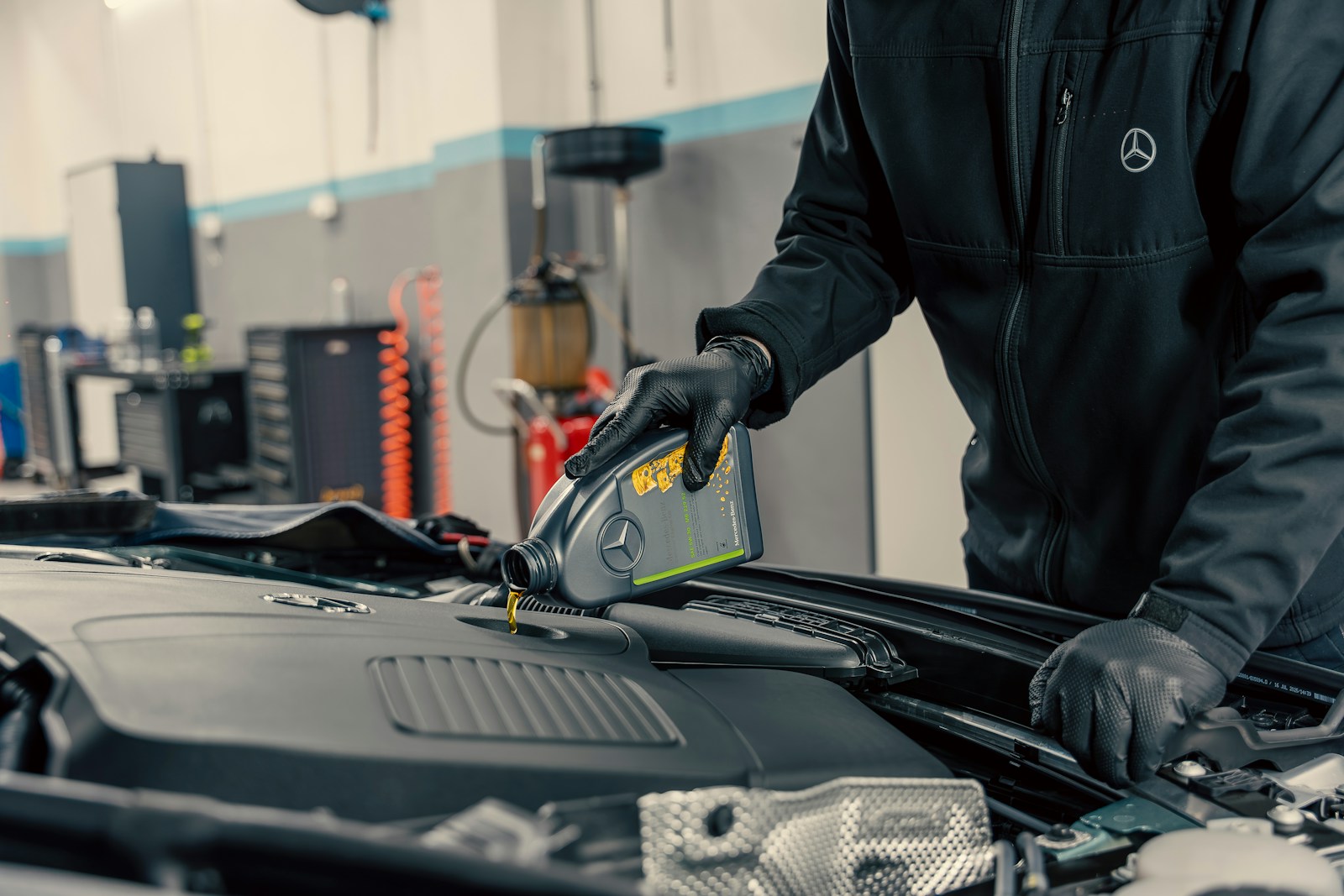

He wasn’t trying to be a “car guy” about it. He just wanted the kind of errand you can squeeze in on a Tuesday: pull into a quick-lube place, sip burnt coffee in a plastic chair, pay the bill, and drive away with fresh oil.
The man had a decent-sized commute and a car that mattered to him—nothing exotic, but new enough that an engine problem would hurt. He’d been keeping up with maintenance, mostly because he’d learned the hard way that skipping oil changes doesn’t save money, it just postpones the payment. So when he saw a coupon for a speedy oil change, he figured, why not.
What he didn’t expect was that this “20 minutes, in and out” stop would turn into the kind of mess that makes your stomach drop: an engine that started sounding wrong, then sounding expensive, and a shop that suddenly decided the problem had to be him.
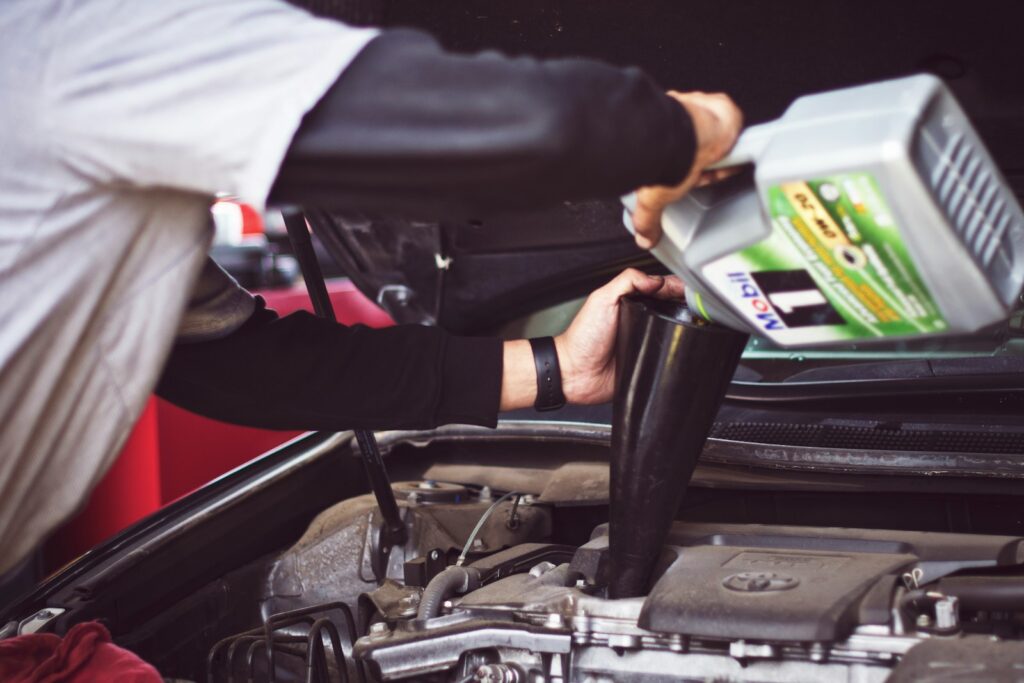
The “easy” oil change that didn’t feel easy
At first, everything looked normal. He pulled into the bay, did the little ritual of handing over the keys, confirming the mileage, and saying the exact thing everybody says: “Just the oil, nothing else.” One of the techs popped the hood and another went under, and he sat where they could still see him through the glass.
He noticed the shop had that rushed energy—phones ringing, two cars waiting behind him, a manager moving between bays like he was trying to plug leaks with his hands. Still, the techs seemed confident, and they even did the usual upsell dance: cabin filter, wiper blades, some additive he didn’t want. He declined and paid for the oil change and filter, got the receipt, and left.
It was only after he’d driven a few miles that something started to feel off. The car wasn’t “on fire” or anything dramatic; it was subtler than that. The engine note had a slightly raspy edge, like a fan blade clipping something, and the oil light flickered in a way that made his brain instantly replay every horror story he’d ever heard.
The warning signs, and then the sound nobody wants to hear
He did what a lot of people do in that moment: he tried to convince himself it was nothing. Maybe the light was a sensor glitch. Maybe the tech spilled something and it smelled weird. Maybe he was imagining it because he’d just paid someone else to touch his car.
But the flicker came back, and then the engine started making a noise that didn’t belong—metallic, fast, and dry. He pulled over, shut it down, and sat there for a second with his hands still on the wheel, staring at the dash like it might explain itself.
He checked for leaks and didn’t see a puddle immediately, which almost made it worse. A missing puddle means the oil might not be where it’s supposed to be at all. He waited a couple minutes, restarted, and the noise returned almost instantly, harsher this time, like the engine was complaining in a language he could suddenly understand.
He didn’t drive it back. He called a tow, because even if it cost him extra, the idea of being “that guy” who grenades his engine because he didn’t want to pay for a tow felt like the kind of regret that lasts for years.
Back at the shop: confident smiles, then defensive math
The shop’s attitude when the car arrived wasn’t apologetic—it was mildly annoyed, like he’d returned a sandwich because he “didn’t like the taste.” The manager met him near the bay and asked what happened, already sounding like he was collecting facts for an argument. The man explained the flickering oil light and the noise, and he emphasized the timeline: this started right after their oil change.
They popped the hood and started checking things in a way that looked busy but not necessarily helpful. One tech grabbed the dipstick and frowned, and another crawled under the car. The manager leaned in and asked the man whether he’d stopped anywhere else, whether anyone else had touched the car, whether he’d hit something on the road.
It wasn’t subtle. The questions weren’t about diagnosing the issue; they were about building distance. The manager even did that thing where he nods while asking, like he’s giving you a chance to confess to a crime you didn’t commit.
Then the shop’s tone shifted again, from “let’s see what happened” to “here’s what happened.” The manager told him the car was “basically dry,” and suggested maybe the man had an existing leak. It was delivered like a conclusion, not a possibility, and it landed like an insult: as if he were too careless to notice his own engine bleeding out.
The missing “small part” that suddenly mattered a lot
Underneath the car, the tech called out to the manager—short, quiet, the way people do when they’ve found something that changes the room. The manager slid under, looked, and came back out slower. The man watched the manager’s face try to stay neutral while his eyes did that math people do when they realize they’re holding the short end of responsibility.
What they’d forgotten was one small part: a sealing washer. Depending on the car, it could be a crush washer on the drain plug or a gasket/O-ring situation that keeps oil where it belongs. It’s a stupidly cheap piece, the kind that costs less than a fast-food combo, and it’s invisible until it’s missing.
Without it, the drain plug can feel tight and still not seal right, which means oil can seep out under pressure and heat. Not always in a dramatic gush—sometimes it sprays and mists while you’re driving, coating the underside and vanishing into airflow. Which is exactly why the man hadn’t seen a cartoon puddle when he pulled over.
The shop didn’t say “we forgot the washer” in a clean, accountable sentence. It came out in fragments: “sometimes those stick,” “it might’ve fallen,” “hard to say.” The man kept asking, calmly but firmly, whether the washer was there when they finished the job, and nobody wanted to answer that question directly.
The blame game: “You must’ve done something”
Once the shop realized the missing part was on the table, their strategy pivoted. The manager told the man that if he’d shut the car off immediately when the light first flickered, “it wouldn’t have gotten that bad.” The man reminded him he did shut it off, and that he had it towed specifically to avoid damage.
Then came the accusation that always shows up in these stories: maybe he drove it “too far” after the oil change. Maybe he ignored warning signs. Maybe he had a pre-existing issue and was trying to pin it on them. It wasn’t one clear claim; it was a scattershot of maybes designed to make him doubt his own timeline.
The man pointed out the obvious: the car wasn’t making noise when he drove in. The oil light wasn’t flickering before the oil change. And he hadn’t done anything exotic between leaving the bay and pulling over—just regular driving.
The awkward part was watching the staff juggle two realities at once. One moment they were implying he caused it, the next they were admitting the car had almost no oil. The missing washer hung there like a smoking gun nobody wanted to touch.
Where it left him: a dead engine and a shop that won’t say the words
After a mechanic outside the quick-lube chain looked at it, the diagnosis was what the man feared: the engine had suffered oil starvation damage. Whether it was spun bearings or scored internals, the verdict was the same in practical terms—this wasn’t a quick fix. It was the kind of failure that turns a running car into a financial problem.
The shop offered vague “we’ll see what we can do” language, but not a clear commitment to cover an engine repair or replacement. They talked about filing something with “corporate,” about needing to “investigate,” about how these things can be complicated. Every sentence sounded like it was designed to slow time down until the man got tired or desperate.
He kept his receipts, tow records, and photos, and he pushed for everything in writing. The shop kept trying to move the conversation into the foggy zone of phone calls and “we’ll call you back.” He started realizing that the real fight wasn’t about what happened; it was about who could afford to wait and who could afford to quit.
The last detail that stuck with him was how small the mistake was compared to the damage it caused. A tiny piece of metal or rubber—something that can disappear into a pocket or a trash bin—had turned a routine oil change into an engine that might never run the same again. And the shop still couldn’t bring itself to say the simplest sentence he needed to hear: “We missed it, and we’re going to make it right.”
More from Steel Horse Rides: