
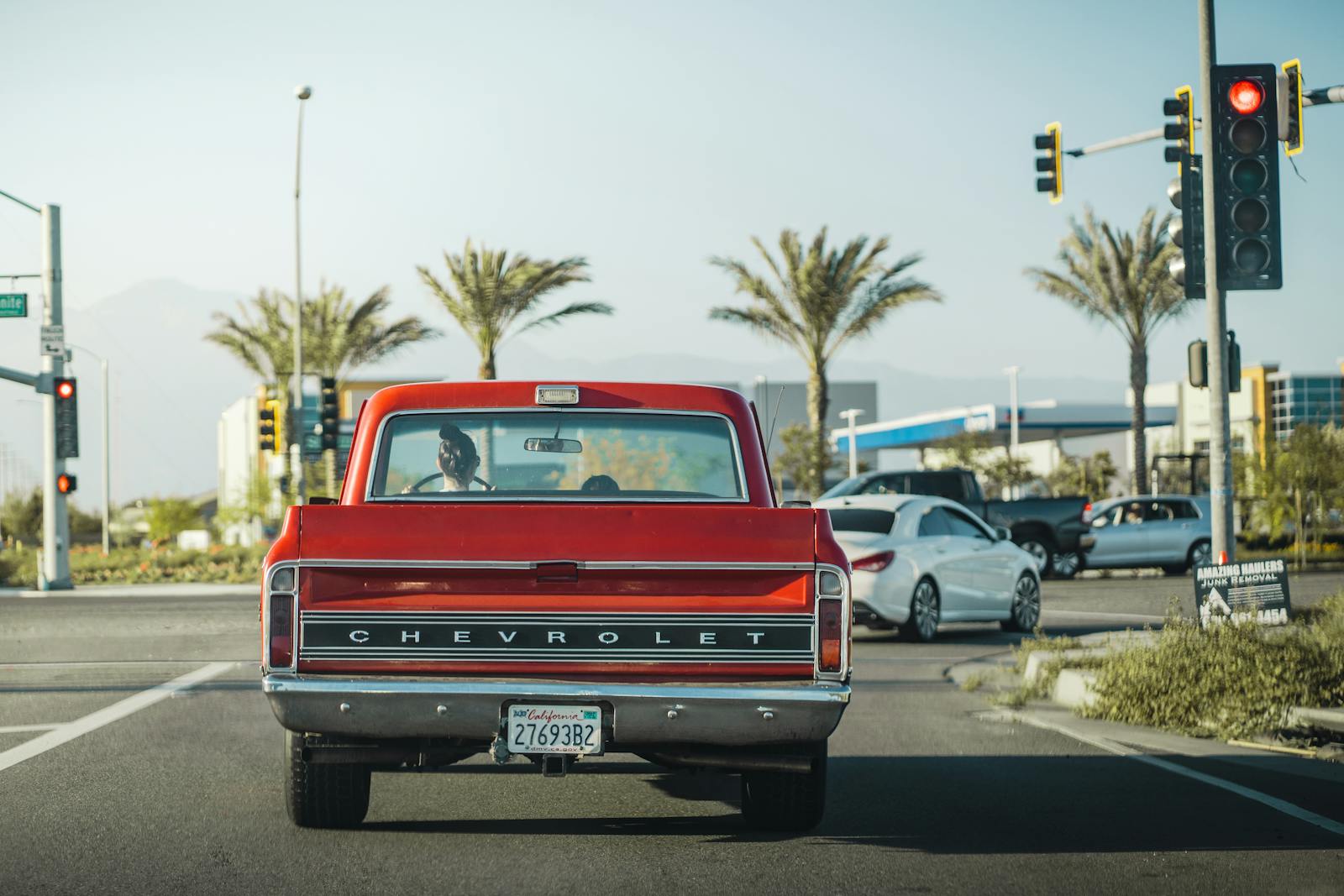

She’d had the truck for less than a month, the temporary tag still curling at the corners in the back window, when it started doing this stupid little thing at red lights. Not every time, not predictably—just often enough to make her grip the steering wheel like she was bracing for impact. The dash would flicker, the engine would stumble, and then: dead silence while the light was still red and everyone behind her was still assuming she’d be moving in a second.
At first she tried to talk herself out of it. Maybe it was that auto stop-start feature modern trucks have, the one that shuts the engine off to “save fuel” and then kicks back on when you take your foot off the brake. Except hers didn’t kick back on. It would shut off and just… stay off, like it had decided the intersection was a good place to retire.
So she did what you’re supposed to do when your brand new purchase starts acting like a haunted lawnmower: she brought it back to the dealer. She showed up with the vibe of someone trying to be reasonable, not accusatory—because there’s a special kind of social awkwardness that comes with complaining about something expensive you just chose to buy.

The first visit: “We can’t replicate it”
The service desk did that polished, sympathetic face and asked for details. When does it happen, how often, any warning lights, any weird noises. She explained it was mostly at stops—red lights, stop signs, drive-thru lines—and that it felt like the truck didn’t know whether it wanted to idle or fully shut down.
They kept it for a few hours and handed it back like they were returning a library book. No codes, no stored faults, no problem found. The advisor used the phrase “can’t replicate it,” which is basically the mechanic’s version of “sounds like a you problem,” just with better customer service.
She drove away trying to believe them, because it’s surprisingly easy to gaslight yourself when the alternative is accepting that your brand new truck might be unreliable. But then it happened again two days later, right at a busy intersection, with a line of cars behind her and that hot flush of embarrassment crawling up her neck. She did the whole routine—put it in park, hit the start button, pray it catches—while the person behind her leaned on their horn like it was personally offensive she wasn’t moving.
It escalates: videos, time stamps, and still “nothing”
By the time she brought it back the second time, she’d stopped trying to sound casual. She had her phone out with a little folder of clips: the dash lit up, the engine dying, her muttering “are you kidding me” under her breath while traffic rolled around her. She had dates and times, because that’s what you start doing when you realize you’re going to have to prove your own reality to someone in a polo shirt.
The vibe at the dealer shifted from polite concern to faint irritation. Not openly rude, just that subtle tightening around the edges—like she was now “that customer,” the one with a complicated complaint that might turn into paperwork. They took the truck again, ran it again, and came back with the same story: no codes, no faults, nothing they could point to.
She pushed back. The whole point of modern vehicles is that they’re rolling computers, right? If an engine shuts off unexpectedly, shouldn’t it leave some kind of breadcrumb trail? The answer she got was basically: not always, and not if it’s behaving fine in their lot. They suggested it might be driver error with the stop-start system, which is the kind of suggestion that lands like an insult when you’re already stressed.
So now she’s in that miserable space where you know something is wrong, but you’re also aware you can’t force a dealership to fix something they say doesn’t exist. She started taking different routes to avoid the worst intersections. She started leaving extra space in front of her at lights, as if being able to coast would somehow save her if the truck decided to quit again.
The breaking point: when it quits in moving traffic
The day it finally crossed from “annoying and dangerous” to “holy crap, this could get someone killed,” she was driving through a stretch of road that doesn’t give you much room for mistakes. Not a parking lot. Not a slow neighborhood street. Real traffic, real speed, real consequences.
She slowed for a light that had just turned yellow and decided to stop. The truck did its usual hesitation—like a stutter in the engine note—and then shut off. Only this time, the timing was different. Instead of dying neatly while already stopped, it died as she was rolling into the lane, and the steering got heavy in that unmistakable way that makes your stomach drop.
She described that moment later like her body knew before her brain did. The wheel felt wrong. The pedal response wasn’t what it should be. The dash lit up with warning messages like a slot machine. And then she’s stuck, not quite in the intersection but not safely out of it either, with cars coming up behind her and the creeping realization that her “can’t replicate it” problem is now occupying public road space.
She got it restarted again—barely—after shifting to park and holding the button long enough to feel ridiculous. A couple of drivers swerved around her, and at least one laid on their horn in that sustained, furious way that says, “I have no idea what’s happening, but I’ve decided it’s your fault.” By the time she limped it into a nearby lot, she was shaking hard enough that she had to sit there for a minute and breathe.
Back to the dealer, but now the story has teeth
This time she didn’t book a convenient appointment and stroll in politely. She had it towed or drove it straight there—depending on how bad it was that day—but either way she arrived with a truck that had just shut off in traffic. That detail matters, because “at red lights” can be dismissed as a quirky feature or a misused system. “In moving traffic” changes the tone in a way everyone understands.
And funny enough, once it shut off in traffic, the dealer’s confidence in “nothing is wrong” started to wobble. Suddenly there were more questions. Suddenly they wanted to keep it longer. Suddenly someone higher up in the service chain was available to talk, the kind of person who doesn’t usually come out unless there’s a potential liability angle.
The most maddening part for her was how quickly the energy shifted. It wasn’t that they apologized and said, “We believe you now.” It was more like they started acting as if the seriousness had just been discovered, as if her earlier visits were just her being anxious about normal vehicle behavior. She’d been telling them it was dangerous, and it took the truck actually dying in the open for it to become a problem worth treating like a problem.
They ran diagnostics again. They checked the battery. They checked grounds and connections. They looked at software updates and modules and whatever else modern trucks rely on to decide whether they should keep running at an intersection. And in the middle of all that, she was stuck in this familiar consumer purgatory: the vehicle is too new to be this sketchy, but also too complicated for anyone to want to commit to a definitive answer without a smoking gun.
The messy middle: blame, limbo, and a truck you don’t trust
Even when the dealer started taking her more seriously, it didn’t automatically translate into a clean fix. Sometimes the problem with intermittent failures is that they turn everyone into a courtroom attorney. The customer is collecting evidence, the service department is protecting itself, and the vehicle is performing just well enough to keep the mystery alive.
She kept asking the questions anyone would ask: Is it safe to drive? Can you disable the stop-start? If you can’t find it, what happens next? The answers were careful, full of “we’ll document it” and “we’ll continue to monitor,” which is not what you want to hear when the thing you’re monitoring can shut off while you’re trying to merge.
Meanwhile, she’s still making payments on a truck she doesn’t trust. That’s the part that makes people’s blood pressure spike when they hear stories like this—the idea of shelling out for something that’s supposed to be dependable, only to get treated like you’re imagining it until it becomes impossible to ignore. It’s not just the breakdown itself; it’s the slow realization that you might have to fight to be taken seriously, and that fighting takes time and energy you didn’t budget for when you signed the paperwork.
By the end of the ordeal—at least the part she’d lived through so far—the truck hadn’t magically become reliable again in her mind. Maybe the dealer would eventually find a failing sensor, a glitchy module, a loose connection, a software issue that only shows up under a specific combination of heat, braking, and load. Or maybe it would keep hovering in that frustrating gray area where it behaves perfectly under observation and then cuts out the moment nobody’s watching.
What stuck with her wasn’t even the inconvenience. It was that lonely, exposed feeling of being stopped in the flow of traffic, knowing you did everything right and still ending up as the obstacle everyone has to go around. And the worst part is that the dealer didn’t really change their tune until the truck proved, publicly and dangerously, that she wasn’t being dramatic—she was just early.
More from Steel Horse Rides: