
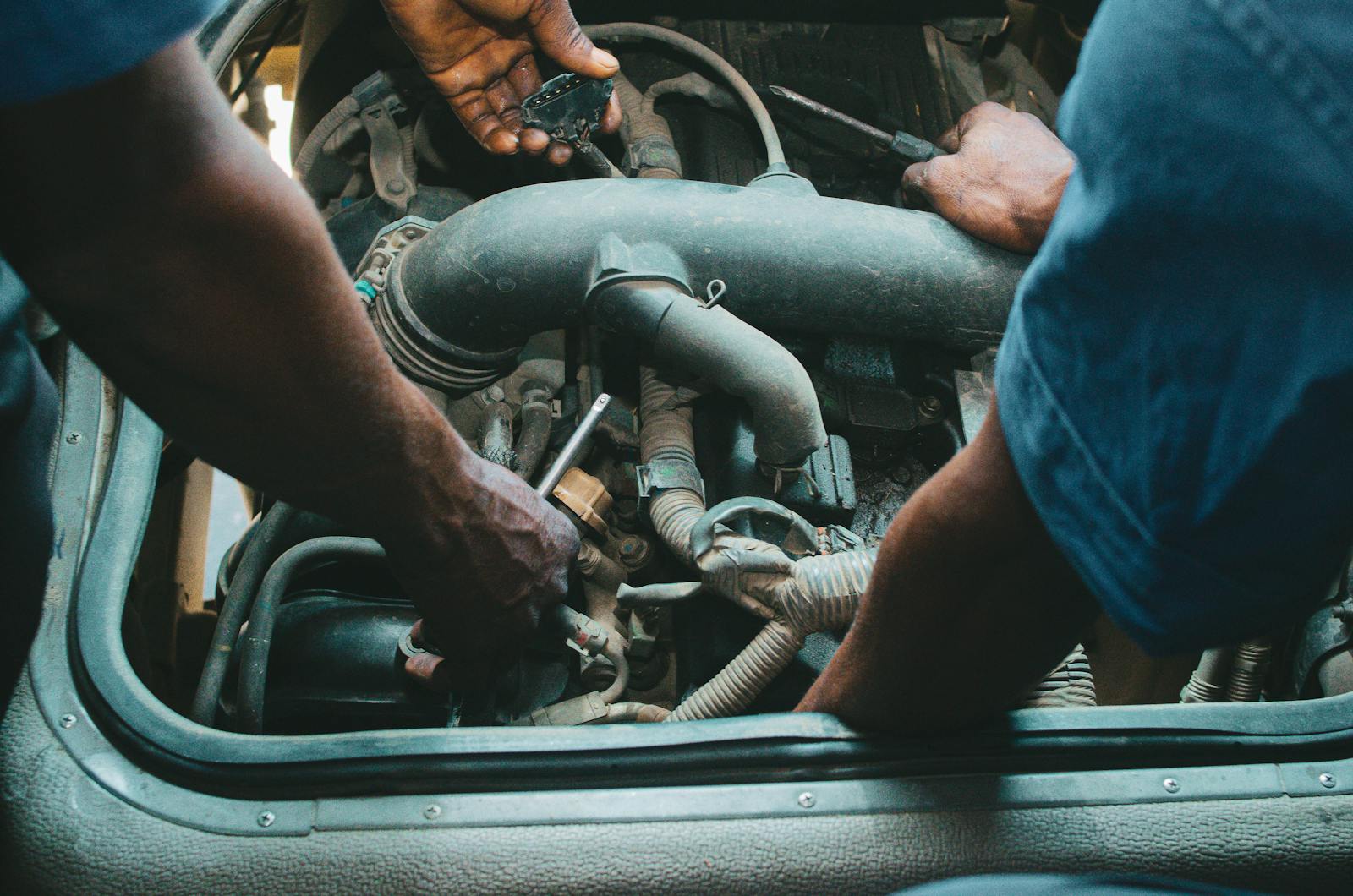

The mechanic didn’t even get to finish wiping his hands before the customer started in with the accusations. Not the normal “I think you overcharged me” stuff either—this was full-on “you sabotaged my car” energy, loud enough that the waiting room went quiet.
The wild part was that the car had only been in the shop two days earlier, and the mechanic had done exactly what the customer asked: a quick look, a basic service, and a blunt warning about the transmission that the guy brushed off like it was a sales pitch.
Now the same guy was back, truck on a tow hook, face red, phone in his hand like he was about to start recording. He wasn’t asking what happened. He was announcing what happened, and he’d already decided who did it.
The “quick check” that wasn’t going to be quick
It started with an older SUV—high mileage, tired paint, that faint burnt-fluid smell you can catch before the hood even pops. The customer came in with one of those vague complaints that sets off every mechanic’s internal alarm: “It’s been shifting kinda weird, but it still drives. I just need you to change the oil and make it run right.”
The mechanic did the usual intake questions. Any warning lights? Any slipping? Any delays going into gear? The customer admitted it sometimes clunked into drive and “revved a little high” before it grabbed, but he framed it like a quirky personality trait the car had always had.
When the mechanic checked the transmission fluid, the color told the story before any scan tool could. It was dark, thin, and smelled cooked, like someone had been overheating it for a while. The mechanic told him straight: this transmission was on borrowed time, and it needed diagnostics at minimum—possibly a rebuild or replacement depending on what they found.
Every warning delivered, every warning ignored
The customer didn’t want diagnostics. He didn’t want to pay for a teardown or even a deeper inspection. He wanted the cheapest path that let him leave thinking the problem had been “handled,” and he kept circling back to the idea that maybe the mechanic could “just top it off” or “do a flush real quick.”
The mechanic pushed back, because flushing a failing transmission can be like kicking a chair leg that’s already cracked. If the clutches are worn and the fluid is full of material, a flush can change pressure and finish the job. So he told the customer what he’d tell anyone: they could check level, note condition, and quote diagnostics, but he wasn’t going to perform a procedure that might make the failure immediate—and then get blamed for it.
That’s where the vibe turned. The customer started doing that half-joking, half-threatening thing: “So you don’t want to work on it, huh?” Then, “Other places said they can flush it.” The mechanic stayed calm, printed the estimate for proper diagnostics, and wrote the warning on the work order: transmission slipping, fluid burnt, failure likely; advised against driving long distances or towing.
The customer signed anyway, but with the energy of someone signing a waiver they plan to argue about later. He paid for the oil change and left, acting like the mechanic was being dramatic or trying to upsell him into a transmission job he didn’t “need.”
The two-day countdown
For the mechanic, it was one of those encounters that lingers in the back of your mind. Not because it was rare—shops see stubborn customers all the time—but because the guy’s attitude had that specific mix of distrust and entitlement. The mechanic even mentioned it to a coworker: “Watch, he’ll be back on a tow and it’ll be my fault.”
Two days later, that prediction rolled into the lot with a tow truck. The SUV didn’t limp in, didn’t crawl, didn’t even pretend it might drive. It arrived like a dead appliance, strapped down and inert, with the customer marching behind it before the tow driver had finished lowering the bed.
The customer didn’t start with questions. He started with conclusions. “It was fine before I brought it here,” he said, loud and sharp, as if volume could rewrite the timeline. “Now it won’t move. You did something.”
According to him, it failed on the highway: a sudden flare in RPM, a hard bang, then nothing—no forward, no reverse, just a whine when he tried to shift. He said he’d barely driven it since the oil change, and the timing was “too convenient” to be anything but sabotage.
The confrontation in the front office
The mechanic pulled up the invoice and the signed work order, the one with the written warning. He slid it across the counter and pointed to the note about the burnt fluid and imminent failure. The customer didn’t look at it the way someone looks at new information; he looked at it like it was a prop in an argument he’d already rehearsed.
Then came the line mechanics hear when someone’s gearing up to make them the villain: “I know how this works. You guys mess with something so I’ll come back and have to pay you more.” He gestured toward the shop bays like there was a secret sabotage station back there, like technicians spent their time plotting how to ruin a random guy’s transmission for the thrill of it.
The mechanic tried to keep it practical. He explained what they did—oil and filter service, nothing touching the transmission besides checking the fluid condition. He explained what he recommended and what the customer declined. He explained that a transmission with burnt fluid and slipping symptoms can fail at any time, and that driving it hard can accelerate the failure.
That’s when the customer’s story started getting specific in a way that didn’t help him. He admitted he’d used it to haul something “not that heavy,” and that he’d driven out of town because “it seemed okay.” He also admitted he’d stopped at another place after leaving the shop because he “wanted a second opinion,” and that they’d “did something with the fluid” that made it “feel better for a day.”
The mechanic just stared for a second, because that “something” sounded an awful lot like the exact flush he’d refused to do. But he didn’t say “I told you so.” He asked what exactly was done and if the customer had paperwork.
No paperwork. Just “they hooked it up and cleaned it out.” The customer said it drove smoother after that, which—if the clutches were already worn—could’ve been the temporary calm before the final slide. Now, with the transmission completely gone, he was back at the original shop because they were “the last ones who touched it,” and in his mind that meant they were responsible.
Proof, paperwork, and the threat of “making a call”
The mechanic offered to diagnose it properly now: scan codes, check line pressure, verify whether the transmission was actually dead or if something like a linkage issue was causing the no-move condition. He quoted a diagnostic fee and explained that if the transmission was toast, they could talk about options—used unit, rebuild, or remanufactured.
The customer heard the diagnostic fee like it was a personal insult. He wanted the shop to eat the cost, tow it in for free, and fix it “since you broke it.” He kept circling back to the idea that the oil change must’ve been done wrong, as if changing oil could quietly assassinate a transmission from across the engine bay.
When the mechanic wouldn’t agree, the customer escalated into threats that weren’t quite legal threats but were meant to feel like them. He said he’d call corporate (it wasn’t a chain). He said he’d call the Better Business Bureau (the mechanic didn’t blink). He said he had friends who were lawyers (everyone has friends who are lawyers).
Then the phone came up again, hovering like a weapon. He started talking about how he could “post this everywhere” and “tell people what you do,” framing it like the shop should be afraid of his version of events. The mechanic, still calm but clearly done, told him: if he wants to accuse them of sabotage, he can pick up the vehicle and take it elsewhere, but the shop wasn’t going to argue in circles at the counter.
That made the customer angrier, because nothing fuels outrage like not getting the reaction you want. He demanded to speak to the owner, so the owner came out and did the same thing: pulled the paperwork, pointed to the documented warning, and asked if the customer wanted a diagnosis or wanted to tow it out.
In the end, the customer didn’t authorize anything. He didn’t want answers; he wanted a confession. He stormed out, leaving the SUV on the lot while he “figured out what he was going to do,” and the tow driver—still hanging around—gave the mechanic a look that said he’d seen this movie before.
The shop was left in that uncomfortable limbo where the car sits out back like an accusation with wheels, and every ring of the phone feels like it might be the next escalation. The mechanic knew the transmission probably died exactly the way he’d predicted, but being right didn’t make it easier—because the guy wasn’t fighting for a repair, he was fighting for someone to blame, and that kind of customer rarely stops at “two days later.”
More from Steel Horse Rides: