
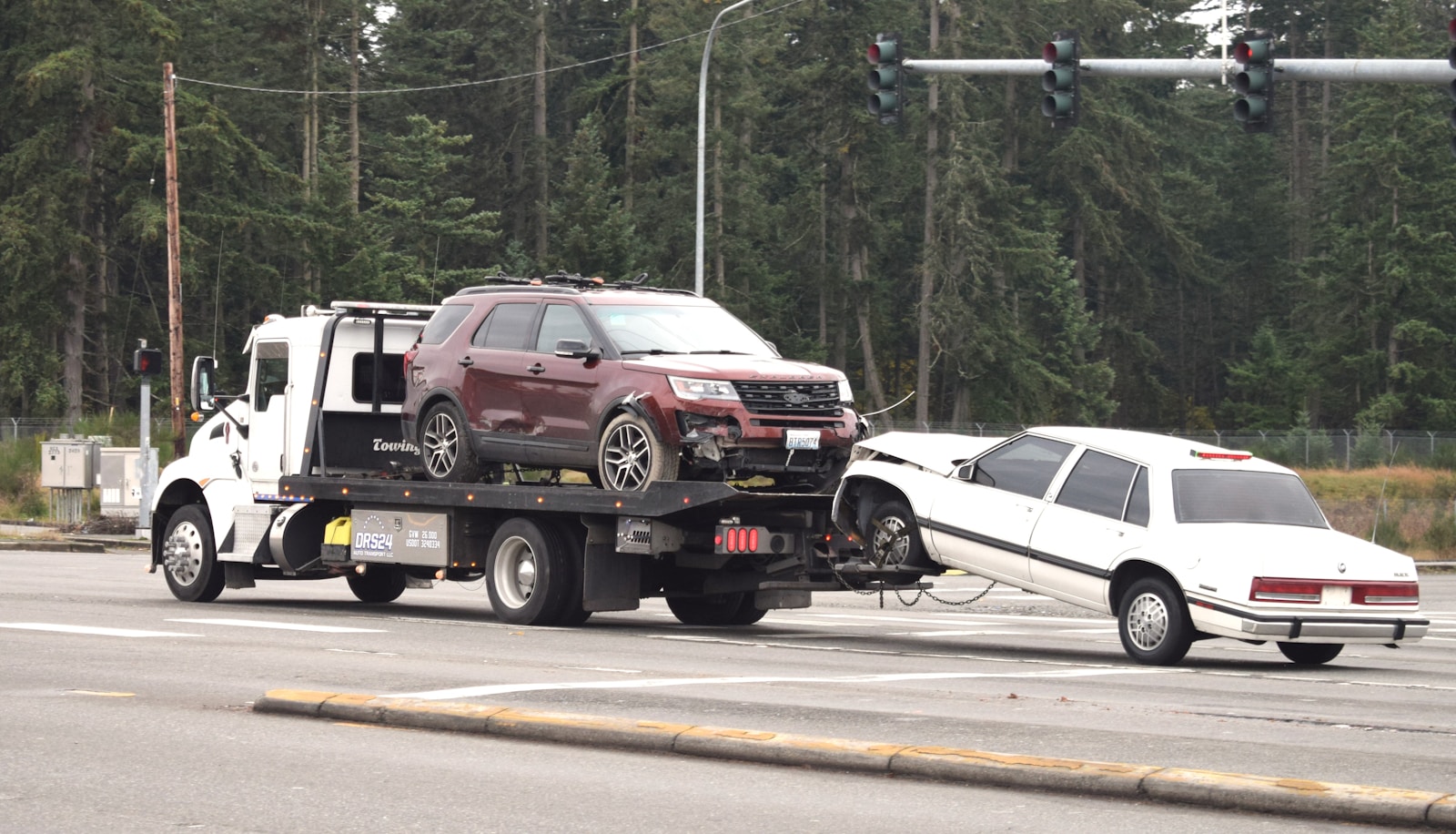

It started as one of those boring, annoying errands nobody plans for: her car needed to be towed. She wasn’t in a panic, exactly—more like irritated and tired, the way you get when you’ve already spent an hour troubleshooting something that should’ve been simple. The tow company said they could send someone out, and she figured the worst part would be the wait.
She did what a lot of people do now without thinking about it: made sure her dash cam was running. Not because she expected a showdown, but because the camera had become part of her routine—proof in case someone rear-ended her, or a cyclist cut across traffic, or an insurer decided to play dumb. She had no idea the most important footage wouldn’t be from the drive at all, but from the few minutes her car was sitting still, helpless, while someone else handled it.
The tow truck rolled up with all the casual confidence of a guy who does this ten times a day and doesn’t want to chat. He did the quick glance-over, asked a couple of short questions, and moved like he was already behind schedule. She stood off to the side, keeping enough distance to not be in the way, but close enough to feel like she was supervising her own property.
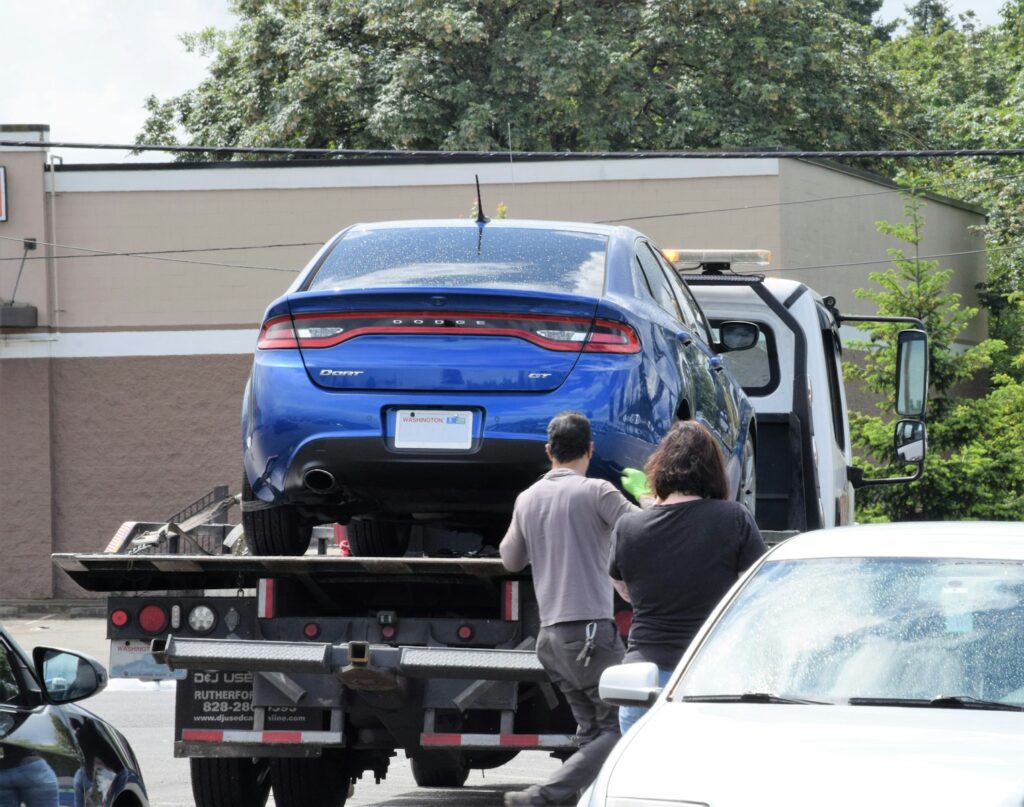
The hookup that felt a little too rough
At first, it looked normal: the operator lining up, checking the angles, doing that slow, controlled maneuvering tow trucks do when they’re trying to meet the car exactly where it sits. But she noticed he wasn’t taking his time with the clearance. He was moving with that “good enough” energy—like the goal was to get it done fast, not to do it gently.
Then came the sound. Not a catastrophic crunch, more like a sharp scrape—metal meeting something it shouldn’t—followed by a tiny pause in his movement, like his brain registered it a split second after it happened. She did that thing people do when they’re not sure if they just heard what they think they heard: a quick glance at the car, then at the operator, then back at the car.
She stepped closer and saw it: the edge of the tow equipment had made contact in a way it clearly wasn’t supposed to. It wasn’t a “barely touched” moment either; it looked like a scuff that had real intention behind it, the kind of mark that shows up bright under sunlight and makes your stomach drop. The operator didn’t say anything, didn’t look back at her, didn’t even do the polite wince-and-apologize people do when they bump your shopping cart.
“That was already there” energy
When she finally said something—calm at first, more like, “Hey, did you just hit it?”—he didn’t meet her halfway. He went straight into denial, the immediate, reflexive kind that comes out before anyone’s had time to think. He shrugged like she was bothering him, like she was confusing a normal part of towing with damage.
She pointed at the spot, and he responded with that classic deflection: it must’ve been like that already. No curiosity, no “let me check,” no “I’m not sure.” Just a flat insistence that he didn’t do anything, paired with a tone that suggested she was being dramatic for noticing.
That’s the part that seemed to get under her skin the most. It wasn’t only the damage—it was the confidence of someone acting like the conversation itself was ridiculous. He kept moving through the steps, tightening and adjusting, as if finishing the job quickly would close the window for her to argue.
The dash cam sitting there like a quiet witness
Here’s where the story pivots from “annoying tow” to “you picked the wrong car.” Because while he was acting like she had no real way to prove anything, her dash cam had been recording the whole interaction from the front windshield. It wasn’t hidden, exactly, but it also wasn’t something he seemed to clock as relevant.
She didn’t announce it immediately. She let him keep talking, let him keep stacking his little claims—didn’t happen, was already there, she must be mistaken—until it became obvious he’d committed to that version of reality. There’s something about that moment that feels very human: the split-second decision to stop arguing and start collecting receipts.
Once the car was loaded, she checked the footage on her phone. And there it was, plain as day: the tow gear contacting the car, the operator’s brief hesitation, the exact moment she reacted. It wasn’t cinematic, but it didn’t need to be; it was the kind of boring clarity that makes lying feel almost embarrassing.
The weird escalation: acting untouchable
When she brought it up—still not screaming, just firm—his attitude shifted in a way that made the whole thing feel even uglier. Instead of backtracking or even pretending to reconsider, he doubled down. He acted like video wouldn’t matter, like it was her problem to figure out what to do with it.
That’s the posture that really sticks with people when these stories get passed around: the sense that the operator thought the system would protect him. Tow companies deal with stressed-out customers all day, and a lot of those customers don’t have documentation or patience. It’s not hard to imagine someone getting used to talking people into dropping it.
He kept saying variations of the same thing—he didn’t do it, it was pre-existing, good luck proving otherwise—while she stood there holding proof. It created this surreal standoff where the facts were no longer the point. The point was whether she’d actually push it, whether she’d take the time to call, file, email, escalate, and keep escalating.
Fallout: now it’s paperwork and principle
After the tow, she did what people always swear they’ll do in these situations and then sometimes don’t: she started documenting everything. Photos of the damage in clear light. Screenshots and saved copies of the video, not just on her phone but backed up, because nothing makes you paranoid like someone acting certain you can’t touch them.
She contacted the company with the footage ready, expecting at least some kind of performative apology. What she ran into instead was that familiar customer-service maze: someone who wasn’t there, asking questions that didn’t matter, implying the damage could’ve happened at any time. The operator’s earlier confidence suddenly made more sense—this wasn’t his first time leaning on the gray area between “your word” and “ours.”
And to be fair, towing situations are messy by nature. Cars are already broken down, people are distracted, everyone’s in a hurry, and damage disputes can turn into a game of “prove when it happened.” But that’s exactly why the dash cam footage felt like such a turning point—because it collapses all the ambiguity into a single, timestamped sequence.
What she couldn’t shake wasn’t just the cost or the hassle; it was the way the operator tried to make her feel powerless while she was standing right there. The whole thing had that petty, almost bullying edge, like he was counting on her being overwhelmed enough to let it slide. Now she had to decide how far to take it—insurance, small claims, formal complaints—knowing every step would cost time and mental energy.
By the end of it, the most unsettled part wasn’t whether she had evidence. It was that the evidence didn’t automatically translate into accountability, and the operator seemed to know that from the start. Even with a camera quietly recording the truth from the windshield, she was still stuck in the part of the story where proof exists… and the fight is getting someone to care.
More from Steel Horse Rides: