
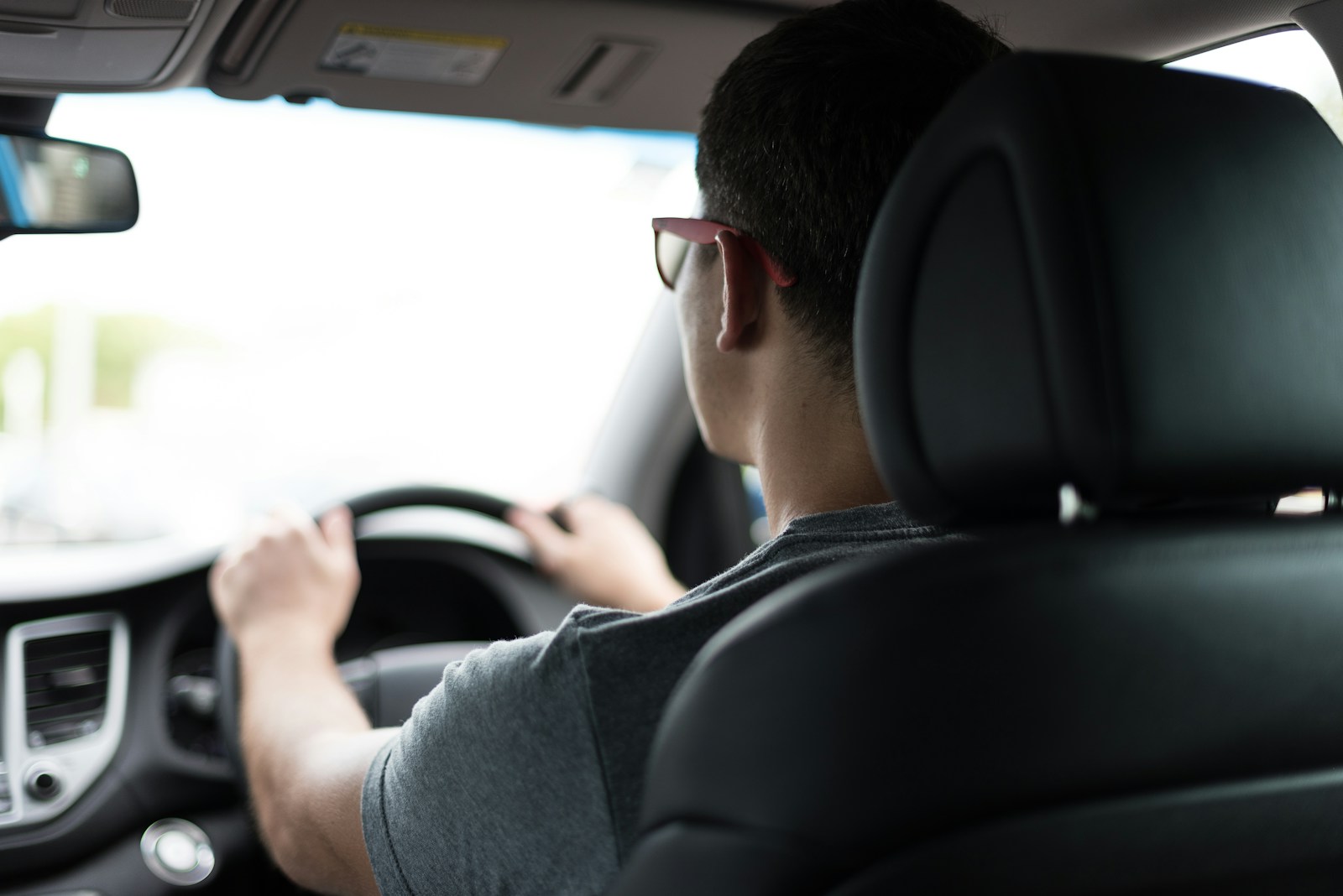

He was doing that end-of-day autopilot drive, the kind where your brain is already home but your hands are still steering. The route was familiar: a four-lane arterial with a string of stoplights, a couple of left-turn pockets, and that one stretch where everyone speeds up to make the next green. His car was nothing flashy, just a regular sedan with a few years on it and a door that already had one small dent he tried not to think about.
The whole thing started with something so minor he didn’t even register it as “an incident” until it was already one. A lane narrowed ahead where construction had been chewing up the shoulder for weeks, and traffic naturally did that messy zipper-merge dance. He left a gap, someone slipped in, and it should’ve been over.
Except the guy behind him didn’t treat it like a zipper merge. He treated it like a personal insult.
The First Flash of “What’s This Guy’s Problem?”
The first clue was the horn—long, angry, held down way past the point of communication and into the point of punishment. In his rearview mirror, he could see a dark SUV riding his bumper so close it looked like it was being towed. The driver’s hands were up, chopping the air, that universal “move” motion people do when they want your car to teleport.
He did what most people do when they’re trying to keep a drive boring: he didn’t engage. He stayed in his lane, kept his speed steady, and stared straight ahead like the road was suddenly very interesting. The SUV swerved left, then right, searching for an angle like it was trying to pick a fight with physics.
When they hit the next light, it went red before the line, and that should’ve forced everyone into the same slow, civilized pause. Instead, the SUV lurched forward and stopped so close behind him that he couldn’t see the front of it in his mirror, just grille and glare. The guy’s headlights practically filled the back window.
The Aggressive Leapfrog Game
The light changed, and the SUV shot out as if the intersection was a starting line. The driver swung around him in the next lane, cutting in so tight that the sedan’s driver had to tap his brakes, the kind of tap that’s half safety and half disbelief. He watched the SUV’s rear end drift over the lane divider like the driver wanted to make a point with the paint.
Then came the brake check. Not a gentle “slow down,” but a sudden, unnecessary slam that makes your stomach drop. The sedan’s driver braked hard enough to feel his seatbelt bite, and he felt that flash of adrenaline that’s like cold water down your spine.
He kept more distance after that, but the SUV didn’t let it cool off. It kept weaving—speeding up, slowing down, drifting toward his lane and back again. In the mirror, the driver could see the guy’s head moving, animated, like he was yelling to himself inside the cab.
The sedan’s driver tried one of those small resets people do when they’re being tailgated: he changed lanes early, hoping the SUV would keep going and pick a new target. For a second it worked. The SUV surged ahead, and he let out a breath he didn’t realize he was holding.
Then the SUV slowed down again, as if it remembered it had unfinished business.
Red Light, Locked Doors, and the Moment It Turned Real
The next stoplight was longer, one of those intersections with multiple turn phases where you can end up trapped in place. Cars stacked up in two lanes, and he rolled to a stop with another vehicle to his right and a line behind him. It wasn’t just “a light” anymore; it was a corral.
The SUV stopped behind him again, slightly offset, angled so the driver could stare straight into his rearview. The sedan’s driver did that thing where you pretend to adjust the mirror but you’re really checking faces. He caught a glimpse: adult man, red-faced, jaw working, eyes locked forward like he was trying to burn a hole through glass.
He made sure his doors were locked without making it obvious, thumb pressing the lock button on reflex. He also slid his phone off the passenger seat and into his lap, screen dark, like just having it there might keep him calm. The cars around them idled, unaware, everybody in their own bubbles.
And then he heard the SUV door open.
It wasn’t subtle. The sound cut through the closed windows: the clunk, the creak, the heavy step onto pavement. He looked up and saw the guy moving fast, coming around the SUV’s front toward the driver’s side of the sedan with a purpose that made his brain go from “annoying” to “danger.”
A Man at the Window, and Then the Kicking Starts
The guy reached the sedan and went right to the driver’s window, close enough that his shadow covered the side mirror. He was yelling, but the words didn’t come through cleanly—muffled by glass and traffic noise—just the shape of anger and the spit-flecked intensity of it. He pointed at the driver, then at the road behind them, like he was presenting evidence in a trial only he understood.
The sedan’s driver didn’t roll the window down. He didn’t flip him off, didn’t mouth back, didn’t do anything heroic or satisfying. He stared straight ahead at the red light like it had the answers, hands on the wheel, trying to keep his breathing steady so he didn’t accidentally stall out or do something dumb.
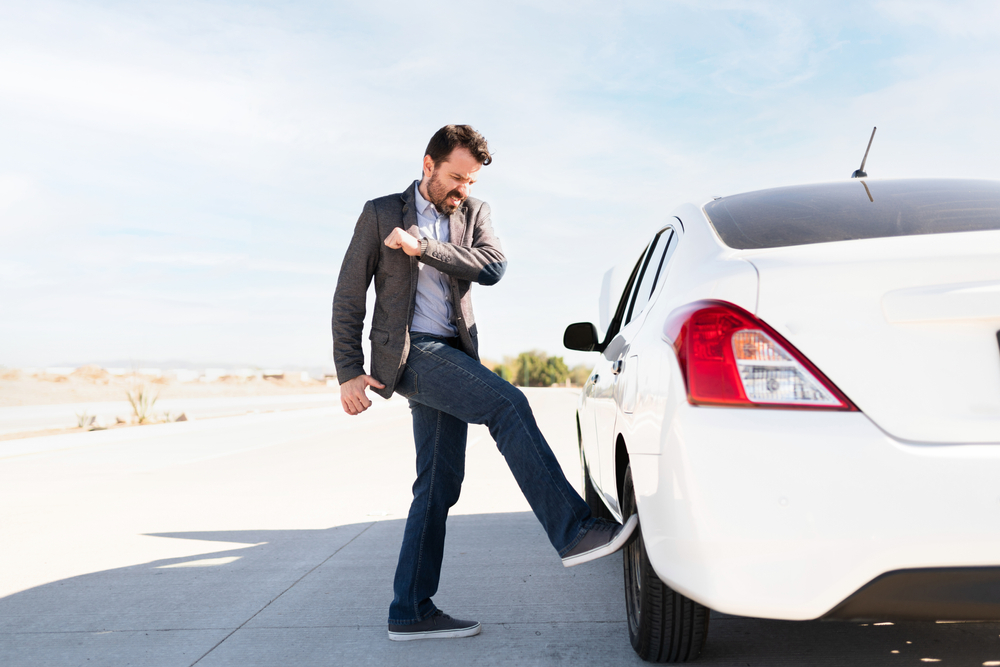
That’s when the guy’s behavior got weirdly performative, like he needed a bigger reaction. He slapped the glass with his palm—hard enough to make the window flex and buzz. Then he stepped back, looked at the door, and kicked it.
The first kick landed near the lower panel with a dull, metallic thud that the driver felt through the frame. The second kick was higher, closer to the handle, and it made the whole car shudder. The sedan’s driver felt his own body tense, shoulders up around his ears, brain flipping between “drive forward” and “you can’t, there’s a car in front of you.”
The guy kicked again, faster now, like he’d found a rhythm. The door didn’t cave in, but it didn’t need to; the message was the point. The sedan’s driver could see the man’s shoe—scuffed sneaker—connecting with paint and metal that he’d have to look at every day afterward.
The Split-Second Choices at an Intersection
Inside the car, everything got narrow and loud. He had the phone in his lap, and his thumb fumbled at the screen, trying to wake it without dropping it, trying to dial without making eye contact. He didn’t want to escalate, but he also didn’t want to be a sitting duck if the guy decided kicking wasn’t enough.
To his right, the driver in the next lane finally noticed. That person leaned forward, eyes wide, doing that “are you seeing this?” look through their own windshield. Somewhere behind, a horn blared—not the SUV’s this time, but an impatient third party annoyed that traffic had stalled for reasons they couldn’t see.
The sedan’s driver thought about throwing the car into reverse, but there were cars stacked behind him. He thought about pulling forward into the intersection, but the light was still red and the car in front of him hadn’t moved. He thought about cracking the window to say something calming, but the guy’s body language wasn’t bargaining; it was auditioning for a fight.
The man leaned in and tried the door handle, yanking it once, then again, as if shocked it didn’t open. That tiny detail—him testing the handle—changed the driver’s fear from “property damage” to “oh, he wants access.” The driver tightened his grip on the wheel and hit the horn, long and loud, hoping noise would do what words wouldn’t.
The honk did something. The guy’s head snapped toward the line of cars, suddenly aware of witnesses, of attention he didn’t control. He backed up a step, chest heaving, still yelling, but the energy wobbled as if he’d hit the edge of his own courage.
And then the light turned green.
The sedan’s driver didn’t floor it—there were too many cars and too much chaos for that—but he moved as soon as the car ahead moved, rolling forward decisively. The man jogged alongside for a beat, one hand slapping the rear quarter panel as the sedan pulled away. Then, like a switch, he turned back toward his SUV, either because he realized he was about to be stranded in the intersection or because the moment had passed.
In the mirror, the sedan’s driver saw him climb back in, slam the door, and lurch forward, still trying to stay in the chase. But the traffic pattern broke them apart: a turn-only lane, a couple of cars sliding in between, the messy randomness of a city grid acting like a separator. The sedan’s driver took the next right he could, not because it was his route, but because it was a way to stop being predictable.
He didn’t feel relieved so much as stunned, like his mind was lagging behind his body. The fear didn’t vanish; it just spread out, turning into a shaky awareness of how fast normal life can go sideways. Later, when he got out and looked at the driver’s door—fresh scuffs, a new dent catching the light—what stuck with him wasn’t the damage so much as the fact that the guy had tried the handle, like the whole point had been to get close enough to make it personal.
That’s the part that kept replaying: not the horn, not the brake check, not even the kicks. It was the image of a stranger at a red light, deciding in a split second that the rules didn’t apply anymore, and acting like the only thing between him and someone else’s body was a cheap little lock and a pane of glass.
More from Steel Horse Rides: