
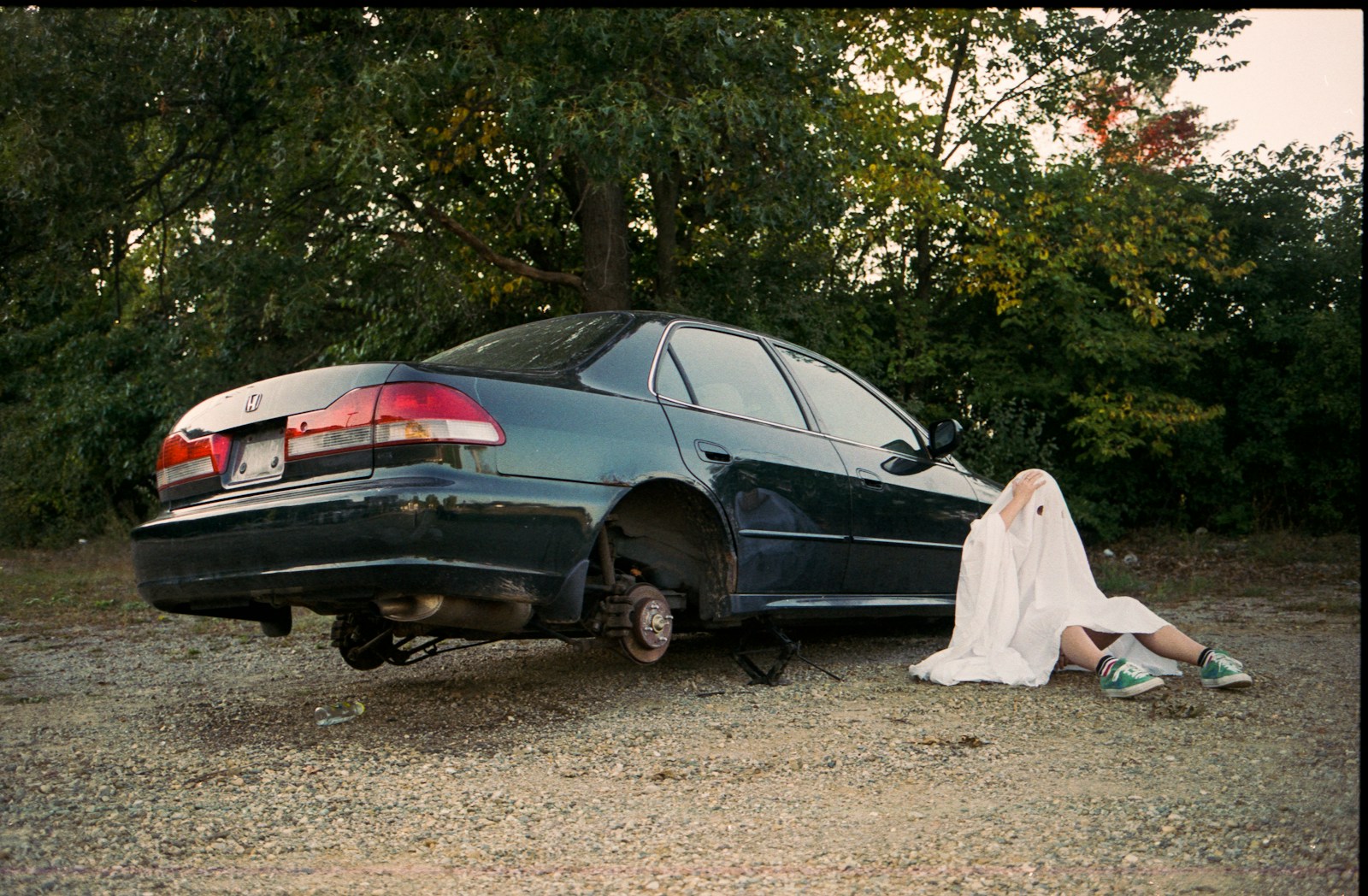

He didn’t notice anything was wrong until he hit the clicker and the lights didn’t flash back at him. It was early, that gray time of morning when the parking lot looks like it’s still half-asleep, and he was already doing the mental math of being late to work. He walked out of his building with one shoe half-tied, coffee in hand, and that familiar, absentminded confidence that his car would be where he left it.
It was where he left it. The problem was that it didn’t look like a car anymore so much as a stripped display. His sedan was sitting low and awkward, tilted in a way that made his stomach drop before his brain caught up: no wheels, no tires, just bare brake rotors and suspension perched on a neat little grid of bricks like someone had staged it.
For a second he genuinely thought he’d parked in the wrong spot, because how do you accept that your own car got dismantled overnight in your own apartment lot? Then he saw the little scuffs on the bumper he’d been meaning to fix for months and the cheap air freshener dangling in the window. Same car. Someone had just taken all four wheels like they were returning shopping carts.
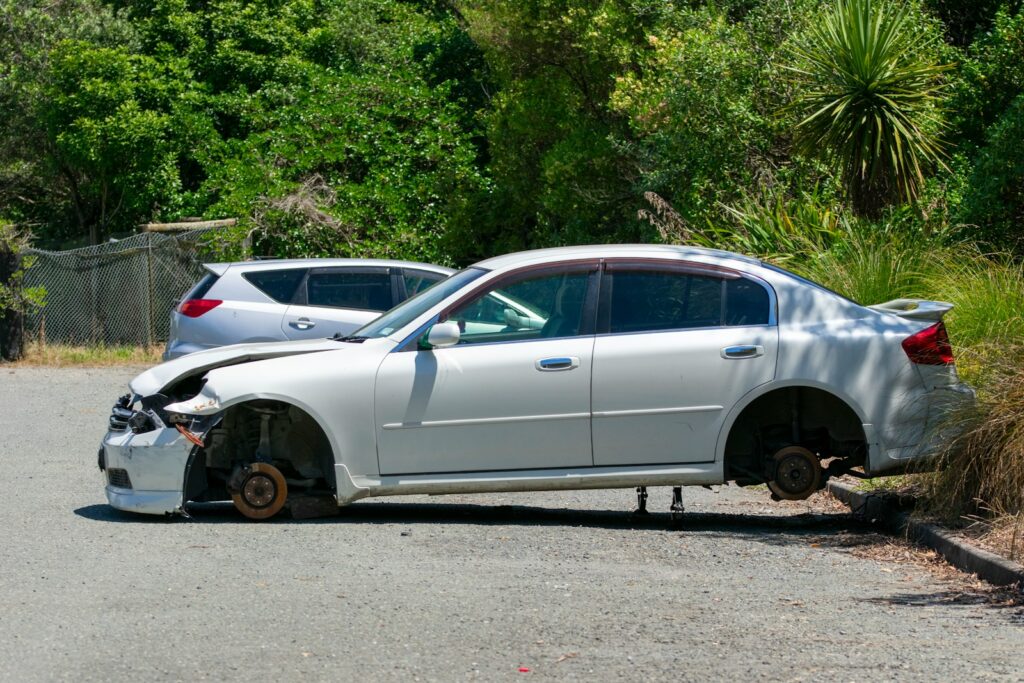
The bricks were… thoughtful, which made it worse
Once the initial shock wore off, what got under his skin wasn’t just the theft. It was how careful it looked. The bricks weren’t random chunks of concrete or cinder blocks tossed under the frame; they were stacked evenly, like whoever did it knew exactly where to place them so the car wouldn’t tip or crack something expensive.
He crouched down, still holding his coffee like it had anything to do with the situation, and stared at the underside. No broken glass, no obvious pry marks, no shredded metal. If you didn’t look too closely, it almost read like a cruel favor: “We stole from you, but we didn’t want you to scrape the oil pan.”
The lot itself didn’t offer much comfort. It was one of those apartment complexes where the lighting works in the middle but fades out around the edges, and the security cameras are either fake or pointed at the leasing office instead of the cars. There were plenty of vehicles around him that still had wheels, which made his feel targeted instead of random.
Calling it in: police report, tow company dread, and the leasing office shrug
He did the standard sequence people do when they’re trying to pretend they’re calm: took photos from every angle, zoomed in on the bricks, and then started calling numbers with sweaty hands. The police non-emergency line put him in a slow queue, the kind where you can hear someone else’s day falling apart in the background. When they finally sent an officer, the officer looked at the car, whistled once, and started writing like this was a routine stop on the morning circuit.
The officer asked the usual questions—when he last drove it, whether he noticed anything off, whether there were cameras in the lot. He pointed vaguely toward the building and admitted he’d never really checked. That was when the conversation got that numb, procedural tone: yes, file the report, yes, contact insurance, no, they can’t do much unless the wheels turn up somewhere obvious.
Then came the towing question, which is when the tension shifted from “someone robbed me” to “how much is this going to cost me on top of being robbed.” He didn’t want it towed—why pay to move a car that couldn’t be driven and might get damaged more? But he also couldn’t leave it sitting on bricks forever without risking citations from the complex or some new act of chaos.
He went to the leasing office with his report number and his best “please take me seriously” face. The person behind the counter gave him sympathy in the way people do when they can’t offer anything else. They said they’d “review the cameras” and asked him to send the photos, and they also reminded him, gently but clearly, that the lot was “park at your own risk.”
Neighbors, side-eyes, and the first theory that made him feel sick
The more he stood there, the more the lot started to feel like a stage. A neighbor walked past, slowed down, and did that thing where they pretend not to stare while staring anyway. Someone else, loading groceries into an SUV, muttered something like, “Damn, they got you,” with the casual tone of someone discussing weather.
One guy offered a theory almost immediately: it had to be someone local. You don’t jack four wheels cleanly in a residential lot without confidence, without time, and without knowing nobody’s going to come running out. It wasn’t the kind of smash-and-grab you do when you’re nervous; it was the kind you do when you’re comfortable.
That idea lodged in his throat because he could picture it too easily. The complex had plenty of foot traffic, plenty of late-night dog walkers, plenty of people who knew where the dark corners were. He started replaying little moments from the past week—cars idling too long, someone lingering by the dumpsters, the sound of a jack he might’ve ignored as construction.
His mind also went to the tiny details you normally don’t think about: the wheels he’d bought last year weren’t flashy, but they were in good shape. The tires were fairly new. The car itself wasn’t a luxury model, but the wheels were worth enough that, if you already had a buyer lined up, it’d be a quick payday.
Insurance purgatory and the awful math of “replacement”
Once he got past the scene-of-the-crime phase, the real misery set in: the admin. Insurance asked for photos, then asked for the police report, then asked if he had receipts for the wheels and tires. He did not have receipts, because who keeps receipts for something you assume will stay attached to your car.
They told him they’d cover it under comprehensive, but his deductible would still hurt. And even if they approved everything, the timeline was vague: adjuster review, parts availability, shop scheduling. Meanwhile, he still had to get to work, which turned into a scramble of rideshares and favors that always feel a little humiliating once you’ve asked for the third time.
He also learned a fun side lesson: wheels aren’t just wheels. The shop asked what trim level, what bolt pattern, whether the car had sensors in the tires. They talked about how stolen wheels often get sold off in sets that don’t stay together, and how matching replacements can take time unless you’re willing to accept whatever’s available. Every option came with a price tag and a small compromise.
And the bricks—those neat little stacks—became a recurring irritation. They weren’t the point, obviously, but they were the image he couldn’t shake. Someone had come prepared enough to bring bricks, but not considerate enough to leave him his wheels.
The part that didn’t add up: no noise, no one saw anything, and the lot felt suddenly hostile
As the day went on, he started asking around in a way that probably made him look paranoid. Did anyone hear an impact wrench? Did anyone see a car pulled up close overnight? People gave him versions of the same answer: no, sorry, they slept through it, they weren’t home, they didn’t notice.
It’s not that he thought his neighbors were lying. It’s that the whole theft required time and some amount of noise, and yet it slipped through the cracks like it was invisible. That’s what made him start scanning faces a little too closely, wondering who had been awake and quiet on purpose.
The leasing office eventually followed up with a message that sounded like it had been copy-pasted: they’d checked what they could, the cameras didn’t capture anything useful, they recommended contacting law enforcement. He reread it twice, irritated at how perfectly it dodged any responsibility while still pretending to be helpful. The lot, in his head, stopped being “home parking” and started being “a place where someone can take your car apart.”
He moved what he could out of the vehicle—registration papers, little personal stuff, the random umbrella he always forgot was there. It felt absurd to be cleaning out a car that hadn’t actually been taken, but standing there made him feel exposed. Like if someone was bold enough to remove all four wheels, what else were they bold enough to do next?
By the time evening rolled around, the sedan was still sitting on its careful brick stilts, a kind of warning sign to everyone who walked past. He’d done everything you’re supposed to do—report, document, call, wait—and none of it changed the fact that he didn’t know who did it, when they did it, or whether they’d be back. The worst part wasn’t even the money; it was the new, nagging sense that the people around him could’ve been watching the whole time, and he’d never know if the next set of footsteps in the lot belonged to a neighbor… or the person who already proved they can take what they want and leave the rest balanced neatly behind.
More from Steel Horse Rides: