
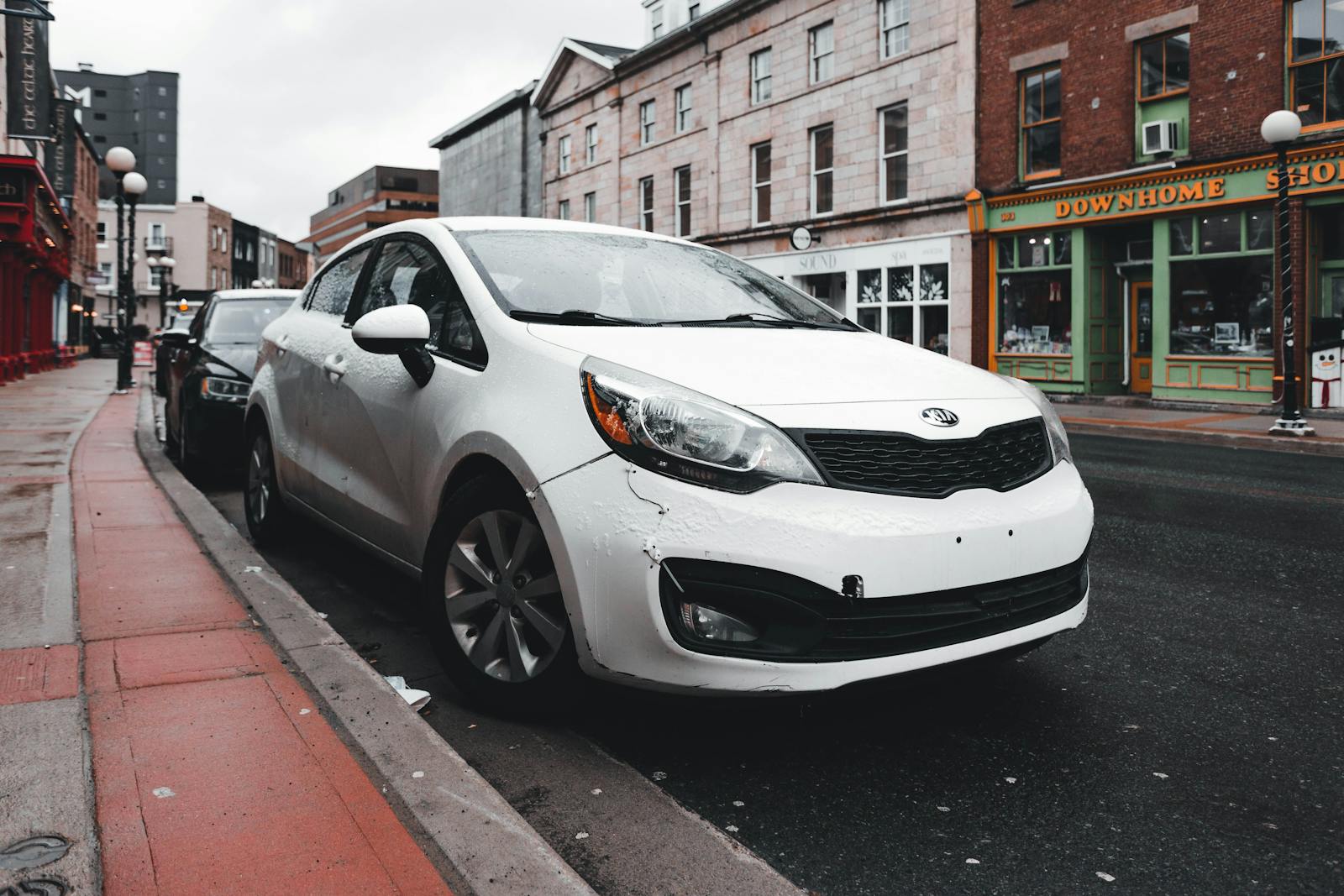

It started the way a lot of couple arguments start: with somebody standing in a doorway holding keys like they’re not asking for much. Her boyfriend had an errand to run, “one quick thing,” and his car was blocked in or low on gas or “making a noise” again—pick your excuse. She had her car sitting right there, and he promised he’d be back in no time.
She didn’t love handing over her keys, but it wasn’t some rare, sacred vehicle either. It was her daily driver, the thing she kept clean-ish, stayed on top of maintenance for, and used to get to work without drama. The biggest reason she hesitated was his track record: he drove like the rules were suggestions, he treated “parallel park” like a contact sport, and he had this habit of brushing off small problems until they turned into expensive ones.
Still, “one quick errand” sounded harmless. She tossed him the keys, watched him jog out like he was doing her a favor by taking her car, and figured she’d spend the next twenty minutes folding laundry or scrolling in peace. The quiet lasted a lot longer than twenty minutes.
“It’ll Be Like Fifteen Minutes” Turns Into a Weird Hour
The first half hour was normal enough. She texted him once—just a casual “Everything good?”—and got back a thumbs-up and “almost done.” No details, no “thanks,” just that vague, slightly impatient tone that always made her feel like she was being clingy for asking.
Another twenty minutes passed, and she started doing the mental math people do when they know something’s off but don’t want to admit it yet. The errand he’d described didn’t require an hour. He wasn’t picking up a couch, he wasn’t driving across town, and he wasn’t the sort of person who made bonus stops without announcing them like they were acts of heroism.
When she called, he didn’t answer. He called back a minute later like he’d been busy, not panicked—breathing normal, voice flat, and a little too cheerful. “Traffic,” he said, and then immediately changed the subject to something dumb, like what she wanted for dinner.
By the time she heard her car pull up, she was already irritated in that tight-jawed way where you’re practicing your speech. She went to the window expecting to see him stroll up with a bag from the pharmacy or whatever. What she saw was the car’s passenger side catching the light wrong.
The Car Comes Back Looking… Wrong
It wasn’t totaled. It wasn’t smoking. It didn’t have a tire hanging off like a cartoon. But it looked like someone had taken a big, careless bite out of it—scuffed paint, a dent along the door, and the side mirror on the passenger side dangling at a weird angle like a broken arm.
He got out fast, not in a rush-to-explain way, but in a rush-to-control-the-situation way. He shut the door a little harder than necessary, clicked the key fob like locking it would make the damage less visible, and met her at the steps with that fixed expression people have when they’re trying to get ahead of bad news. Before she could even speak, he hit her with, “Everything’s fine.”
She didn’t yell. Not at first. She just walked past him toward the car, because there’s something about seeing damage up close that forces your brain to accept what your eyes already know.
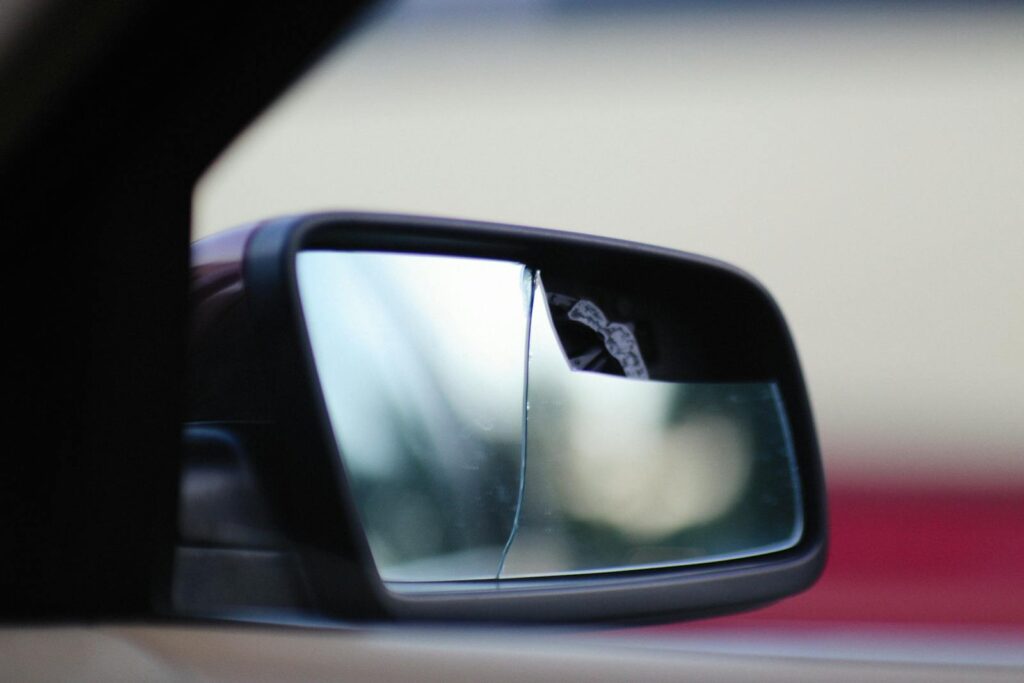
The mirror casing was cracked and scratched, and the glass inside looked spidered at the corner. The dent wasn’t just a dent; it had that long scrape that meant movement, not a stationary bump. She ran her fingers along the edge like she was checking if it was real, then looked at him and asked the only question that mattered: “What happened?”
His Explanation Is Basically… Nothing
He didn’t say, “I’m so sorry.” He didn’t say, “I hit something.” He didn’t even try the classic “someone did this in a parking lot.” He shrugged, eyes flicking away from her face, and said, “I don’t know.”
That answer didn’t land like confusion; it landed like an evasion. She asked again, slower, giving him an opening to adjust his story. “You don’t know how my mirror got broken and the side of my car got scraped?”
He repeated it, slightly louder this time, like volume could replace detail. “I don’t know. It must’ve happened when I was parked.” Except the scrape looked fresh, and the mirror wasn’t the kind of thing that breaks quietly without someone noticing. She pointed out the obvious: if it happened while he was parked, where did he park, and why didn’t he mention it the second he noticed?
His shoulders went tight. He said she was making “a big deal out of nothing,” then pivoted to the idea that cars get dents and she was “too precious” about hers. That’s when her annoyance flipped into something colder, because it wasn’t just the damage—it was how quickly he tried to make her feel unreasonable for wanting the truth.
The Awkward Dance Around Insurance, Money, and Basic Accountability
She asked for the simplest possible practical thing: his route. Where he went, where he parked, whether there was a note on the car, whether he’d taken pictures. He acted like she was interrogating him over a stolen diamond, not a mirror he’d just returned in pieces.
When she mentioned insurance, he got visibly irritated, the way some people do when you introduce consequences into their world. He said reporting it would “raise premiums” and it was “not worth it,” which sounded a lot like someone who didn’t want anyone else involved. She asked if he’d exchanged information with anyone, and he said no—too quickly, like he’d rehearsed the word.
That’s when she realized how lopsided the conversation was. She was talking about repairs, documentation, and responsibility. He was talking about vibes—how she was reacting, how she was “stressing him out,” how he “didn’t even do anything,” despite the fact that he’d been the only person driving the car during the window when it got damaged.
She tried a different angle: okay, forget blame for a second. If you truly don’t know, then help me figure it out. Let’s go back to the spots you stopped at. Let’s check for cameras. Let’s at least be honest about where you were. He refused, saying it was “a waste of time,” then said the most suspicious thing possible: “Why are you so obsessed with this?”
The Fight Shifts From the Car to What He’s Hiding
Once he framed it like she was “obsessed,” the argument stopped being about a dent. It became about the blank space he was defending so aggressively. She started replaying the timeline: the longer-than-promised errand, the missed call, the too-casual “traffic,” the way he came in trying to sweep it under the rug before she could even see it properly.
She asked him directly if he hit something and panicked. He scoffed and told her she was “acting crazy.” She asked if he hit another car and drove off. He went quiet for a beat, then got mad again—louder, sharper—because anger is easier than explaining yourself.
It got personal fast, the way it always does when someone doesn’t have facts on their side. He brought up old fights, told her she didn’t trust him, said she was always looking for reasons to start drama. She reminded him that trust isn’t a gift you demand while actively refusing to answer basic questions.
At one point she said, “If this is how you handle messing up my property, what happens when it’s something bigger?” And he shot back, “It’s just a car,” like the issue was the object and not the behavior. That line—“just a car”—hung in the air, because it meant he either didn’t understand why she was upset or he did understand and was counting on her giving up.
By the end of it, the car was still in the driveway with a broken mirror and a fresh scrape, and the boyfriend was still insisting he had no idea how it happened. He didn’t offer to pay. He didn’t offer to call around for estimates. He didn’t even offer to help tape the mirror so she could drive safely until it was fixed.
She was left with that specific, maddening kind of uncertainty: not just the cost of repairs, but the feeling that she was looking at the edge of something darker—recklessness, dishonesty, maybe even a hit-and-run—without enough proof to pin it down. And the worst part wasn’t the damage itself; it was realizing that “one quick errand” had turned into a situation where she couldn’t tell if her boyfriend was careless, scared, or flat-out lying to her face, and he was acting like her wanting the truth was the real problem.
More from Steel Horse Rides: