

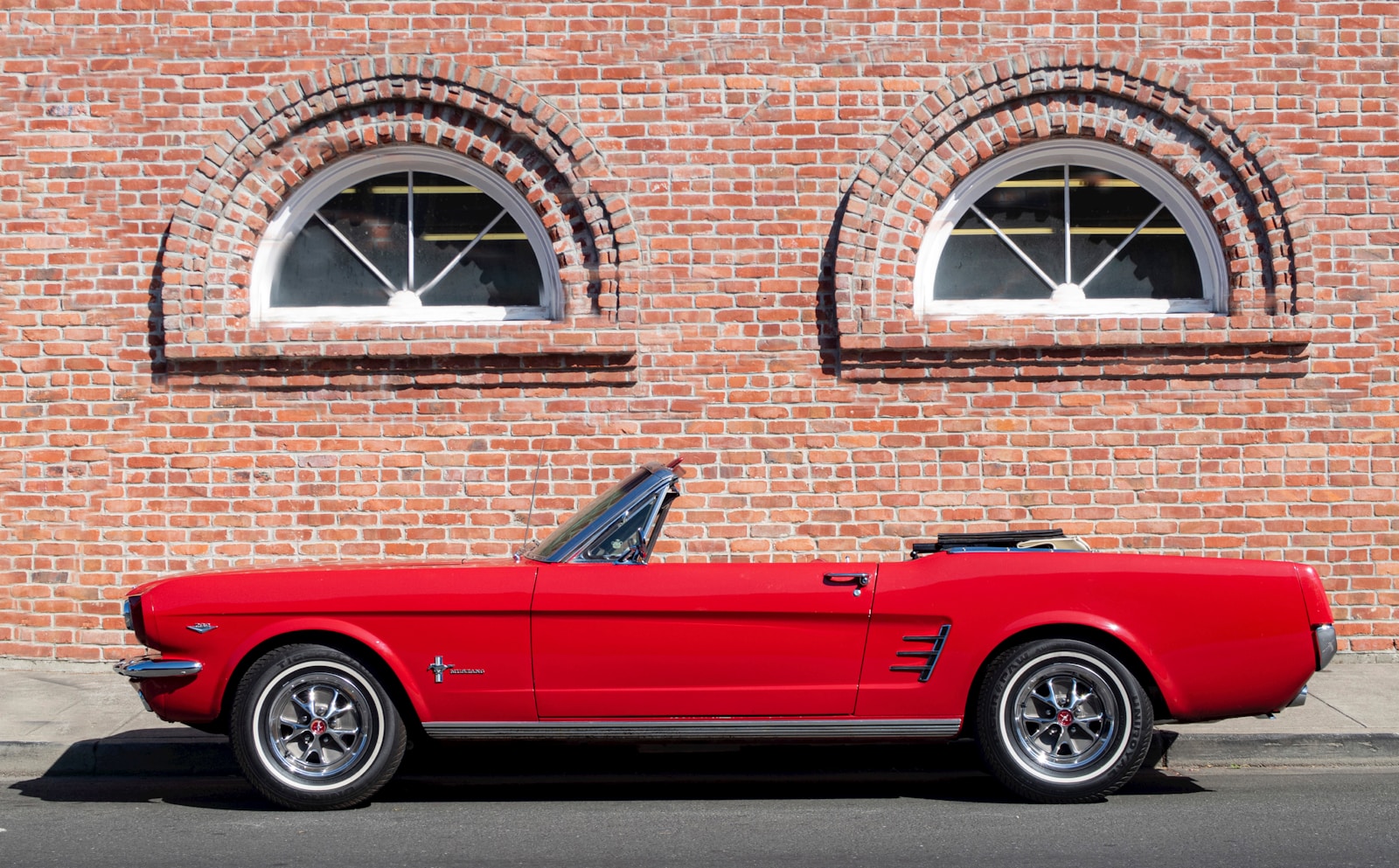
He’d been staring at the same car for twenty years, just in different places in his head.
Back in high school, it was a beat-up-but-perfect Fox-body Mustang he’d bought with summer job money and whatever he could scrape together from flipping tools and mowing lawns. It wasn’t rare, it wasn’t pristine, but it was his—an old 5.0 with a lumpy idle, mismatched interior panels, and that specific smell of gas and sunbaked vinyl that made him feel like he’d built a life with his own hands.
Then one morning it was gone from the apartment lot. No broken glass, no dramatic chase, just an empty rectangle of faded asphalt where he’d parked it. Insurance cut him a check that didn’t come close to what it meant to him, the police shrugged in the way they do when the stolen thing is “just a car,” and he graduated with that low-grade anger you carry around like a pebble in your shoe.
The car that wouldn’t stay dead
Years later, he did what a lot of car people do when they’re bored or nostalgic: he started searching. Not even with a grand plan, just casually—old VIN records, Mustang groups, scrolling listings late at night like it was doomscrolling with horsepower.
He didn’t expect to actually find it. But the details started lining up in a way that made his stomach go tight: the same odd dent on the passenger-side quarter panel, the same aftermarket steering wheel that looked like it came from a discount catalog, and—most convincing—the exact paint defect on the hood where someone had tried to “fix” a chip and made it worse.
The listing was local-ish, tucked into a generic “Classic Mustang runs great” post with three blurry photos and a price that didn’t make sense. It was too low for a running V8 Mustang in any condition, even in a market where everyone pretended their rust bucket was “an investment.” That cheap number was like a flare: either the seller didn’t know what he had, or he knew exactly what he had and wanted it gone.
The seller’s name brought everything back
He messaged immediately and got a reply fast—too fast. The seller acted casual, almost breezy, like he was doing a favor by answering questions. When the buyer asked for the VIN, the seller dodged with, “I’ll show you when you come by, paperwork’s somewhere,” which is never a good sign and always a sign.
But then the buyer caught the name attached to the account and felt that weird, cold jolt of recognition. It was a guy he’d gone to school with—older by a grade or two, always around the parking lot, always “knowing somebody” who could get you parts, wheels, a stereo, whatever you wanted if you didn’t ask too many questions.
He hadn’t spoken to him since graduation, but he remembered him in the way you remember a face from a bad day. The kind of person who smirked a lot and never looked surprised when something went missing. The buyer couldn’t prove anything, not from a name on a profile, but it made the cheap price feel less like luck and more like a trapdoor.
Still, he went. He told himself it was just a coincidence, that it was probably another Mustang that looked similar. He also told himself—quietly—that if it was his car, he wanted it back more than he wanted to be right about the story of how it disappeared.
The driveway reunion that felt wrong
The Mustang was sitting in the seller’s driveway like it belonged there, which somehow made it worse. The paint looked tired and chalky in daylight, the wheels were wrong, and the exhaust hung a little low, but it was unmistakably the same car. The buyer says he recognized it the way you recognize your own handwriting: not one detail, but the whole vibe.
The seller leaned on the fender like a guy posing with a fish. He did the whole “yeah man, these old things, simple cars” routine while the buyer walked slow circles around it, trying not to show his hands shaking. There was no moment where the seller admitted anything. If he knew what he was doing, he hid it behind that half-friendly, half-mocking tone people use when they want to stay in control.
When the buyer finally got the VIN, it matched his old records. Not “close,” not “could be,” but exact. He stared at the number long enough that the seller asked if he was “good,” and the buyer swallowed it down and said he just wanted to make sure it wasn’t a salvage title.
Inside the car, there were little ghosts. A screw missing where he remembered putting in a cheap gauge pod. A patched tear in the driver’s seat that wasn’t patched the way he would’ve done it. And the trunk latch had the same sticky resistance it always had, like the car was stubborn about giving up anything, even now.
Why it was so cheap became obvious fast
The seller wanted cash, of course, and he wanted it now. No bank check, no “let me think about it,” no waiting while the buyer called the DMV. The buyer had come prepared because part of him knew that if he left, the car might vanish again, and he couldn’t take that twice.
They did the handshake in the driveway, the title looked old and slightly water-damaged, and the seller acted like it was just a normal sale. But the weirdness piled up in small ways: the seller wouldn’t make eye contact when the buyer mentioned he’d had a Mustang “just like this” in school, and he got suddenly talkative about how he “barely drove it” and “just needed the space.”
The buyer pulled out, feeling that ridiculous, unreal mix of triumph and nausea. He expected the first drive to be a victory lap, a movie moment where the past clicks into place. Instead, within ten minutes he smelled something hot and wrong, like wiring insulation warming up in a toaster.
Then the dash lights flickered. Not a gentle old-car flicker, but an anxious strobe that made the gauges twitch. When he hit the brakes at the first longer red light, the pedal felt mushy, and the car shuddered like it was arguing with itself about whether it wanted to stop.
The real problem wasn’t the engine—it was the history
He limped it home and popped the hood, expecting something simple. What he found was a maze of cheap fixes stacked on top of older cheap fixes, like someone had been keeping it alive with shortcuts and anger. The wiring harness looked like it had been “repaired” with household twist caps. There were vacuum lines going nowhere, hoses clamped onto fittings that didn’t match, and a battery that wasn’t even properly secured.
And then, tucked behind the glove box, he found it: a sloppy, hidden toggle switch wired into the ignition circuit. The kind of thing people install when they don’t have the right key setup—or when they want a kill switch because the car has a habit of disappearing. That was the moment the cheap price started to make sense, not just mechanically but emotionally. It wasn’t a car being sold; it was a problem being handed off.
He took it to a trusted mechanic, hoping for a list of fixes and a bill he could swallow. The mechanic’s face did that careful, sympathetic thing when he pulled the buyer aside and started explaining the stuff you don’t want to hear: signs of flood exposure at some point, mismatched numbers on panels suggesting it had been pieced together, brake lines that looked newer than they should and installed badly, and an undercoating that seemed less like protection and more like camouflage.
The buyer’s dream car had been treated like a disposable tool. It ran, technically, but it ran like a car that had spent years being driven hard, patched fast, and maybe used for things nobody wanted documented. Suddenly the low price didn’t feel like a steal. It felt like hush money.
The confrontation he couldn’t avoid
He did what anyone with that mix of rage and hope would do: he reached back out to the seller. Not with threats right away, but with questions. “Hey, did you ever have electrical issues?” “Do you know why there’s a kill switch?” “What’s up with the title history?”
The seller replied like someone who’d been waiting to get blamed. He got defensive immediately, insisted the car was sold “as-is,” and started throwing out lines about how the buyer “looked it over” and “drove it.” Then he pivoted into something uglier—snide little hints that the buyer should be grateful to have it at all, that “things happen,” that it was “a long time ago,” said in a way that made it clear he wasn’t talking about the wiring.
That’s when the buyer stopped pretending it was a normal transaction. He told the seller he knew it was his car, that the VIN proved it, and that he’d reported it stolen back then. The seller didn’t confess, didn’t apologize, didn’t even deny it directly. He just went quiet for a beat and then replied with the kind of vague, slippery non-answer that only makes you more certain you’re right.
The buyer thought about going to the cops, but the math was bleak: decades-old theft, title transfers, the car having been through who-knows-what. He’d gotten the car back, but he’d also bought into its mess. And he couldn’t shake the feeling that the seller had priced it low not because it was falling apart—though it was—but because getting caught holding it was suddenly riskier than letting it go.
Now the Mustang sits in the buyer’s garage again, exactly where he used to picture it when he was a kid, except it doesn’t feel like a trophy. It feels like an artifact dragged out of a swamp, something you can clean up but never fully make innocent. He’s stuck with a car that’s both the thing he missed and the thing that was taken, and the guy who sold it to him is still out there acting like this was just business—while the buyer keeps finding new, dumb little secrets behind panels, under carpet, inside wiring looms, each one whispering the same question: what else did this car get used for while it was gone?